

Feb
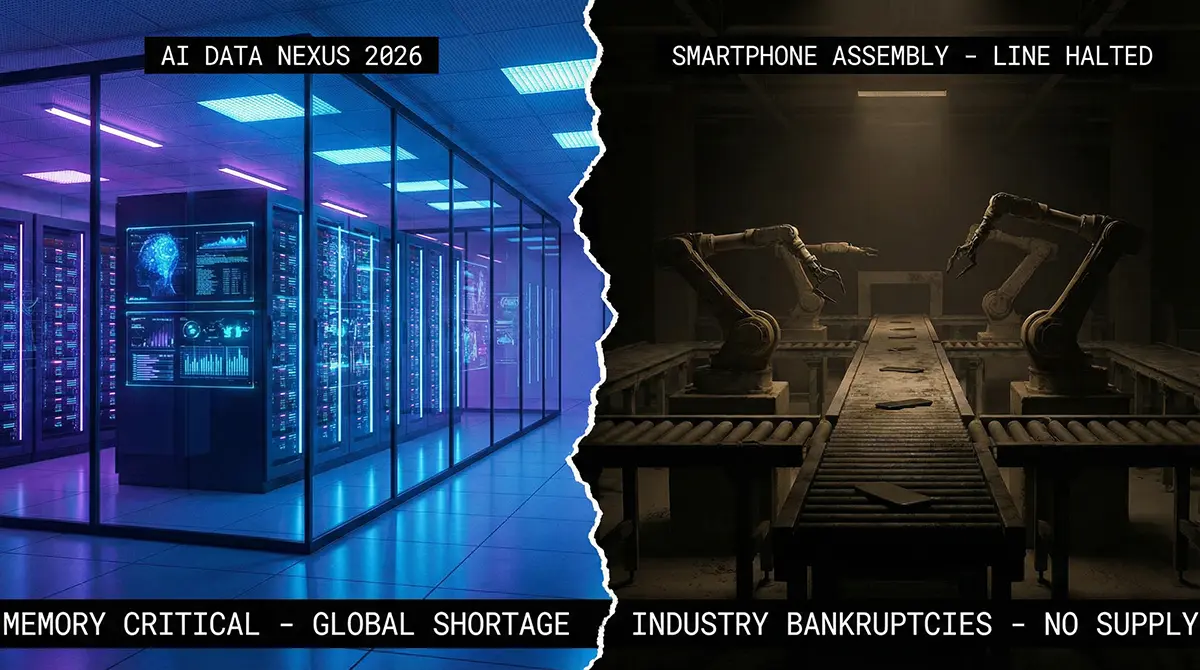
The AI memory crisis has officially escalated from a distant supply chain worry to an immediate, existential threat. For months, the conversation surrounding tech hardware has been dominated by complaints of price hikes and frustrating shortages. We all feel the sting of paying more for our daily devices. But today, the narrative has shifted from the inconvenience of expensive gadgets to the very real possibility of dead companies.
In a sobering forecast, Khein Seng Pua, the Phison CEO and a highly influential figure in the global memory market, has issued a stark warning. His prediction reads less like a standard market correction and more like a eulogy for a massive segment of the consumer electronics industry.
According to his insights, many manufacturers are on a collision course with bankruptcy by the end of 2026. This is not just about a temporary dip in production; it is about entire brands disappearing because they physically cannot source the components needed to build their products.
Here is a comprehensive breakdown of the impending AI memory crisis and what it means for the future of tech hardware.
What is the AI Memory Crisis?
The AI memory crisis refers to the severe reallocation of global memory chip production away from consumer electronics and toward data center infrastructure.
As the demand for artificial intelligence processing explodes, memory manufacturers are abandoning the lower-margin chips used in everyday gadgets. Instead, they are prioritizing high-end, highly profitable chips required to power AI servers. This rapid shift is leaving traditional hardware manufacturers struggling to secure essential components.
The Prophecy: A Devastating Blow to the Consumer Electronics Industry
Phison is a major supplier of NAND controllers. Because of their position, they have unparalleled visibility into the global supply chain. When their leadership speaks, the market listens closely.
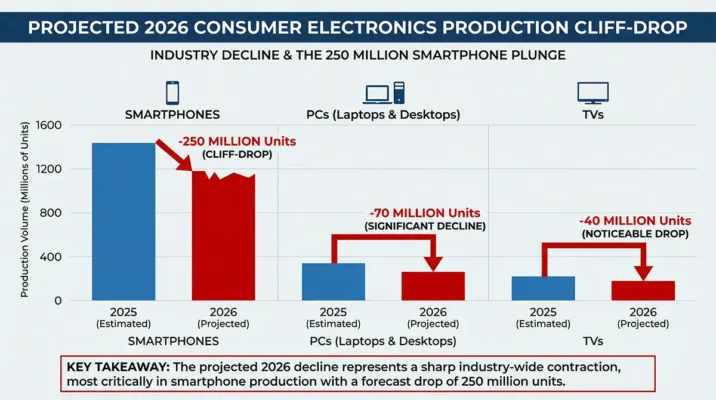
The numbers cited in recent supply chain reports are staggering and point to a catastrophic memory chip shortage for everyday devices.
- Smartphones Vanish: Global smartphone production is projected to be reduced by a staggering 200 to 250 million units. To put this in perspective, that is roughly equivalent to erasing an entire year of Samsung’s global output.
- PCs & TVs Suffer: Production lines for personal computers and televisions will also see significant, disruptive reductions.
“Many consumer electronics manufacturers will go bankrupt or exit product lines by the end of 2026.” — Khein Seng Pua, Phison Electronics CEO
Why Artificial Intelligence is Starving the Global Supply Chain
Why is this happening so rapidly? The simple answer is that the impact of AI is effectively starving the rest of the technological world.
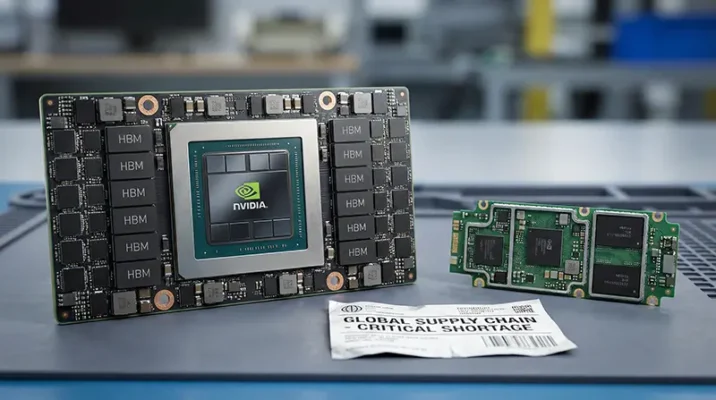
Memory makers—such as Samsung, SK Hynix, and Micron—have strictly limited fabrication capacity. They face a binary choice:
- Produce HBM (High Bandwidth Memory) for heavy-hitters like NVIDIA and sell it for massive, unprecedented profits.
- Produce cheaper LPDDR5 memory for a standard Android phone at vastly lower margins.
Economically, they are making the obvious choice. They are actively converting production lines to serve the booming data center demand. This strategic pivot leaves the consumer electronics industry fighting over the leftover scraps.
The System Vendor Wipeout: Who Will Survive the Tech Industry Bankruptcies?
The warning specifically targets “System Vendors”—the companies that assemble the final products we buy. The AI memory crisis will force a brutal division between the survivors and the victims, leading to widespread tech industry bankruptcies.
The Survivors: Tech giants like Apple and Samsung have the massive cash reserves and market leverage necessary to secure whatever limited memory exists. They can lock in long-term contracts and absorb higher costs, ensuring their flagship devices stay on the shelves.
The Victims: Small to mid-sized players are facing a grim reality. Independent makers of smart home gadgets, budget tablets, and smaller SSD brands that do not own their own fabrication plants will face an absolute supply blackout. Without components, they cannot generate revenue, leading inevitably to closures.
The Devastating Impact on Budget Smartphone Brands
This crisis will be felt most acutely in emerging markets like Pakistan, where budget smartphone brands dominate the landscape.
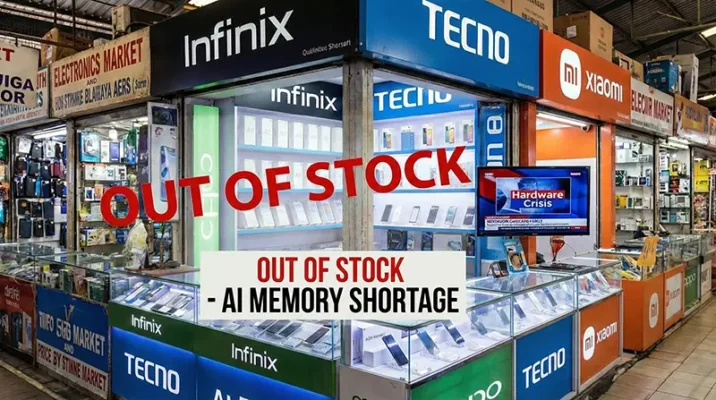
Companies operating on razor-thin margins—such as Infinix, Tecno, Itel, and various smaller OEMs—simply cannot afford to bid against titans like Apple for memory allocation. If they cannot procure affordable LPDDR5 or NAND storage, they cannot build their devices.
For consumers in regions heavily reliant on these affordable options, the AI memory crisis means the era of powerful, ultra-cheap smartphones is coming to a rapid end. The lack of supply will force prices up across the board, pricing millions out of technological upgrades.
The Verdict: Preparing for the Smartphone Market 2026
We are entering a forced, painful period of market consolidation.
By the time we look at the smartphone market 2026, the retail landscape will look fundamentally different. The illusion of infinite choice and aggressively cheap gadgets is dissolving. If these supply chain forecasts hold true, 2026 will go down in history as the year the AI boom killed the consumer gadget boom.
As a consumer, recognizing this shift is vital. The devices available today may be the most affordable we see for the next several years.
Resources
- PC Gamer: Many consumer electronics manufacturers ‘will go bankrupt or exit product lines’ by the end of 2026 due to the AI memory crisis, Phison CEO reportedly says.
- Notebook Check: Many consumer electronics companies may end up bankrupt this year due to AI-driven shortages, Phison CEO alerts.
- VideoCardz: DRAM and NAND shortages could run to 2030, consumer device output to fall.
- MSN: Memory crisis may wipe out tech brands.
- Game GPU: Phison CEO predicts mass bankruptcies among electronics manufacturers.
Frequently Asked Questions (FAQs)
The AI memory crisis is a severe supply chain shortage where global memory chip manufacturers are prioritizing high-bandwidth memory (HBM) for artificial intelligence data centers over standard chips for consumer electronics. This shift is starving the tech industry of essential components like NAND and LPDDR5, leading to massive production drops.
Budget smartphone brands operate on razor-thin profit margins. As the memory crisis drives up the cost of essential chips, smaller companies cannot afford to bid against tech giants like Apple and Samsung for limited supplies. This creates a supply blackout, forcing many system vendors toward bankruptcy by the end of 2026.
Consumers in emerging markets like Pakistan will see a sharp increase in prices and a severe drop in the availability of budget smartphones. Because brands like Infinix, Tecno, and Xiaomi rely on cheap memory to keep prices low, the artificial intelligence boom will effectively kill the ultra-cheap gadget market, making device upgrades much more expensive.
Khein Seng Pua, the Chief Executive Officer of Phison, warned that the global tech industry will face an extinction event for smaller hardware brands. He predicted that global smartphone production will drop by 200 to 250 million units by 2026, leading many consumer electronics manufacturers to either exit product lines or go bankrupt entirely.
Memory fabrication plants have limited production capacity. Because tech companies are willing to pay massive premiums for memory chips needed to train artificial intelligence models, suppliers are converting their factories to meet this data center demand. Consequently, they are producing far fewer chips for everyday consumer electronics, TVs, and PCs.
Related Blogs
Samsung Memory Shortage Crisis: Why No One Can Escape the 2026 AI Tax
Samsung CEO TM Roh warns of an unprecedented Samsung memory shortage caused by OpenAI's Stargate project. Learn how this crisis will hit electronics prices in Pakistan and what you can do before [...]
Jan

The Legacy Trap: Why DDR4 RAM Prices Are Skyrocketing in 2026
Are you caught in the "Legacy Trap"? Discover why DDR4 RAM prices are exploding in 2026 and why upgrading your old gaming PC might be a financial mistake.
1 Comment
Feb
RAM Price Pakistan 2025 Shock: Why The “Stargate” Crisis Will Explode Costs
The RAM price Pakistan 2025 forecast is terrifying. Discover how OpenAI's "Stargate" project is draining global supplies and why Hafeez Center rates are skyrocketing.
2 Comments
Dec
RAM Prices are Skyrocketing: The 2025 RAM Price Increase & Why Your Next PC Will Cost Double
The era of cheap memory is officially over. With analysts predicting a 200% RAM price increase in 2025, the so-called "AI Tax" is set to double the cost of your next gaming [...]
Dec
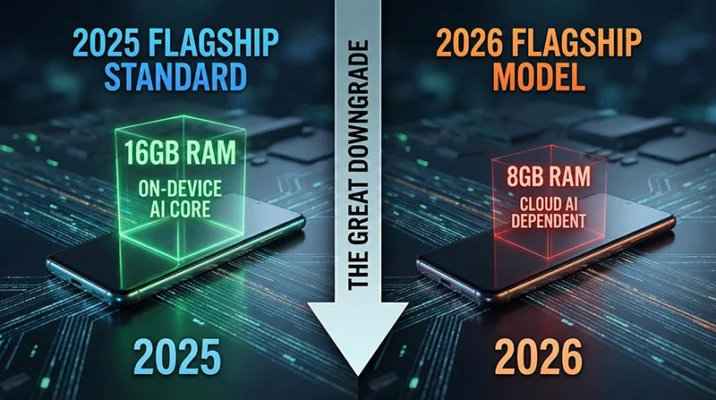
The Great Downgrade: Why Future Flagship Phones Will Have LESS RAM
Is your next upgrade actually a downgrade? Why 2026 flagship phones are ditching 16GB RAM standards and pivoting to a controversial 'Cloud AI' future.
Dec
