

News
Unlocking Claude Mythos: Project Glasswing

Apr
Are you ready to see the invisible gears turning inside the world’s most advanced artificial intelligence?
The global AI landscape is shifting rapidly. For the tech-savvy minds in Pakistan—from the bustling software houses in Lahore and Islamabad to the innovative fintech startups in Karachi—staying ahead means looking beyond mere prompts and APIs. It requires understanding the foundational architectures shaping tomorrow’s technology. Enter the Claude Mythos.
While it might sound like a term from a sci-fi novel, the Anthropic Mythos actually represents a groundbreaking philosophical and technical framework aimed at creating safer, more understandable AI. At the heart of this evolution is Project Glasswing, a revolutionary initiative designed to shatter the “black box” of artificial intelligence. In this article, we are going to unpack exactly what these concepts mean, how they are redefining mechanistic interpretability, and why Pakistan’s IT sector is uniquely positioned to leverage these transparent AI models for unprecedented growth.
Demystifying the Claude Mythos
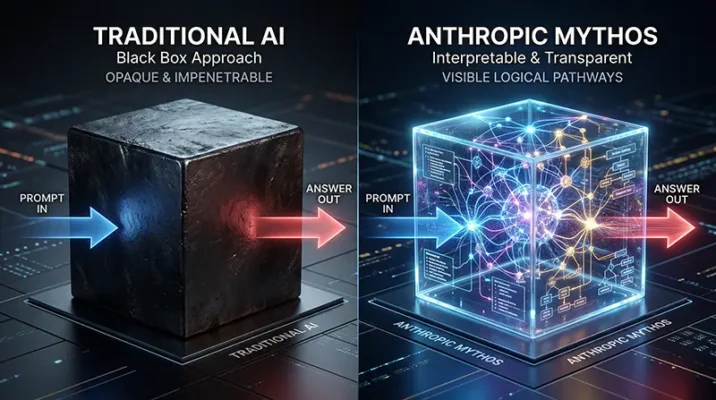
When we talk about the Claude Mythos, we aren’t talking about folklore. In the tech community, a “mythos” refers to the underlying set of beliefs, architectural principles, and foundational lore that dictates how a system operates. For Anthropic—the research company behind Claude—this mythos is built entirely around safety, alignment, and human-centric reasoning.
The Philosophy Behind Anthropic Mythos
For years, developers have treated Large Language Models (LLMs) as magical entities. You put a prompt in, and an answer comes out. The Anthropic Mythos explained simply is a rejection of this magic. It is the belief that AI should not be an enigmatic oracle, but a measurable, understandable tool.
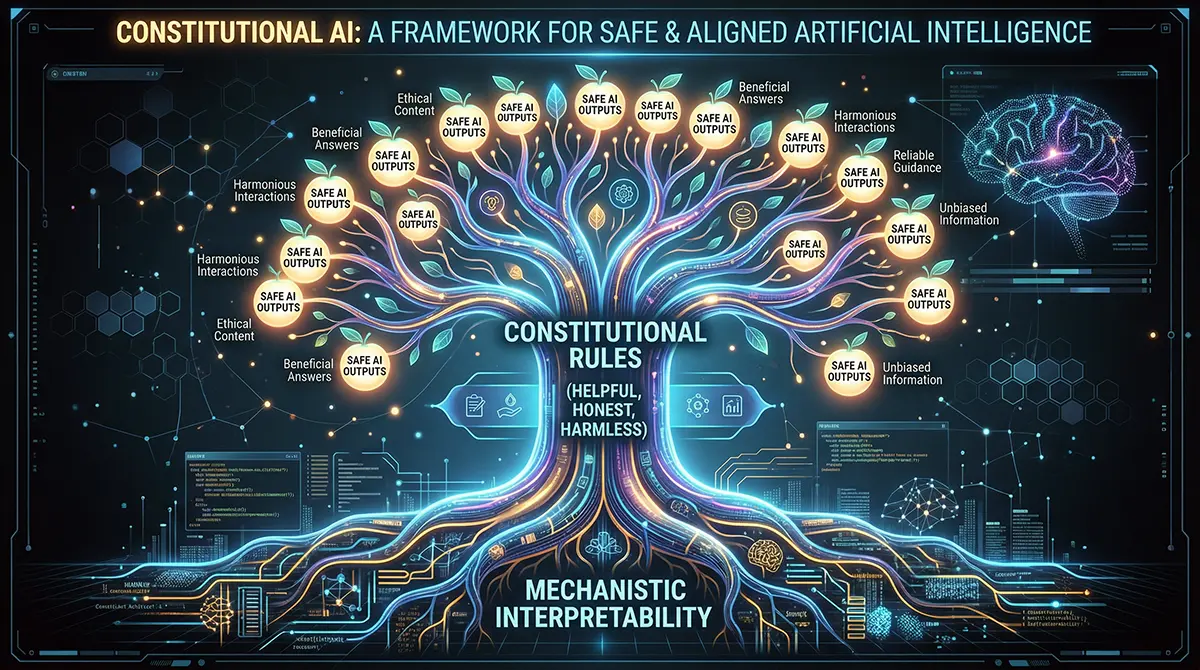
Anthropic’s approach focuses on building models that can explain their own reasoning. Instead of relying on vast, unchecked webs of parameters, the Claude architecture is heavily rooted in Constitutional AI—a system where the AI is trained to follow a specific set of ethical guidelines and self-correct when it veers off course.
Beyond Traditional Chatbots: The Constitutional Core
This is where we gently correct a common misconception: AI does not have personal feelings or a subconscious. When Claude provides a highly nuanced, empathetic response, it isn’t “feeling” the user’s emotion; it is executing complex pattern recognition guided by its constitutional framework. The Claude Mythos dictates that this reasoning process should be aligned with human values, ensuring the AI remains helpful, harmless, and honest without pretending to be human.
Deep Dive into Project Glasswing
If the Claude Mythos is the philosophy, Project Glasswing is the technical execution. Let’s look under the hood of what this initiative represents for the future of transparent AI models.
Why “Glasswing”? The Transparency Revolution
The name is a brilliant metaphor. The Glasswing butterfly (Greta oto) is famous for its completely transparent wings, allowing you to see right through them. Similarly, Project Glasswing transparency AI aims to make the “wings” of Claude’s neural network completely visible to researchers and developers.
Historically, AI models are “black boxes.” Even the engineers who build them often cannot explain exactly why a model generated a specific string of text. Project Glasswing focuses on cracking open that black box.
Mechanistic Interpretability Explained

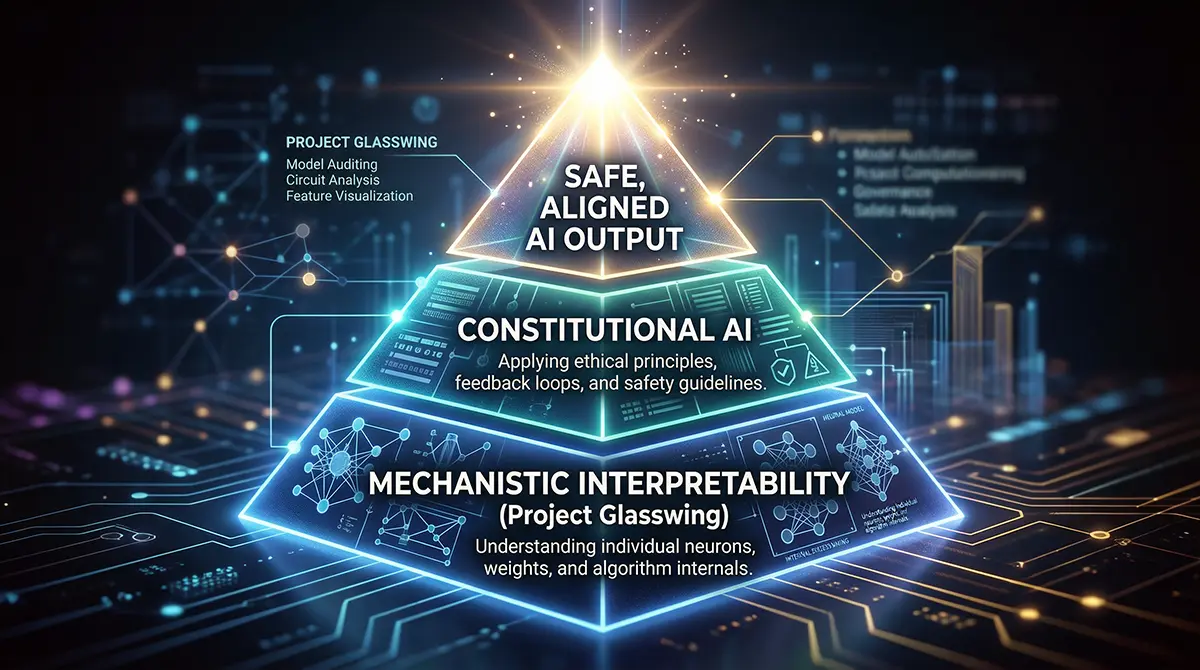
At the core of this project is a field called mechanistic interpretability in LLMs. Think of it like reverse-engineering the AI’s brain. Researchers map individual neurons and circuits within the model to understand how concepts are formed. For instance, if an AI is asked to write code in Python, mechanistic interpretability allows engineers to identify the exact cluster of artificial neurons that “lit up” to understand Python syntax.
How Project Glasswing Impacts AI Safety
Why does this matter? Because you cannot fully trust a system you cannot understand. By utilizing the insights from Project Glasswing, developers can spot potential biases, security flaws, or “hallucinations” before they manifest in the output. For enterprise applications—like banking, healthcare, and law—this level of AI safety frameworks for enterprise isn’t just a bonus; it’s a strict requirement.
Relevance for Pakistan’s Tech Ecosystem

You might be wondering, “This is great high-level tech, but what does it mean for us here in Pakistan?” The answer is: everything. Pakistan’s IT exports are surging, and the country is rapidly transitioning from a hub of traditional software development to a serious player in the global AI landscape.
Opportunities for Pakistani Developers and Software Houses
Pakistan boasts a massive, young, and highly skilled developer population. However, competing globally requires moving up the value chain. As Western companies become more concerned about AI regulations (like the EU AI Act) and data privacy, they are actively looking for partners who understand ethical AI development guidelines.
By mastering transparent architectures and the principles of the Anthropic AI development philosophy, Pakistani software houses can position themselves as premium hubs for safe AI integration.
Building Localized, Trustworthy AI Solutions
Consider a Pakistani health-tech startup building an AI diagnostic tool for rural clinics in Sindh or Punjab. If the startup uses a “black box” model and the AI makes a mistake, the consequences are dire, and the developers won’t know why it happened. By adopting “glass box” methodologies inspired by Project Glasswing, local developers can build future of generative AI in Pakistan solutions that are fully auditable, increasing trust among local doctors and patients.

Ethical AI in Emerging Markets
Emerging markets often face unique challenges, such as linguistic nuances (like Roman Urdu blending with English) and specific cultural contexts. Transparent AI allows local engineers to fine-tune models to respect these cultural boundaries without accidentally introducing harmful biases, ensuring AI serves the local population fairly.
Claude Mythos vs. Traditional AI Paradigms
To truly appreciate the leap forward, we must compare the Claude neural network architecture to traditional paradigms.
The Shift Toward Transparent LLMs
Many open-source models and earlier iterations of commercial AI focused purely on scale—throwing more data and compute power at the problem to improve performance. While this makes the AI smarter, it also makes the “black box” denser and harder to decipher.
The Anthropic Mythos flips this script. It argues that scaling must be proportional to understanding.
- Traditional Models: Focus on generating the most plausible-sounding text, sometimes leading to confident hallucinations.
- Claude/Glasswing Paradigm: Focuses on traceable reasoning. If the AI doesn’t know the answer, its transparent architecture allows the system to recognize its own knowledge gaps and honestly state its limitations.
Unique Insight: The tech world is realizing that raw intelligence in AI is a commodity. Trust, transparency, and safety are the new premium features. For Pakistani tech entrepreneurs, building services around these transparent frameworks is the key to winning high-ticket global clients.
Quick Takeaways
- Claude Mythos is a Philosophy: It refers to Anthropic’s foundational belief in creating AI that is helpful, honest, harmless, and deeply understandable.
- Project Glasswing is about Transparency: Named after the transparent butterfly, it is the push to replace “black box” AI with “glass box” models where neural pathways are visible.
- Mechanistic Interpretability is Key: This science allows developers to reverse-engineer AI outputs, understanding exactly which artificial neurons fired to create a response.
- A Massive Opportunity for Pakistan: By mastering transparent AI frameworks, Pakistani IT firms can attract premium global clients who demand strict AI safety and compliance.
- Trust Over Scale: The future of AI isn’t just about getting bigger; it’s about getting safer and more interpretable.
Conclusion: Embracing the Transparent Future
The era of blindly trusting artificial intelligence is coming to an end. Concepts like the Claude Mythos and Project Glasswing prove that the next frontier of technology is rooted in transparency, safety, and human alignment. By cracking open the black box and utilizing mechanistic interpretability, we can build AI that doesn’t just mimic intelligence, but operates on understandable, auditable logic.
For the developers, tech enthusiasts, and IT leaders in Pakistan, this represents a unique inflection point. You don’t have to follow the outdated paradigms of the past. By championing transparent, ethical AI, Pakistan’s tech ecosystem can leapfrog competitors and establish itself as a global leader in safe AI integration.
The future is transparent. The only question is: are you ready to build it? Start exploring Constitutional AI frameworks today and position your next project at the cutting edge of the Glasswing revolution.
References
- Anthropic Research Team. (2024). Towards Mechanistic Interpretability: Opening the Black Box of Neural Networks. Anthropic AI Safety Publications.
- Global AI Alignment Consortium. (2025). Constitutional AI and the Future of Enterprise Compliance in Emerging Markets.
- Pakistan Software Export Board (PSEB). (2025). Annual Report on IT & Generative AI Export Growth in Pakistan.
- TechCrunch. (2025). The Rise of Transparent AI: Why ‘Glass Box’ Models are the New Industry Standard.
- Journal of Artificial Intelligence Safety. (2026). Evaluating the Impact of the Anthropic Mythos Framework on Hallucination Reduction.
THE CLAUDE AI CRASH: Anthropic’s Network Buckles Under the Weight of “Elevated Errors”
Discover why Claude AI crashed globally on March 2. We break down the Anthropic network outage, HTTP errors, and the Pentagon controversy impact in Pakistan.
Mar
Anthropic Claude AI: The Stunning Discovery of 500+ Zero Day Exploits
Discover how Anthropic Claude AI is revolutionizing bug hunting by uncovering 500+ zero day exploits in open-source software, acting as an automated cybersecurity shield.
Feb
Anthropic AI Military Safeguards: Why the Pentagon Threatens to Dump Claude Over “Killer Robot” Fears
Discover why the Pentagon is threatening to end its $200M deal over Anthropic AI military safeguards. Explore the clash between ethical AI warfare and national security.
Feb
Frequently Asked Questions (FAQs)
The Claude Mythos refers to the underlying philosophy and architectural lore of Anthropic’s AI models. It focuses heavily on Constitutional AI, safety alignment, and building models that operate transparently rather than acting as opaque “magic” black boxes.
While standard AI development often results in a “black box” where the internal reasoning is hidden, Project Glasswing transparency AI aims to make the neural network’s internal processes entirely visible and understandable, much like the clear wings of a Glasswing butterfly.
Mechanistic interpretability allows developers to understand exactly how an AI makes decisions. For Pakistani software houses serving global clients, utilizing these transparent AI models ensures compliance with strict international data and safety regulations, making their services highly competitive.
No. As an AI, Claude does not possess consciousness, feelings, or personal beliefs. Its empathetic-sounding responses are the result of complex pattern recognition and its Constitutional AI training, which guides it to be helpful and polite without mimicking human sentience.
By shifting the focus from raw, unchecked processing power to safety and transparency, the Anthropic Mythos provides a roadmap for Pakistani startups to build localized, trustworthy AI tools in sectors like healthcare, finance, and education, where accuracy and safety are paramount.
Join the Conversation!
What are your thoughts on the shift from “black box” to “glass box” AI? Do you think Pakistani startups are ready to adopt the principles of Project Glasswing to dominate the global IT export market?
Drop your thoughts in the comments below, share this article with your fellow developers, and let’s get the discussion started!
