News
RAM Prices are Skyrocketing: The 2025 RAM Price Increase & Why Your Next PC Will Cost Double

Dec
If you have been waiting to build a PC, the news just went from bad to worse. Industry reports from late 2025 indicate that memory costs are not just creeping up—they are exploding.
For the last two years, builders enjoyed historically low prices on storage and memory. That era is officially over. Analysts are now seeing sudden price hikes of 120% to 200% on high-performance memory kits compared to earlier this year. This RAM price increase in 2025 is shaping up to be one of the most aggressive market corrections we have seen in a decade, and it is going to fundamentally change the Gaming PC cost in 2026.
The “AI Tax”: What is Causing the DDR5 Shortage?
Why is this happening right now? The industry has dubbed it the “AI Tax,” and it is the primary driver behind the current DDR5 shortage.
To understand the shortage, you have to look at the manufacturing floor. Major memory manufacturers like Samsung, SK Hynix, and Micron have finite production capacity (wafers). In the past, the majority of these wafers were dedicated to standard DDR4 and DDR5 RAM for consumer electronics.

However, the explosion of Artificial Intelligence has shifted the priority. Data centers training massive LLMs (Large Language Models) require HBM (High Bandwidth Memory). HBM is significantly more profitable for manufacturers than consumer RAM. Consequently, these giants have shifted almost all their production focus to HBM to fuel the AI boom.
This pivot has left consumer RAM—the kind you put in your gaming rig—with a massive supply gap. We aren’t just facing a price hike; we are facing a physical scarcity of the silicon needed for gaming PCs.
DRAM Price Forecast: The Numbers Look Grim
The current DRAM price forecast for the remainder of 2025 and early 2026 is volatile. Financial analysts covering the tech sector have adjusted their outlooks, warning that the “floor” for pricing has risen permanently.
Here is how the landscape has shifted for the average consumer:
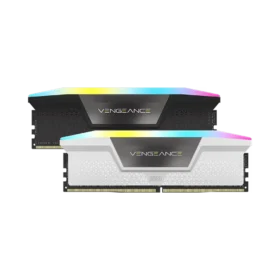
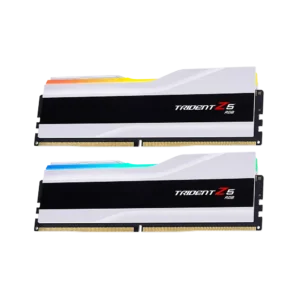
- Entry Level: Standard 16GB kits that used to cost $40–$50 are rapidly approaching the $100 mark.
- Enthusiast Level: The “sweet spot” 32GB DDR5-6000MHz kit, which could be found for around $100 last year, is now pushing $200+.
- Availability: We are seeing stock issues for high-speed (6000MHz+ and low latency CL30) kits. This scarcity is leading to a resurgence of scalping on platforms like eBay, reminiscent of the GPU crisis of 2021.
How the AI Impact on Gaming Affects Your Wallet
The AI impact on gaming hardware goes beyond just the sticks of RAM you plug into your motherboard. The memory shortage is systemic.
It is critical to remember that Video RAM (VRAM) and System RAM share similar supply chains. The production lines squeezed by HBM demand are the same ones needed for GDDR7 video memory. This links the RAM crisis directly to potential GPU shortages for the next generation of cards from NVIDIA and AMD.

If you are planning a build, the Gaming PC cost for 2026 will likely be inflated not just by the CPU or GPU, but by the “boring” components—RAM and SSDs (which are also seeing NAND flash price hikes). A build that cost $1,500 in 2024 could easily cost $2,200 in 2026 for identical performance.
The Verdict: Buy Now or Wait?
Budget builds are effectively dead for the near future. If you are sitting on the fence, the advice from hardware experts is unanimous: Panic buying is usually bad, but waiting is currently worse.
If you see a high-quality DDR5 RAM kit at or near its original MSRP today, buy it immediately. Prices are expected to climb steadily through Q2 2026 before production capacity can catch up to the new demand from the AI sector.

Frequently Asked Questions (FAQs)
Current market analysis suggests that RAM prices will likely not go down in early 2026. Due to the shift toward HBM production for AI servers, the supply of consumer DDR5 is expected to remain tight through at least Q2 2026. Prices may stabilize late in the year, but a return to 2024 lows is unlikely in the near term.
DDR5 is expensive due to a combination of high demand and reduced supply. Manufacturers have reallocated their production lines to focus on High Bandwidth Memory (HBM) for AI data centers. This “AI Tax” has created a DDR5 shortage, allowing retailers and scalpers to raise prices on the remaining stock.
The average Gaming PC cost in 2026 is projected to be 20-30% higher than in 2024. While CPU and case prices remain stable, the doubling costs of RAM and SSDs mean a mid-range PC that cost $1,000 previously may cost $1,300 to $1,400 to build in 2026.
The AI impact on gaming is likely a long-term shift rather than a temporary blip. As long as AI companies continue to buy enterprise-grade memory at premium prices, manufacturers will prioritize them over gamers. However, manufacturers are building new fabrication plants, which should eventually alleviate the shortage—likely by 2027.
If you are building a PC in the next 6 months, you should buy RAM now. The DRAM price forecast indicates continued inflation. Waiting could result in paying significantly more or settling for slower memory speeds. If you are not building for another year, you might wait to see if the market corrects itself.
Related Products