

Apr
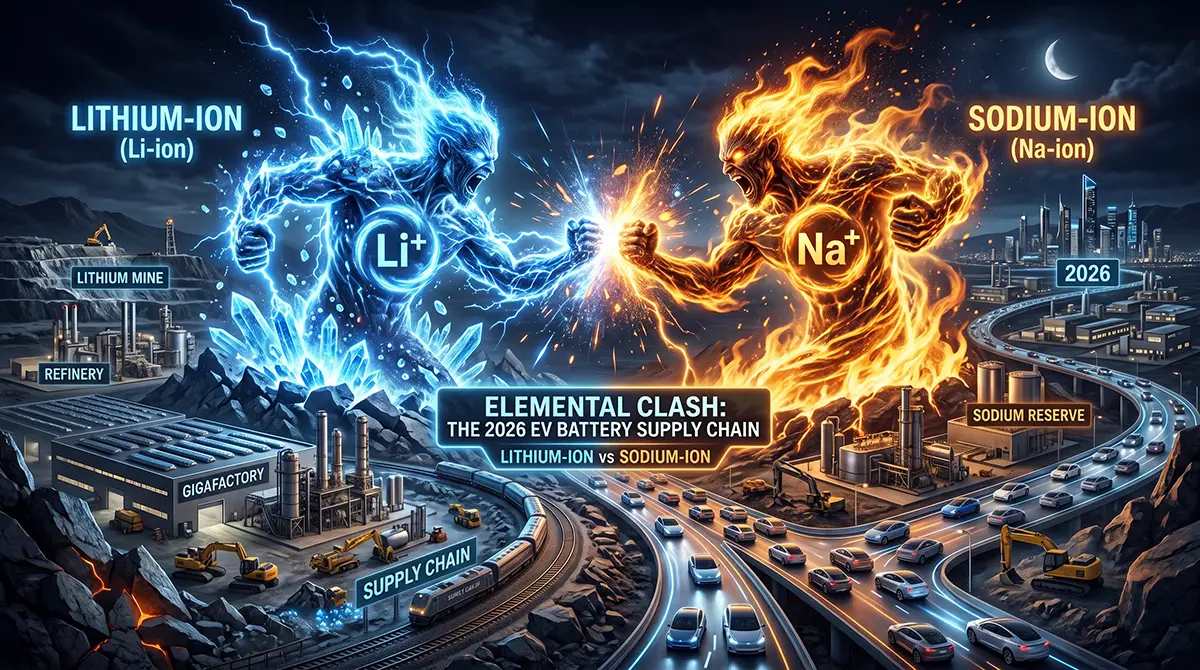
The global transition to electric mobility has hit a critical juncture in 2026. For years, the industry has relied on a single, dominant chemistry to power everything from smartphones to heavy-duty trucks. However, geopolitical bottlenecks, volatile raw material costs, and environmental concerns have forced innovators to look beyond the status quo. Enter the next major leap in energy storage: the sodium-ion vs lithium-ion debate is no longer theoretical; it is actively reshaping the global market.
For the tech-oriented and general public of Pakistan, this shift is incredibly relevant. As fuel prices remain a point of economic friction, the adoption of electric vehicles is heavily constrained by upfront battery costs. Fortunately, sodium-ion technology is emerging as a definitively cheaper alternative to lithium, promising to democratize clean energy. From the massive potential of the Khewra salt mines Pakistan to the rapid expansion of the global EV battery supply chain, 2026 is the year sodium steps out of the lab and onto the streets. This comprehensive guide will break down the chemistry, economics, and future trajectory of this groundbreaking technology, exploring what it means for consumers, industry professionals, and the future of energy.
The Genesis of a New Energy Era
The dominance of lithium has been undisputed for over three decades. Yet, the limitations of this highly reactive metal are becoming glaringly apparent as we attempt to electrify the entire global transport sector.
Why 2026 is the Tipping Point
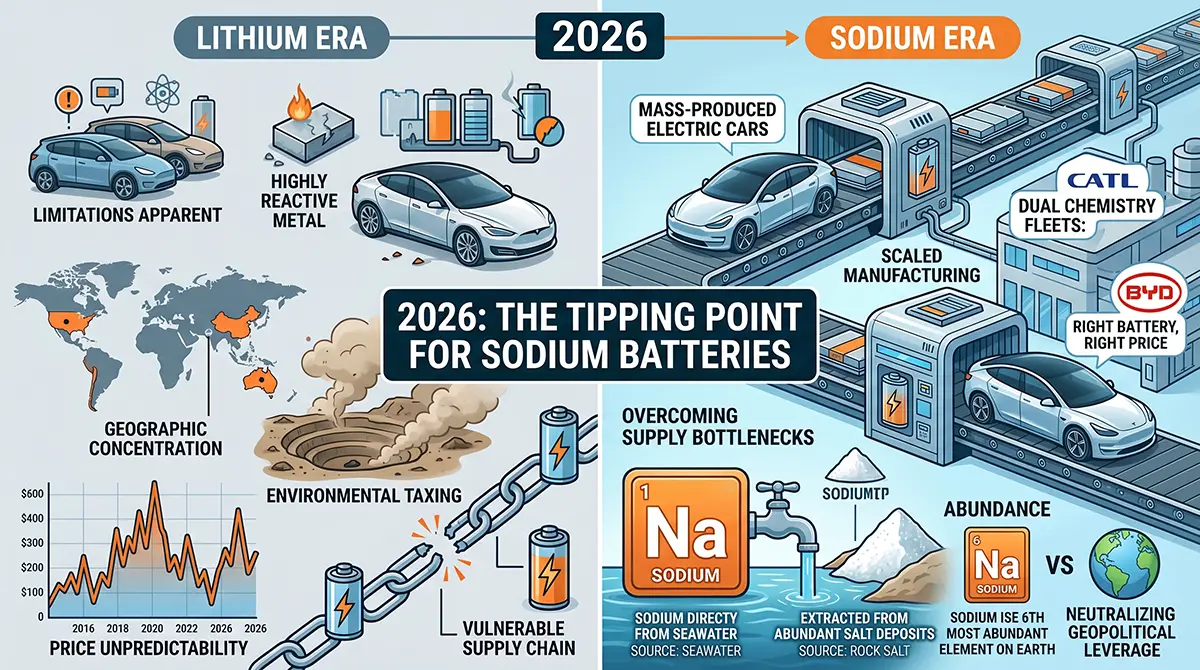
We are currently witnessing a historic milestone. In 2026, the first mass-produced electric cars equipped entirely with sodium batteries are not just prototypes—they are rolling off assembly lines and arriving at dealerships globally. Giants like CATL and BYD have successfully scaled their manufacturing, moving sodium from a niche research topic to a commercially viable powerhouse. This year marks the takeoff of “dual chemistry” fleets, where manufacturers utilize different battery types based on the vehicle’s intended use case and target price point.
Overcoming Lithium’s Supply Bottlenecks
Lithium mining is geographically concentrated and environmentally taxing. With lithium carbonate price fluctuations creating immense unpredictability for automakers, the industry has been desperately searching for stability. The global EV battery supply chain is highly vulnerable to these single-point failures. Sodium, on the other hand, is the sixth most abundant element on Earth. It can be sourced from seawater or extracted from abundant rock salt deposits, effectively neutralizing the geopolitical leverage associated with lithium extraction.
Sodium-Ion vs Lithium-Ion: Analyzing the Tech
To truly understand the sodium-ion vs lithium-ion dynamic, we have to look at the chemistry. Both belong to the metal-ion family and share a remarkably similar system architecture. Both utilize cathodes, anodes, electrolytes, and complex battery management systems (BMS). The critical differences lie at the atomic level.
Atomic Weight and Energy Density
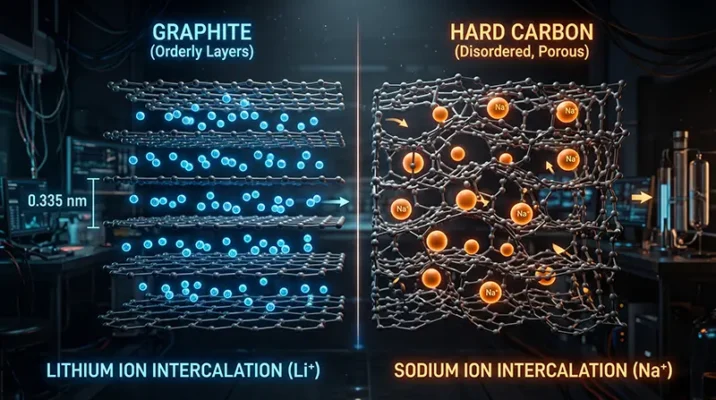
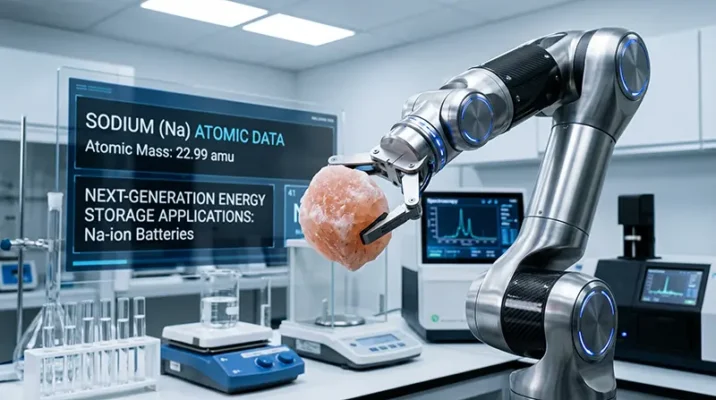
The most significant hurdle sodium has faced is its physical size. A sodium ion has an atomic mass unit (amu) of 22.99, making it over three times heavier than a lithium ion (6.94 amu). Furthermore, its radius is roughly 0.3 nanometers larger. While this sounds microscopic, it prevents sodium from smoothly intercalating (inserting itself) into the standard graphite anodes used in lithium batteries.
Because of this heavier mass, the battery energy density comparison historically favored lithium. In 2026, commercial sodium-ion battery EVs are achieving energy densities of 100 to 175 Wh/kg. For comparison, high-end NMC lithium-ion batteries range from 150 to 250 Wh/kg. While lithium remains the undisputed king for long-range, high-performance vehicles, sodium’s density is more than sufficient for standard urban commuting, easily delivering 300 to 400 kilometers on a single charge.
Thermal Stability and Safety Profiles
One of the most compelling arguments in the sodium-ion vs lithium-ion conversation is safety. Thermal runaway in EV batteries—the dangerous, uncontrollable chain reaction that causes battery fires—is a persistent concern with lithium chemistries. Sodium is inherently less chemically reactive. Modern sodium-ion cells use highly stable electrolytes that drastically reduce the formation of dendrites (microscopic structures that can cause short circuits). In rigorous penetration and cutting tests, sodium batteries have demonstrated an ability to operate without smoking or catching fire, providing a massive safety upgrade.
Extreme Temperature Operations
If you live in a region with drastic temperature swings, sodium-ion technology offers a unique advantage. Lithium batteries notoriously suffer from severe range degradation and charging limitations in freezing weather. Sodium-ion cells, however, can be cycled at temperatures as low as -40°C while maintaining nearly 90% of their charge capacity. They also perform exceptionally well in high heat (up to 80°C), making them highly adaptable to the diverse, and often intense, climate zones found across South Asia.
The Economics: A Cheaper Alternative to Lithium
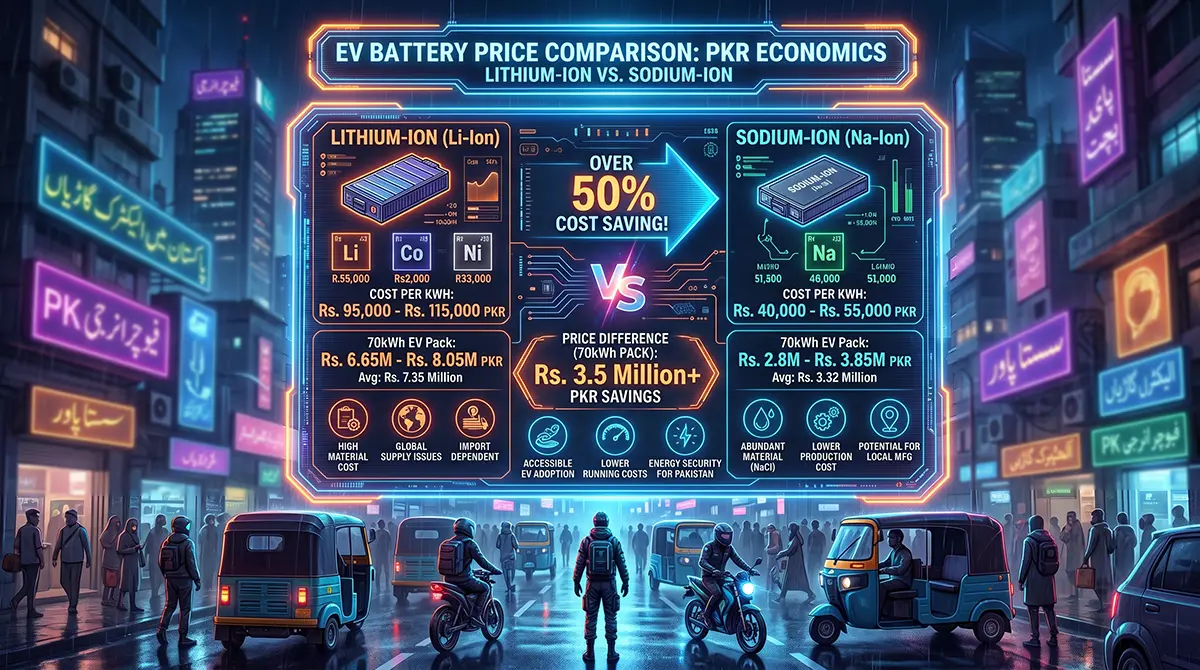
The primary catalyst driving the 2026 battery revolution is raw economics. For electric mobility to achieve mass adoption in developing markets, the upfront sticker price of EVs must achieve parity with internal combustion engines.
Raw Material Price Volatility
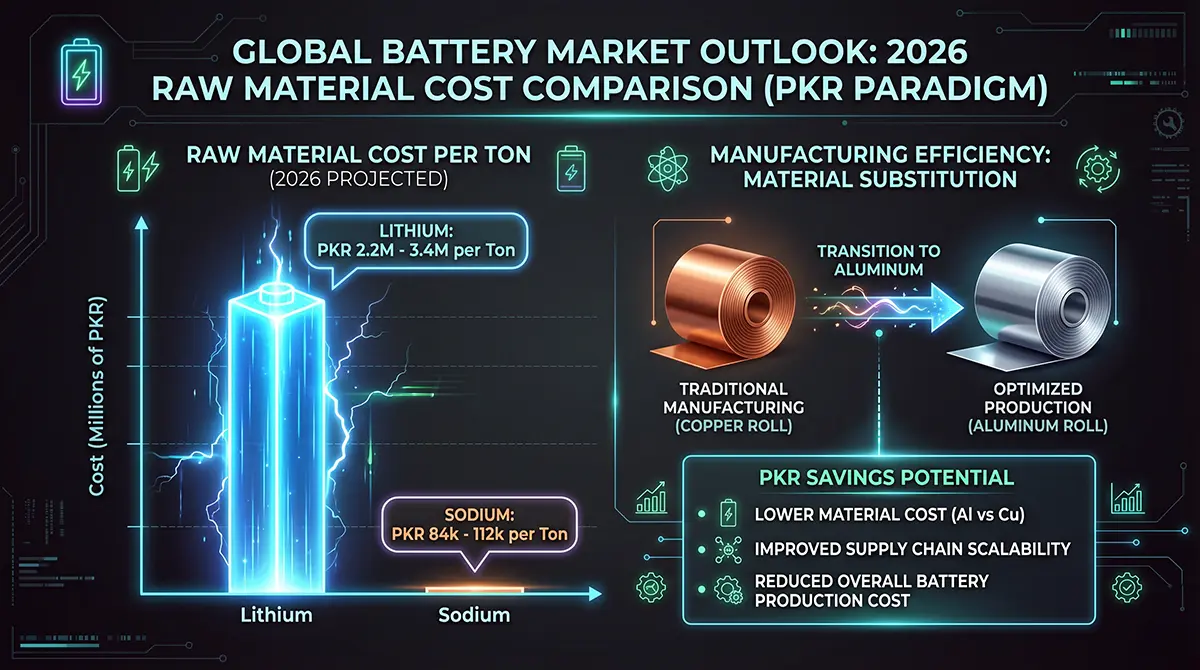
The economic proposition of sodium is undeniable. As a cheaper alternative to lithium, sodium fundamentally alters the baseline cost of production. In 2026, battery-grade sodium carbonate costs roughly $300 to $400 per ton. Conversely, lithium carbonate—even after market corrections—often hovers between $8,000 and $12,000 per ton. By replacing a scarce, expensive mineral with one that is virtually inexhaustible, manufacturers can insulate themselves from the extreme price shocks that have historically plagued the sector. At full commercial scale, sodium-ion cells are projected to be 20% to 40% cheaper to produce than their lithium counterparts.
Copper vs. Aluminum Current Collectors
Beyond the active chemicals, the internal hardware of the battery also drives down costs. In lithium-ion batteries, copper foil must be used for the anode current collector because lithium alloys with aluminum, which would destroy the battery. Sodium does not share this aggressive reaction with aluminum. Therefore, sodium-ion batteries can utilize cheap, lightweight aluminum foil for both the cathode and the anode. This single substitution strips significant cost and weight out of the manufacturing process, further cementing sodium’s status as a highly disruptive, cheaper alternative to lithium.
The Pakistani Context: Mining for the Future
When discussing the global EV battery supply chain, Pakistan rarely enters the conversation. However, the rise of sodium-ion technology presents a unique, untapped strategic advantage for the country.
Unlocking the Khewra Salt Mines Pakistan
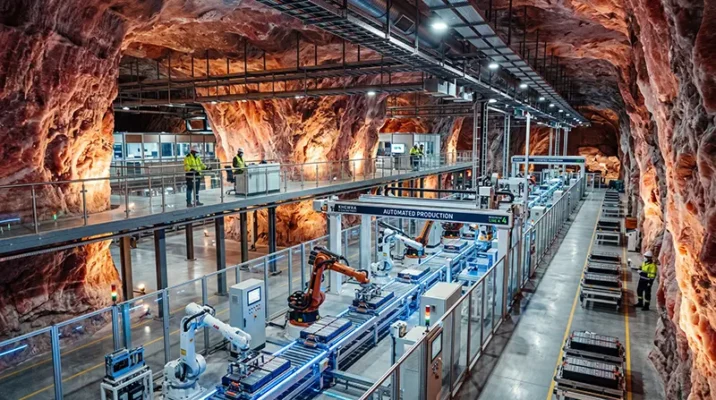
Pakistan is home to one of the largest and purest natural deposits of halite (rock salt) in the world: the Khewra salt mines Pakistan. Historically viewed merely as an agricultural or culinary export, these massive reserves of high-grade sodium chloride (NaCl) represent a sleeping giant in the context of advanced energy storage. Recent independent scientific studies, including thermoluminescence analyses of Khewra salt pellets, have proven the exceptional crystalline purity of these deposits. While refining culinary salt into high-grade battery materials requires dedicated chemical processing facilities, having an inexhaustible domestic source of the core raw material gives Pakistan a massive theoretical advantage in the new energy economy.
Developing a Resilient EV Battery Supply Chain
The current tech landscape in Pakistan—from the hardware hubs of Techno City in Karachi to Hafeez Center in Lahore—is heavily reliant on imported finished goods. By leveraging the Khewra salt mines Pakistan, there is an opportunity to move upstream. Localized battery manufacturing is not an overnight endeavor; it requires heavy capital expenditure, technology transfers, and stable energy policies. However, by establishing joint ventures with global battery leaders, Pakistan could theoretically pivot from an energy-importing nation to a key node in the regional EV battery supply chain. This would drastically lower the cost of domestic EVs, bypass lithium import tariffs, and create a robust new industrial sector.
Macro Applications: Grid Energy Storage 2026
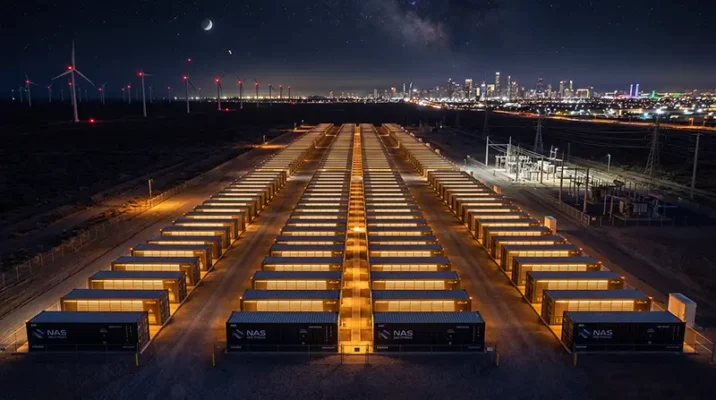
While cars capture the headlines, the most immediate and profound impact of sodium-ion technology is happening on the power grid.
Powering the AI and Data Center Boom
The explosion of generative AI and large-scale cloud computing has placed unprecedented strain on global power grids. Data centers require massive, reliable uninterruptible power supplies (UPS). Grid energy storage 2026 is being defined by the integration of sodium-ion batteries into these critical infrastructures. Because weight and physical size are not primary constraints for stationary storage facilities, sodium’s lower energy density is entirely irrelevant. Instead, its supreme safety profile, long cycle life, and low cost make it the perfect deep cycle battery alternative for tech giants scaling their AI infrastructure.
Synergies with Renewable Energy
Solar and wind power are intermittent; the wind doesn’t always blow, and the sun sets every evening. To stabilize a national grid reliant on renewables, massive energy storage parks are required. Utilizing lithium for these stationary parks is becoming economically unviable. Sodium-ion batteries are stepping in as the dominant force for grid energy storage 2026, acting as giant, cost-effective buffers that capture solar energy during the day and discharge it safely during peak evening hours.
Future Horizons: Two-Wheelers and Micro-Mobility
The immediate future of mobility in South Asia isn’t just about luxury electric sedans; it is about micromobility.
Transforming Urban Transit in Pakistan
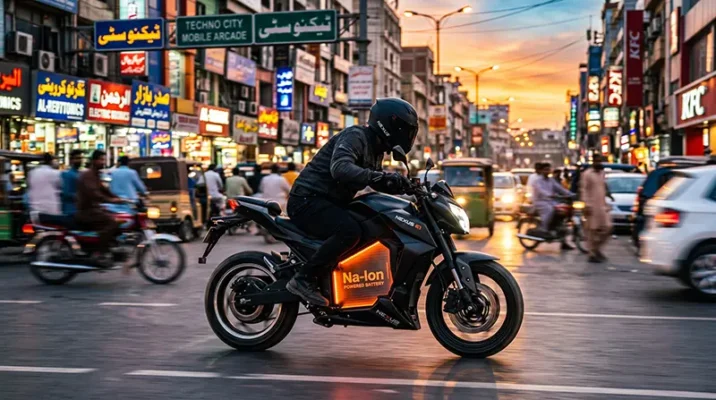
The two-wheeler EV market in Asia is exploding. Motorcycles and scooters are the lifeblood of urban transit in cities like Karachi, Lahore, and Islamabad. Because these vehicles are primarily used for short, daily commutes, they do not require massive, heavy, high-density lithium packs. Sodium-ion battery EVs in the two-wheeler segment provide the perfect balance: they are highly resistant to the intense summer heat, they won’t catch fire if damaged in a collision, and they can bring the purchase price of an electric motorcycle down to match, or even undercut, traditional petrol bikes. This segment will likely be the first place the average consumer interacts with sodium battery technology on a daily basis.
Quick Takeaways
- Cost Efficiency: Sodium-ion batteries are 20-40% cheaper to produce, serving as the ultimate cheaper alternative to lithium due to abundant raw materials and the use of aluminum instead of copper.
- Safety First: Sodium chemistry is highly stable, drastically reducing the risk of thermal runaway in EV batteries and making them safer for both vehicles and home storage.
- Temperature Resilience: Unlike lithium, sodium-ion cells maintain high performance in extreme cold (-40°C) and extreme heat (80°C).
- Strategic Local Potential: The Khewra salt mines Pakistan offer an incredibly pure, massive deposit of sodium, presenting a unique opportunity to localize the EV battery supply chain.
- Stationary Dominance: Because size and weight matter less for stationary applications, sodium is rapidly becoming the gold standard for grid energy storage 2026.
- Energy Density Realities: While lithium still wins on maximum range for luxury EVs (up to 250 Wh/kg), sodium’s current 175 Wh/kg is more than enough for urban EVs and electric motorcycles.
Conclusion
The sodium-ion vs lithium-ion paradigm shift of 2026 is not about one technology completely eradicating the other; it is about optimization. Lithium will continue to power high-end, long-range electric vehicles and ultra-thin consumer electronics where maximum energy density is non-negotiable. However, sodium-ion technology is stepping in to democratize the rest of the market. As a definitively cheaper alternative to lithium, it is paving the way for affordable urban commuting, safer two-wheelers, and massive, scalable grid energy storage 2026.
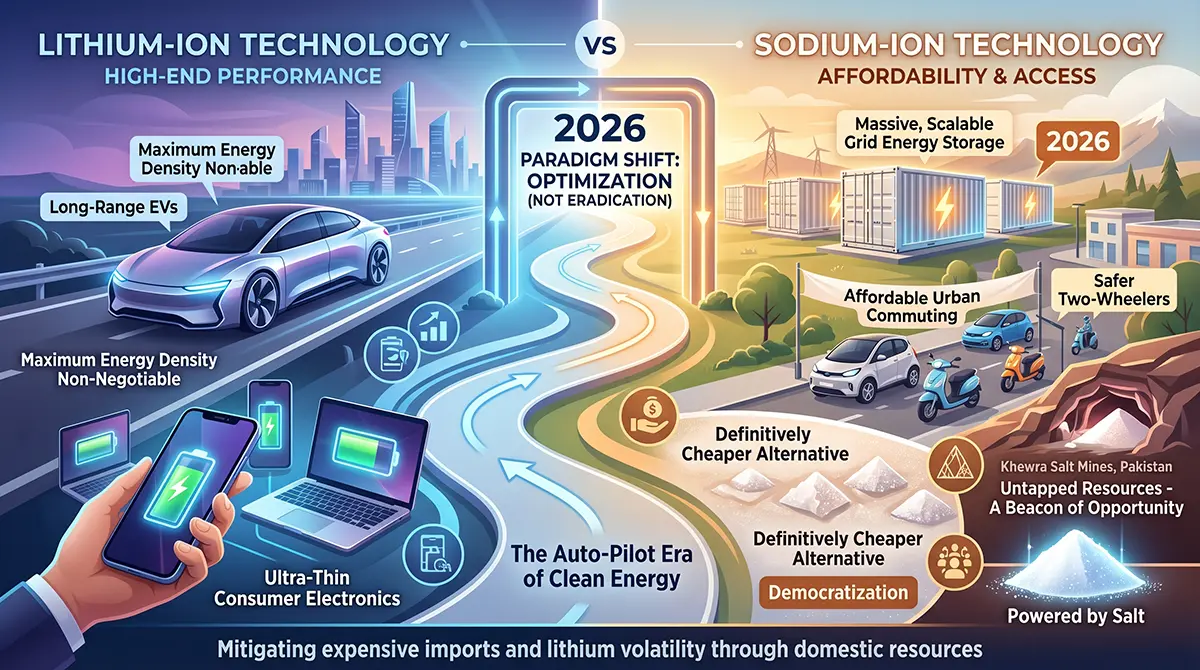
For a rapidly developing market like Pakistan, this shift is a beacon of opportunity. The reliance on expensive, imported fuel and highly volatile lithium markets can be mitigated by looking inward—potentially toward the vast, untapped resources of the Khewra salt mines Pakistan. By understanding and embracing these shifts in the global EV battery supply chain, tech professionals, policymakers, and consumers can better navigate the electric future. The auto-pilot era of clean energy is here, and it is powered by salt.
References
- PROPOW Energy (2025/2026). Are Sodium-Ion Batteries Cheaper Than Lithium Ion in 2026. Insights on raw material costs, aluminum vs. copper foil manufacturing savings, and cost parity projections.
- TYCORUN (2026). CATL Sodium-Ion Battery Explained: How It Compares to Lithium-Ion Technology. Specifications detailing CATL’s Naxtra EV battery achieving 175 Wh/kg energy density and its focus on commercial safety.
- EV Infrastructure News (2026). Sodium-ion vs lithium-ion batteries: the complete guide. Deep dive into the physicochemical properties of metal-ion batteries, atomic mass unit comparisons, and the challenges of graphite anode intercalation.
- CRU Group (2026). Sodium-ion battery technology gains traction in 2026. Analysis of the global supply chain, China’s dominance in Na-ion manufacturing, and the specific advantages of sodium in extreme cold temperatures.
- ResearchGate / Radiation and Environmental Biophysics (2021). Thermoluminescence study of pellets prepared using NaCl from Khewra Salt Mines in Pakistan. Scientific assessment proving the high structural purity and crystalline nature of naturally occurring salt from the Khewra deposits.
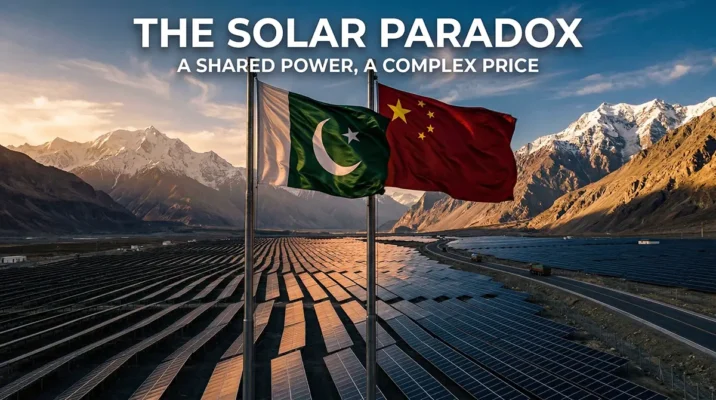
THE SOLAR PARADOX: China Powers Up the World, While Pakistan Pays the Price
Pakistan's solar boom is saving households but breaking the grid. Discover the hidden costs of cheap Chinese solar panels and what it means for your bills.
Mar
Frequently Asked Questions (FAQs)
Yes. In 2026, the raw material cost for sodium is roughly $300-$400 per ton, compared to $8,000+ for lithium. Combined with the use of cheaper aluminum current collectors instead of copper, overall manufacturing costs are 20-40% lower.
While global giants like BYD and CATL have launched mass-produced sodium-ion cars in 2026, widespread availability in Pakistan will likely begin with two-wheelers (electric motorcycles and scooters) before expanding to fully imported passenger cars.
Sodium-ion batteries use sodium as their primary active material. Khewra is one of the world’s largest and purest natural deposits of sodium chloride. With the right refining infrastructure, it could provide a massive domestic raw material advantage for the EV battery supply chain.
Lithium-ion batteries still hold the lead, offering 150-250 Wh/kg, which is ideal for long-range driving. However, modern sodium-ion batteries are now reaching up to 175 Wh/kg, which is excellent for daily city driving, micromobility, and grid storage.
Stationary battery parks do not need to be lightweight or compact. Therefore, sodium’s lower energy density is not a disadvantage. Its supreme safety profile (low fire risk), excellent temperature tolerance, and low cost make it the superior choice for backing up solar and wind grids.
Join the Conversation!
What are your thoughts on the future of electric mobility in Pakistan? Do you think we can leverage our natural resources to become a key player in the global EV battery supply chain, or will we remain reliant on imports? Drop your thoughts in the comments below and share this article with your network to keep the tech community informed!
