

News
THE SOLAR PARADOX: China Powers Up the World, While Pakistan Pays the Price

Mar
If you live in Pakistan, opening your monthly electricity bill has likely become a source of profound anxiety. With tariffs surging by an eye-watering 155% over the past three years, finding a way out of the grid’s financial stranglehold is no longer a luxury—it is a necessity for survival. Enter the “Solar Rush.” Across the nation, from sprawling industrial rooftops in Karachi to rural homes in Punjab, Pakistanis are taking their energy needs into their own hands.
This transformation is largely powered by China. Thanks to a massive influx of hyper-affordable Chinese solar panels, Pakistan has quietly become one of the fastest-growing solar markets in the world, importing a staggering 39 to 50 gigawatts (GW) of solar capacity over the last five years. But this green revolution hides a complex economic reality.
Welcome to THE SOLAR PARADOX: China Powers Up the World, While Pakistan Pays the Price. In this comprehensive guide, we will unpack how this people-led energy transition is saving households but fracturing the national grid, the upfront investment hurdles you face, and what the future holds for solar panels in Pakistan.
Introduction: The People-Led “Solar Rush” in Pakistan
The narrative of renewable energy globally is often one of government mandates, climate accords, and massive state-sponsored utility farms. Pakistan’s story is entirely different. The country’s pivot to solar energy solutions is a grassroots rebellion against an unsustainable energy ecosystem.
Driven by necessity rather than environmental altruism, Pakistani citizens and business owners have transformed themselves from helpless consumers into empowered “prosumers” (producers and consumers of energy). Homes that used to face 10 to 18 hours of load-shedding now boast turnkey solar installations. Young professionals are saving up to buy photovoltaic (PV) kits instead of cars. Even charitable organizations are offering micro-loans for off-grid setups.
This decentralization is historic. According to recent reports, over 95% of Pakistan’s imported solar panels come directly from China, making Pakistan the third-largest buyer of Chinese solar technology globally in recent years. But as we celebrate the democratization of power, we must also examine the systemic shockwaves this transition is sending through Pakistan’s fragile economy.
Why is Pakistan Pivoting to Solar Energy?
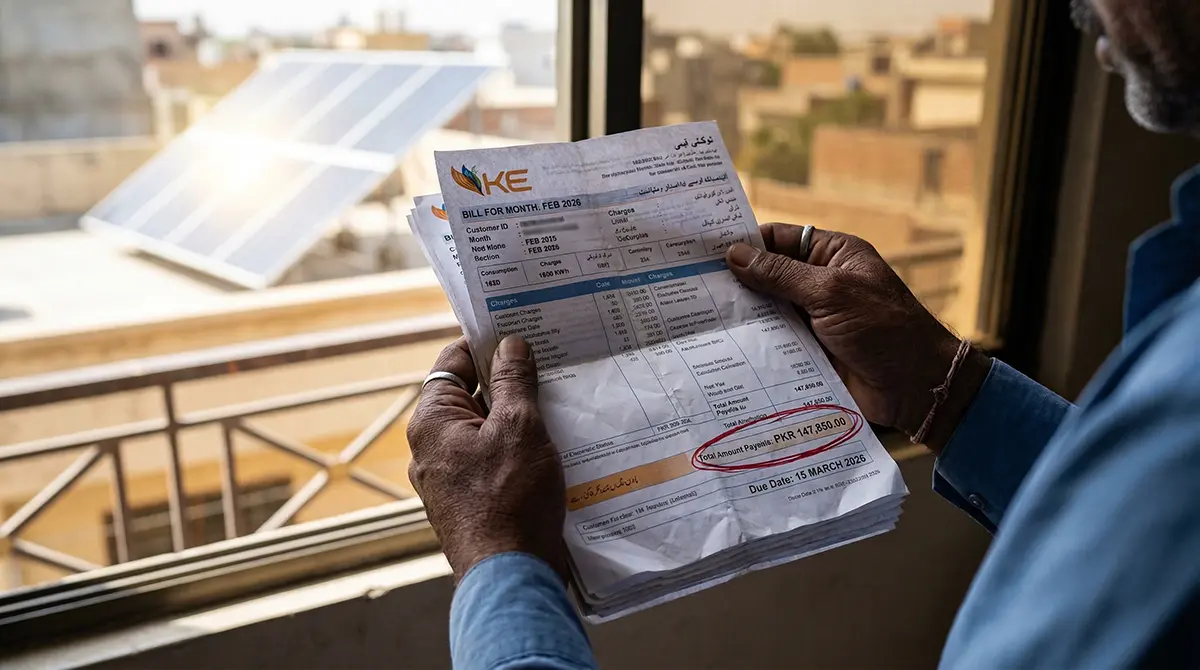
To understand the scale of this solar boom, we must look at the push factors driving ordinary Pakistanis to make substantial investments in a technology they knew little about just a decade ago.
Crippling Electricity Bills and Soaring Tariffs
The primary catalyst for the renewable energy transition in Pakistan is purely financial. The cost of grid electricity has reached untenable levels for both the middle class and industrial sectors. With base tariffs, fuel price adjustments, and cascading taxes, paying the utility bill often consumes a disproportionate percentage of a household’s monthly income.
The economics of solar, conversely, have never looked better. Global solar module prices have plummeted to historically low levels—dropping to around $0.07 to $0.09 per watt by early 2025. Because of this steep decline, a typical residential solar installation in Pakistan can now break even in just two to four years. After that period, the electricity generated is essentially free, providing immense financial relief and a hedge against future tariff hikes.
The Menace of Load-Shedding and Grid Unreliability
Beyond the sheer cost of electricity, there is the issue of availability. Despite having an installed national generation capacity of around 46 GW, circular debt, fuel shortages, and transmission bottlenecks mean that the grid frequently fails to deliver.
Load-shedding solutions have evolved. In the past, Pakistanis relied on noisy, fuel-guzzling generators or basic UPS systems with lead-acid batteries. Today, a hybrid solar system offers seamless, quiet, and continuous power. For businesses, this uninterrupted power supply is the difference between fulfilling orders and shutting down operations entirely. The desire for energy independence is a powerful motivator, driving the rapid adoption of solar energy solutions across the nation.
The Chinese Connection: Fueling Pakistan’s Solar Boom
You cannot talk about solar in Pakistan without talking about China. The symbiotic—and sometimes contradictory—relationship between the two nations is the engine of this energy revolution.
A Flood of Affordable Chinese Solar Panels
China dominates the global solar supply chain, controlling over 80% of global solar manufacturing capacity. Backed by over $50 billion in investments and economies of scale, Chinese manufacturers like LONGi, Jinko, and Huawei (for inverters) have saturated the global market with high-quality, low-cost equipment.
While Western economies have imposed steep tariffs to block Chinese clean technology, Pakistan has historically maintained a more open trade policy for these goods to combat its own energy crisis. In 2024 alone, Pakistan imported around 15 to 17 GW of solar panels, costing billions of dollars. This sheer volume is enough to exceed a large portion of Pakistan’s actual operational grid demand. This flood of hardware has made tier-1 Chinese solar panels accessible to the average local installer in Lahore, Karachi, or Peshawar.
From Real Estate to Renewables: A Lucrative Market
An interesting, unique insight into Pakistan’s solar boom is how it has reshaped local domestic investment. For decades, the default investment vehicle for Pakistanis with capital was real estate—buying plots and holding them. However, as the property market stagnated due to heavy taxation and economic cooling, capital rapidly pivoted.
The solar import and installation market became the new gold rush. Traders, stockers, and middle-men redirected their funds into importing solar modules. The Pakistan Solar Association now boasts hundreds of corporate members, alongside tens of thousands of freelance installers. This fierce local competition has driven down installation margins, ultimately benefiting the end-consumer and accelerating the pace of adoption.
The Core of the Solar Paradox: Who Actually Pays the Price?
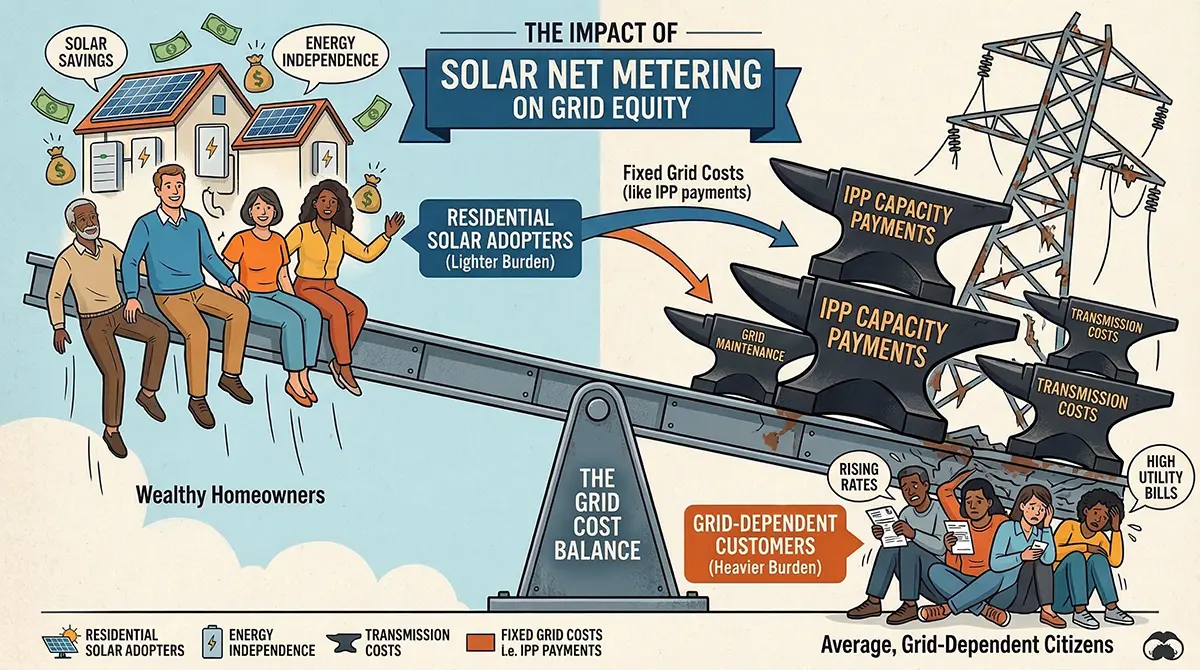
Here lies the crux of the issue. While individual homeowners and factory bosses are achieving energy independence, the collective national structure is buckling. This is the “Solar Paradox.”
The Vicious Cycle of IPP Capacity Payments
Pakistan’s power sector is built on contracts with Independent Power Producers (IPPs). These contracts often include “capacity payments”—agreements where the government must pay the IPPs for their capacity to generate power, regardless of whether that power is actually purchased or used by the grid.
As affluent households and large industries install massive prosumer facilities and rely on the net metering policy to offset their usage, overall demand from the national grid plummets. In recent times, grid electricity demand dropped by over 10%. However, the capacity payments remain fixed. Between 2019 and 2023, Pakistan paid a staggering 6 trillion rupees ($21.5 billion) in capacity payments. With fewer units of electricity being sold to cover these massive fixed costs, the per-unit price of grid electricity must go up.
The Plight of the Grid-Dependent Lower Class
This creates a devastating wealth divide. The middle and upper classes, who have the capital to invest in a 10kW or 20kW solar system, effectively exit the system. They stop subsidizing the grid. The burden of the ballooning IPP capacity payments is then shifted onto the lower-income demographic—those who live in rented homes, apartments without roof access, or simply cannot afford the upfront capital for solar. They are trapped, forced to pay exponentially higher grid electricity costs for a failing system.
The Foreign Exchange Drain
Furthermore, Pakistan “pays the price” on a macroeconomic level. While solar panels save money for the citizen, the country spent over $2.1 billion in a single year importing these panels. For a nation chronically struggling with foreign exchange reserves and tethered to IMF bailout programs, this massive outflow of US dollars puts immense pressure on the rupee and the national exchequer.
The Hidden Downsides: Initial Hurdles and Policy Risks
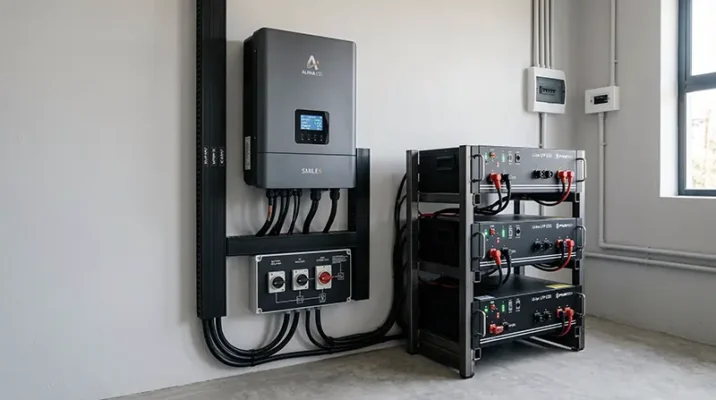
While the marketing around solar often sounds like a utopian dream, making the switch involves navigating substantial hurdles and accepting certain risks.
The Steep Upfront Investment and Battery Costs
The price of the solar panels themselves has dropped by 90% over the last decade. However, panels only make up a fraction of a functional off-grid solar system or hybrid setup. The real bottleneck is the balance of system: the mounting structures, the pure copper wiring, the sophisticated hybrid inverters, and most crucially, energy storage.
Because load-shedding is rampant and solar panels don’t produce power at night, users must invest in batteries. Traditional tubular lead-acid batteries are cheaper but degrade quickly, often requiring replacement within two years. Modern lithium-ion batteries offer a 10-year lifespan and deep discharge capabilities, but they require a massive upfront capital outlay. For a standard 5kW system, a good lithium battery setup can easily double the total cost of solar installation.
Policy Instability and the Threat of Solar Taxes
The regulatory environment in Pakistan is notoriously volatile. The government, alarmed by dropping grid revenues, has frequently toyed with policies that threaten solar economics.
There have been persistent rumors and proposals to impose fixed taxes on solar capacity, reduce the buy-back rates for the net metering policy, or slap heavy sales taxes (like the proposed 18% tax in recent budgets) on imported equipment. While public uproar often forces the government to back down, this policy instability makes long-term ROI calculations risky. Consumers live in fear that the government will change the rules of the game just after they have emptied their savings to install a system.
The Stranded Asset Dilemma: Solar vs. Coal
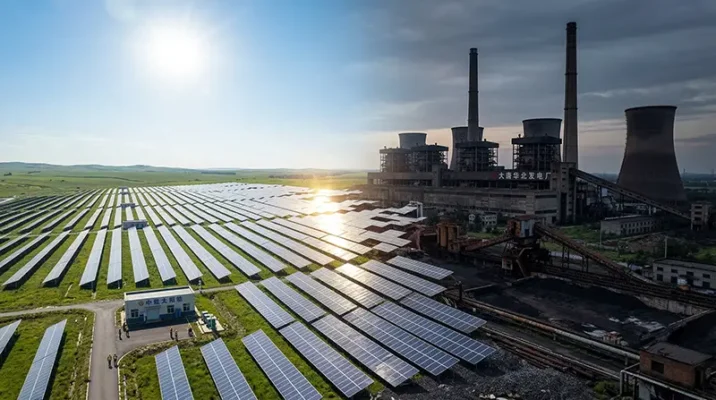
One of the most profound ironies of Pakistan’s current energy landscape is the direct conflict between two different Chinese exports.
When China’s Solar Panels Outcompete China’s Power Plants
Under the China-Pakistan Economic Corridor (CPEC), Beijing financed billions of dollars worth of centralized, coal-fired power plants to help solve Pakistan’s energy crises of the 2010s. These massive infrastructure projects were designed to be the anchor of Pakistan’s energy security for decades.
Today, the flood of cheap Chinese solar panels has made those very coal plants redundant. As decentralized solar slashes grid demand, the utilization of these legacy fossil-fuel plants has plummeted—falling to as low as 4% in some projects by 2024. China is essentially cannibalizing its own investments in Pakistan. The solar panels manufactured in Shenzhen and Jiangsu are outcompeting the coal plants financed by Beijing and built in Sindh and Punjab. Pakistan is now ground zero for this global experiment in energy disruption, stuck paying the bill for stranded coal assets while simultaneously importing the renewable technology that killed them.
Paving the Way Forward: Can Pakistan Manufacture Its Own Future?
If Pakistan is to survive the Solar Paradox, it cannot simply remain a passive importer of technology. It must evolve its strategy to retain wealth and modernize its infrastructure.
The Push for Local Solar Panel Assembly and Manufacturing
To stem the bleeding of foreign exchange, the government is desperately trying to incentivize local manufacturing. There are promising signs: Chinese conglomerates, such as Hebei Juhang Energy Technology Group, are in talks with Pakistan’s Board of Investment to establish large-scale solar module imports substitutes via local manufacturing plants.
The goal is to provide special economic zones and tax holidays to transition Pakistan from just importing finished panels to assembling them locally, and eventually manufacturing the raw cells. However, experts warn that Pakistan must focus on “investable” steps—starting with framing and assembly—rather than trying to build the entire complex supply chain overnight. Policy consistency will be the absolute baseline requirement to attract this tier of foreign direct investment.
Grid Modernization: Evolving from Consumers to “Prosumers”
The state-run grid cannot survive by simply punishing solar users. It must adapt to the new reality. This means investing heavily in smart grid technologies that can handle bidirectional energy flow from millions of distributed prosumer facilities.
Furthermore, the government needs to renegotiate the disastrous IPP contracts to reduce capacity payments, transition the grid into a smart distribution network, and incentivize utility-scale battery storage. If managed correctly, the grid of the future won’t be a monolith generating power, but a dynamic marketplace routing power between millions of independent solar roofs.
Quick Takeaways: The Solar Landscape in Pakistan
- Massive Adoption: Pakistan imported roughly 39-50 GW of solar panels in the last 5 years, almost entirely from China.
- Driven by Desperation: A 155% increase in electricity tariffs and chronic load-shedding have forced citizens to adopt solar energy solutions.
- The Price Drop: Chinese solar module prices have crashed to below $0.10 per watt, making ROI achievable in 2-4 years.
- The Paradox: As rich consumers leave the grid, grid demand drops (by ~10%), forcing the government to hike prices for the poorer, grid-dependent population to cover fixed IPP capacity payments.
- Hidden Costs: While panels are cheap, the required lithium-ion batteries and hybrid inverters make the initial capital hurdle very steep.
- Stranded Assets: Cheap Chinese solar is actively making expensive Chinese-financed coal plants in Pakistan financially unviable.
Conclusion: Balancing the Scales of the Solar Paradox
The energy transition happening right now on the rooftops of Karachi, Lahore, and Islamabad is nothing short of a quiet revolution. Out of sheer necessity, the Pakistani people are dismantling a broken, centralized utility model and replacing it with decentralized, renewable power. It is a testament to resilience.
However, the Solar Paradox remains a stark reality. While China powers up the individual Pakistani home, the macroeconomic toll on the nation’s grid, foreign exchange reserves, and lower-class citizens is severe. The way out is not to tax solar into oblivion, but to embrace it strategically. Pakistan must aggressively pursue local manufacturing to retain capital, modernize its failing grid to handle smart distribution, and urgently restructure its IPP debts.
If you are considering making the switch, the math is overwhelmingly in your favor—provided you can stomach the initial investment and potential policy turbulence. Solar is no longer the future of Pakistan; it is the immediate, glaring present.
References
THE $1.2 BILLION PING: Why Accenture Just Bought Speedtest and Downdetector
Accenture just bought Speedtest and Downdetector for $1.2 billion. Discover why this massive tech deal matters for AI, 5G, and internet users in Pakistan.
Mar
Nvidia 6G AI: The Blueprint for a Physical AI World
Discover how Nvidia 6G AI and global telecom giants are building an AI-native 6G network for Physical AI. Learn what this tech revolution means for Pakistan.
Mar
Frequently Asked Questions (FAQs)
Yes. Tier-1 Chinese solar panels (from brands like LONGi, Jinko, and Canadian Solar—which manufactures heavily in China) are built to international standards and perform exceptionally well in Pakistan’s high-irradiance climate. They usually come with 12 to 15-year product warranties and 25-year performance warranties.
The net metering policy allows users with a three-phase connection to sell excess electricity generated by their solar panels back to the national grid. This exported energy is credited against the units consumed from the grid during the night, drastically reducing or even resulting in negative monthly electricity bills.
While the per-watt price of panels has plummeted, the overall cost of solar installation remains high due to the “balance of system.” High-quality hybrid inverters, pure copper wiring, mounting structures, and crucially, energy storage solutions like lithium-ion batteries make up the bulk of the upfront cost.
This is due to IPP capacity payments. The government must pay power plants a fixed fee regardless of usage. As solar users pull less power from the grid, the total grid electricity demand drops. To cover those massive fixed costs, the government raises the per-unit grid electricity costs for those still dependent on it.
Yes, but it requires a substantial investment. To run heavy loads like ACs on an off-grid solar system during load-shedding or at night, you need a high-capacity hybrid inverter (e.g., 10kW or more) and a large bank of lithium-ion batteries, which significantly increases your initial capital requirement.
Are you planning to install a solar system this year, or are you waiting for battery prices to drop further? Let me know how the electricity crisis is impacting your household!
Enjoyed this deep dive into Pakistan’s solar revolution? Share this article with friends and family who are on the fence about going solar! Drop your thoughts in the comments—what has been your experience with solar installers in your city?
