

News
THE $1.2 BILLION PING: Why Accenture Just Bought Speedtest and Downdetector

Mar
Have you ever experienced that frustrating moment right here in Pakistan when your WhatsApp messages refuse to send, or your YouTube video endlessly buffers just as the match gets interesting? If you’re like most of us, your immediate reflex is to open the Speedtest app to check your Nayatel, PTCL, or Zong connection, or you browse Downdetector to see if the whole country is facing an internet outage. These platforms are essentially the internet’s pulse. Now, imagine putting a price tag on that pulse. That’s exactly what the global IT consulting giant Accenture just did.
In a massive, unexpected move that shook the tech world, Accenture agreed to acquire Ziff Davis’s Connectivity division—the parent company of Ookla, Speedtest, and Downdetector—for a staggering $1.2 billion in cash. But why would an enterprise-focused behemoth drop over a billion dollars on consumer apps we use for free? The answer lies deep within the ongoing AI revolution, the expansion of 5G networks, and the desperate need for enterprise network intelligence. In this article, we’ll dive into the details of this monumental tech acquisition, exploring what it means for the global tech landscape and how it specifically impacts tech-savvy users and telecom infrastructure right here in Pakistan.
What Exactly Did Accenture Buy?
When we talk about the Accenture Ookla acquisition, it’s easy to focus solely on the apps sitting on our smartphone home screens. However, Accenture bought an entire ecosystem of network intelligence services that measure how the digital world operates in real time.
The Companies Behind the $1.2 Billion Price Tag
Ziff Davis’s Connectivity division wasn’t just a two-trick pony. This $1.2 billion deal transferred an entire portfolio of highly specialized data analytics and monitoring brands to Accenture.
Ookla and Speedtest: The World’s Internet Barometer
Since 2006, Ookla’s Speedtest has been the gold standard for internet performance measurements. Processing hundreds of millions of consumer-initiated tests every single month, Speedtest logs thousands of unique data attributes per test. It isn’t just checking how fast you can download a file; it is mapping the global quality of service (QoS) and radio frequency (RF) signal data. For Pakistani users constantly debating whether Nayatel, PTCL, or Transworld offers the best fiber connection, Speedtest is the ultimate, objective referee.
Downdetector: The Pulse of the Internet

While Speedtest measures capacity and speed, the Downdetector outage tracker measures reliability. By crowdsourcing user reports and tracking social media sentiment, Downdetector identifies service incidents faster than many companies can detect them internally. When Instagram, Facebook, or a major local banking app goes down, Downdetector is where millions of users flock.
Additionally, the deal included RootMetrics (a pioneer in mobile network testing and analytics) and Ekahau (specialized hardware and software used to design and troubleshoot enterprise Wi-Fi networks).
Why Did an IT Consulting Giant Buy Consumer Apps?
Accenture doesn’t build apps for regular consumers; they consult for the Fortune 500, major telecom operators in Pakistan and globally, and massive cloud providers. So, what is the strategic play here?
The AI Connection: Data is the New Oil
We are deep into the era of AI-based transformation. As artificial intelligence scales, the underlying infrastructure needs to be absolutely flawless. Modern networks have evolved from simple infrastructure into “business-critical platforms.” AI systems require low-latency, zero-friction connectivity to function.
To train AI models, run edge data centers, and ensure predictive algorithms work in real-time, enterprises need flawless network data. The Speedtest app data provides the ultimate training ground. By acquiring Ookla, Accenture isn’t just getting an app; they are buying the world’s largest, crowdsourced sensor network. They now have access to real-time data from billions of devices worldwide, which can be used to enhance fraud prevention in banking, optimize smart home analytics, and streamline traffic in retail environments.
Enterprise Optimization for CSPs and Hyperscalers
Communications Service Providers (CSPs) and hyperscalers (like Amazon Web Services, Google Cloud, and Microsoft Azure) are in a constant race to optimize their digital core operations. Accenture will integrate Ookla’s competitive benchmarking and customer experience analytics to help these giants design and troubleshoot mission-critical Wi-Fi and 5G networks. Instead of guessing where a network is failing, Accenture can now sell these hyperscalers exact, granular data highlighting dead zones and latency bottlenecks.
Unique Insight: Think of this acquisition not as buying software, but as buying a global nervous system. While telecom companies know what is happening inside their own networks, Ookla and Downdetector tell them what the end-user is actually experiencing. Accenture is closing the gap between internal network metrics and real-world human experience.
What This Means for Pakistani Tech Enthusiasts and Everyday Users
Pakistan is undergoing a rapid digital evolution. With millions of new mobile broadband subscribers added yearly and continuous investments by local telcos like Jazz, Zong, Ufone, and PTCL, network reliability is a hot topic.
Will Speedtest and Downdetector Change?
For the everyday user in Lahore or Karachi, the core functionality of Speedtest and Downdetector will likely remain free and unchanged. Accenture has no incentive to put the consumer-facing apps behind a paywall, because the sheer volume of crowdsourced data is what makes the enterprise product valuable. Without millions of free users constantly testing their connections, the data pool dries up.
The Role of 5G and Digital Infrastructure in Pakistan

As Pakistan inches closer to broader 5G rollouts, enterprise AI infrastructure will become a critical talking point for local businesses. Telecommunication providers in Pakistan already rely heavily on Ookla’s awards and benchmarking to market their services (you’ve likely seen the “Pakistan’s #1 Data Network by Ookla” billboards and social media ads). With Accenture stepping in, the consulting firm could offer Pakistani telcos much deeper, AI-driven predictive simulations to plan their capital expenditure. They can use RootMetrics and Ekahau to optimally place 5G towers in dense urban centers like Karachi, ensuring maximum coverage with minimal infrastructure waste.
The Financials: Was Ookla Worth $1.2 Billion?
Dropping $1.2 billion in cash is a massive flex, even for a company that brings in billions in revenue. But a closer look at the Ziff Davis Connectivity division reveals a highly lucrative asset.
Breaking Down Ziff Davis’s Connectivity Division Revenue

In recent years, Ziff Davis’s Connectivity division generated upwards of $230 million in annual revenue. This accounted for roughly 16% of Ziff Davis’s total sales. By paying $1.2 billion, Accenture paid a multiple of about 5x revenue—a very healthy, standard valuation for a high-margin, data-heavy tech asset. Ziff Davis originally bought Ookla for just $15 million back in 2014, making this an incredible return on investment fueled by the global pandemic’s bandwidth surge and the worldwide 5G rollout.
The Shift from Media to Deep Tech
For Ziff Davis, selling off its connectivity assets allows them to refocus on their core digital media properties like IGN and Mashable. For Accenture, this fits perfectly into a broader aggressive acquisition strategy. They are buying up assets that give them a competitive moat in the AI and deep tech spaces, ensuring they remain the go-to consultants for the world’s largest digital transformations.
The Future of Network Intelligence
Where does the industry go from here? The integration of these tools into a single, unified service offering represents a paradigm shift in IT consulting.
Integrating Ekahau and RootMetrics into Accenture’s Ecosystem
Accenture’s leadership noted that Speedtest and RootMetrics define the experience; Downdetector identifies incidents faster; and Ekahau drives digital workplace transformation. In a world moving towards “agentic access”—where AI agents act on our behalf—connectivity cannot drop for even a millisecond. Ekahau will allow Accenture to walk into a massive corporate office in Islamabad or a sprawling warehouse in Faisalabad and flawlessly map private 5G and Wi-Fi networks to support robotics and autonomous systems.
A Unique Perspective: Crowdsourced Data as a Global Sensor Network
Most analysts view this deal as an enterprise software play. However, the most profound implication is the monetization of human frustration. Every time you get annoyed that Netflix isn’t loading and hit “Go” on the Speedtest app, you are functioning as an unpaid field researcher for Accenture. You are feeding their AI models with localized, hyper-specific network intelligence services data. Under Accenture, this consumer data engine transforms into a real-time, global sensor network. They aren’t just measuring the internet; they are selling the very weather map of the digital world to the highest corporate bidders.
Quick Takeaways
- The Deal: Accenture acquired Ziff Davis’s Connectivity division (Speedtest, Downdetector, RootMetrics, Ekahau) for $1.2 billion in cash.
- The Goal: To build end-to-end network intelligence services essential for AI-based transformation and enterprise cloud optimization.
- The Value: The acquired division generated hundreds of millions in revenue, proving its massive profitability and high-margin data model.
- For Consumers: The apps will remain free, as consumer testing is the engine that generates the valuable enterprise data.
- For Pakistan: Local telcos and enterprises will likely benefit from advanced predictive analytics for upcoming 5G and cloud infrastructure rollouts.
Conclusion: The Era of Agentic Connectivity
THE $1.2 BILLION PING—Accenture’s acquisition of Speedtest and Downdetector—is much more than a corporate reshuffling of popular smartphone apps; it is a clear indicator of where the tech industry is heading. As artificial intelligence scales from localized software to vast, interconnected networks of autonomous agents, the physical infrastructure of the internet—the mission-critical Wi-Fi and 5G networks—becomes the ultimate bottleneck.
Accenture recognized that to lead in AI consulting, they needed to own the data that measures network performance. For tech enthusiasts and everyday users in Pakistan, this deal highlights the hidden value in our daily digital interactions. Our collective clicks, speed tests, and outage reports are the foundation upon which the future of global enterprise AI is being built. As connectivity evolves into a zero-friction necessity, platforms like Ookla will dictate how the world’s biggest companies build, fix, and optimize the digital spaces we all live in.
References
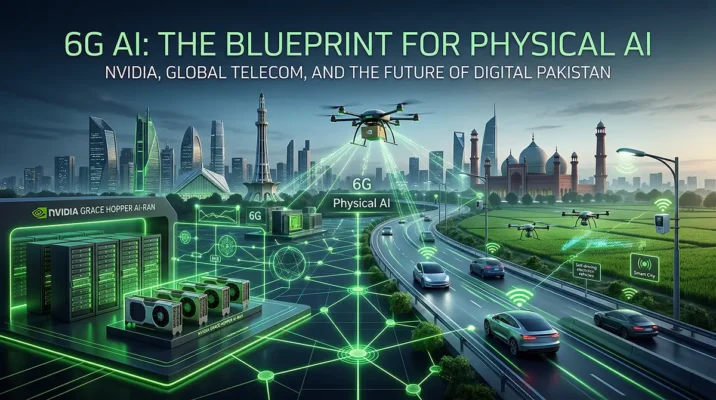
Nvidia 6G AI: The Blueprint for a Physical AI World
Discover how Nvidia 6G AI and global telecom giants are building an AI-native 6G network for Physical AI. Learn what this tech revolution means for Pakistan.
Mar
Frequently Asked Questions (FAQs)
Accenture bought Ookla and its sister brands to access vast amounts of network intelligence services data. This data helps their enterprise clients, such as hyperscalers and telecom providers, optimize their digital infrastructure for AI and cloud computing.
No, the consumer-facing apps are highly likely to remain free. The crowdsourced Speedtest app data generated by millions of free users is exactly what makes the platform valuable to Accenture’s enterprise clients.
Downdetector relies on crowdsourced reporting to identify internet service issues long before internal company alerts do. Accenture will use this incident detection data to help global enterprises react to, troubleshoot, and resolve infrastructure outages much faster.
Pakistani telecom companies heavily utilize Ookla data to benchmark their services against competitors. With Accenture’s involvement, local telcos like Jazz, Zong, and PTCL may gain access to far more sophisticated, AI-driven predictive modeling to optimize network routing and plan their 5G expansions.
It was a specific portfolio of tech brands owned by the media company Ziff Davis. It included internet and mobile network testing tools like Ookla, Speedtest, Downdetector, RootMetrics, and Ekahau, all of which measure and analyze global connectivity.
We’d Love to Hear From You! 🇵🇰
Are you surprised that the app you use to check your Nayatel or Jazz internet speed is worth $1.2 billion? How often do you find yourself relying on Downdetector when an app crashes?
Drop your thoughts in the comments below and share this article with your tech-savvy friends on WhatsApp and LinkedIn! Question for you: Do you think crowdsourced data is the best way to measure a country’s true internet performance, or should the PTA rely more on internal infrastructure metrics?
