

Mar
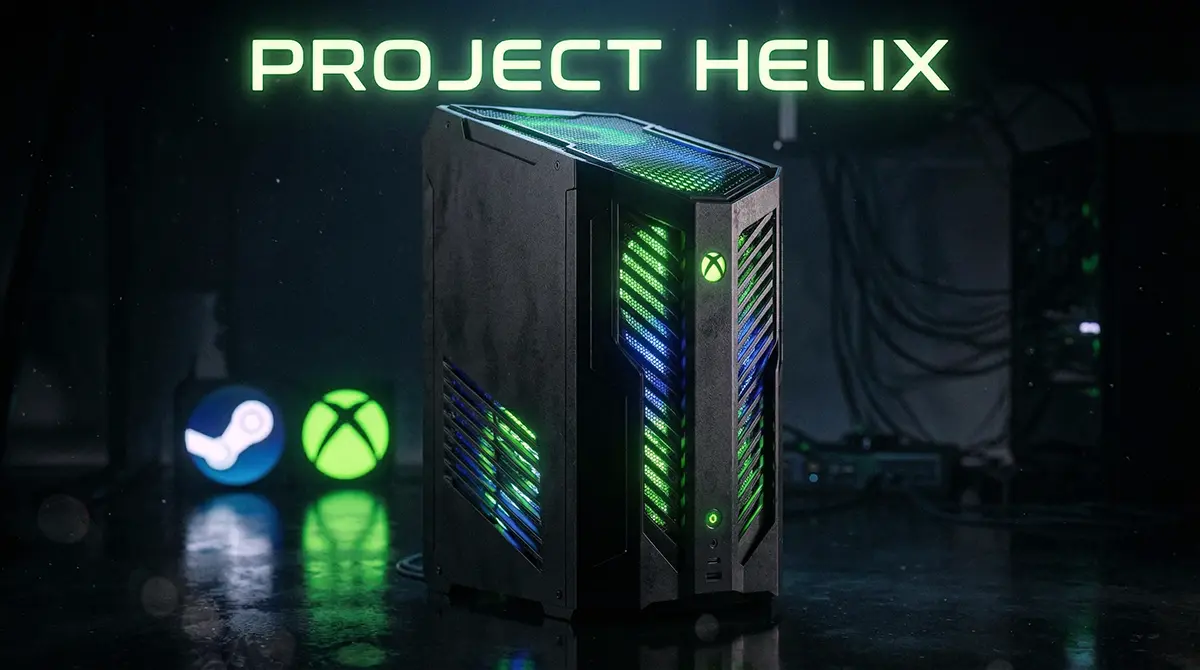
For decades, the line between console gaming and PC gaming was drawn in permanent marker. You either bought a box that sat under your TV for plug-and-play simplicity, or you spent hours researching motherboards and airflow to build a high-end gaming PC. But the gaming landscape is shifting beneath our feet. Following the recent appointment of new Microsoft Gaming CEO Asha Sharma, the curtain has been pulled back on Project Helix, the codename for the next-generation Xbox. And it’s hiding a massive secret: it’s not just a console. It’s essentially a high-end gaming PC packed into a living room-friendly chassis.
If you are a tech enthusiast or gamer in Pakistan, where hardware prices are a constant topic of debate, this shift is monumental. We are looking at a future where the traditional “native console” is dead, replaced by a hybrid beast designed to play both Xbox and PC games natively. Let’s dive deep into what Microsoft’s Project Helix actually is, what the leaked specs tell us about its power, and why this might be the most disruptive hardware launch in gaming history.
The Big Reveal: What Exactly is Project Helix?
In early March 2026, the gaming industry received a jolt. Microsoft officially confirmed the existence of their next-generation hardware, codenamed Project Helix. This wasn’t just a routine tease; it was a declaration of a totally new hardware philosophy.
Asha Sharma’s Game-Changing Announcement
Taking over after the retirement of Phil Spencer, new Xbox CEO Asha Sharma didn’t waste any time making her mark. In a social media post following a Team Xbox meeting, Sharma confirmed that Project Helix will “lead in performance and play your Xbox and PC games.” The logo—a double helix forming an X—was also revealed, symbolizing the merging of the console and PC gaming worlds. This confirms years of speculation that Microsoft wanted to break down the walled garden of traditional console ecosystems.
A Shift in Leadership, A Shift in Hardware
This pivot makes perfect sense when you look at Microsoft’s broader strategy over the last few years. The Xbox Play Anywhere initiative and the massive push behind Game Pass were just the groundwork. Microsoft recognized that competing purely on exclusive console titles against Sony was a grinding, uphill battle. Instead of just building a better Xbox, they decided to build a closed-box PC that leverages the entire Windows gaming ecosystem. Project Helix is the physical manifestation of a strategy designed to offer a high-end gaming PC alternative to the masses.
Under the Hood: The Leaked Project Helix Specs
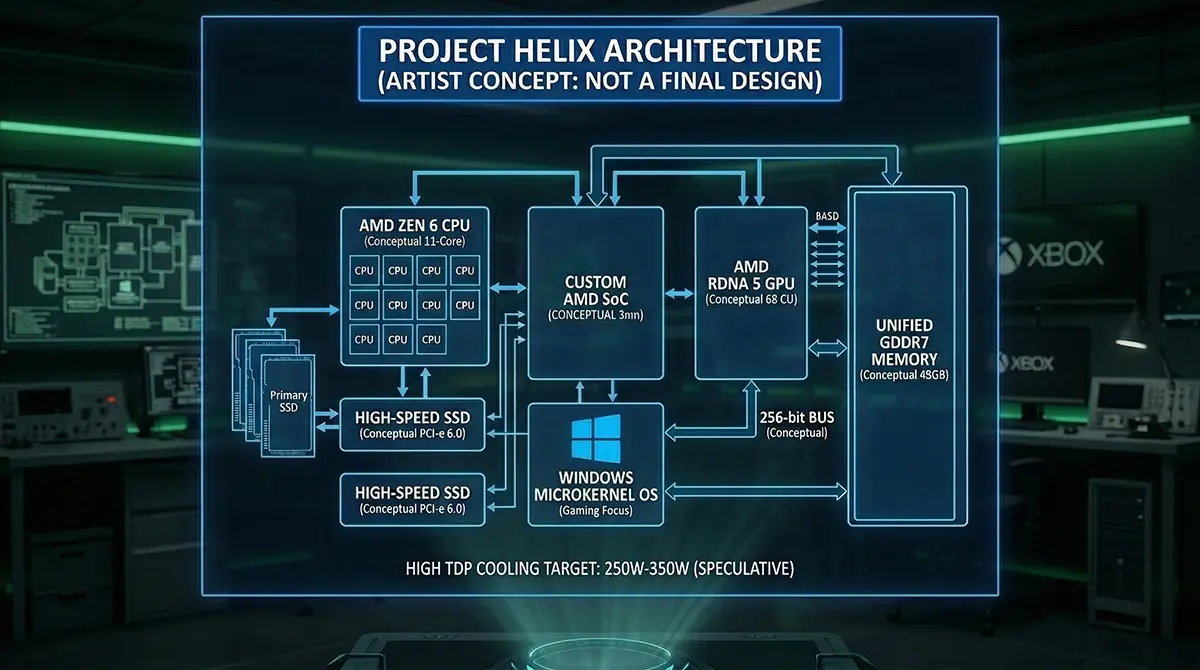
If Project Helix is going to run both PC and console games seamlessly, it needs serious horsepower. While official spec sheets haven’t been published by Microsoft, deep supply chain leaks and manufacturing sheets—primarily from their chip partner—have painted a very clear picture of what to expect.
Alt Text: A system architecture diagram comparing the internal components of a traditional console with a high-end PC.
CPU and GPU Power: A PC in Disguise?
According to industry insiders, Project Helix is targeting performance that could double the output of current mid-generation refreshes. The leaked specs suggest a custom TSMC 3nm SoC featuring a monstrous 11-core CPU setup (3 Zen 6 cores paired with 8 Zen 6c cores). On the graphics side, we are looking at 68 RDNA 5 Compute Units. To put that in perspective, this rivals the raw computational power of dedicated, high-end desktop GPUs that currently cost more than an entire console.
Memory is also getting a massive upgrade. Leaks indicate a 192-bit memory bus with up to 48GB of GDDR7 memory. This isn’t just for rendering 4K textures at 120 FPS; it’s necessary overhead if the system is going to run a heavier, PC-like operating system in the background while managing game states.
The AMD Partnership Continues
AMD has been the backbone of console gaming for a long time, and they are once again at the helm here. The difference with Project Helix is the estimated Thermal Design Power (TDP). Rumors suggest a TDP between 250W and 350W. For a console, that is incredibly power-hungry and implies a massive cooling solution. It essentially confirms that Microsoft is stuffing desktop-grade, high-end PC hardware into a proprietary box.
The End of the “Console Wars” As We Know It?
For years, the “console war” was defined by a simple metric: who had the better exclusive games. Sony built an empire on cinematic, single-player experiences locked to the PlayStation. Microsoft is effectively opting out of that traditional battle and starting a new one.
Why Sony Might Be Sweating
Sony has recently shown hesitation regarding first-party PC ports, seemingly pulling back to protect their native console sales. Microsoft is doing the exact opposite. By creating a hybrid gaming platform, Microsoft is directly targeting the massive PC gaming audience. If Project Helix allows users to access their existing Steam or Epic libraries alongside Game Pass, the value proposition changes entirely. You aren’t just buying an Xbox; you are buying a machine that plays almost every game in existence, past and present. This blurs the lines so much that comparing it directly to a traditional, locked-down console feels outdated.
Steam, Epic, and Xbox: A Unified Storefront?
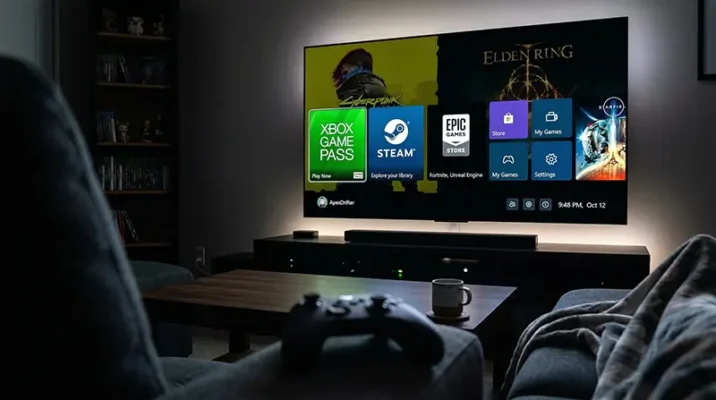
The biggest question surrounding the “play PC games on Xbox” claim is how it will be implemented. Will it be an open ecosystem, or a walled garden dressed up as a PC?
Alt Text: An infographic mapping out the Xbox Project Helix software ecosystem with Steam, Epic Games, and Game Pass integration.
Native PC Game Support on a Console
Current insights suggest that Project Helix will operate on a heavily customized, gaming-focused microkernel of Windows. It is heavily rumored that the console will actually ship with third-party storefronts like Steam and the Epic Games Store accessible right out of the box.
If this is true, it is an unprecedented move. It means you wouldn’t have to re-buy titles you already own on PC to play them on your TV. For developers, especially indie studios who lack the resources for dedicated console ports, this is a miracle. They can simply optimize their PC builds, and suddenly their games are playable on millions of living room devices. The Xbox PC integration isn’t just a feature; it’s the core identity of the hardware.
What This Means for PC Hardware Enthusiasts
The PC building community is incredibly passionate, and the idea of a pre-packaged box encroaching on their territory usually meets with skepticism. However, Project Helix is a fascinating proposition even for die-hard builders.
Upgradability vs. Closed Systems
The primary trade-off is, of course, upgradability. A native console, even a hybrid one like Project Helix, will not let you swap out the GPU in three years. However, the sheer baseline power rumored for this machine might make the lack of upgradability a moot point for many.
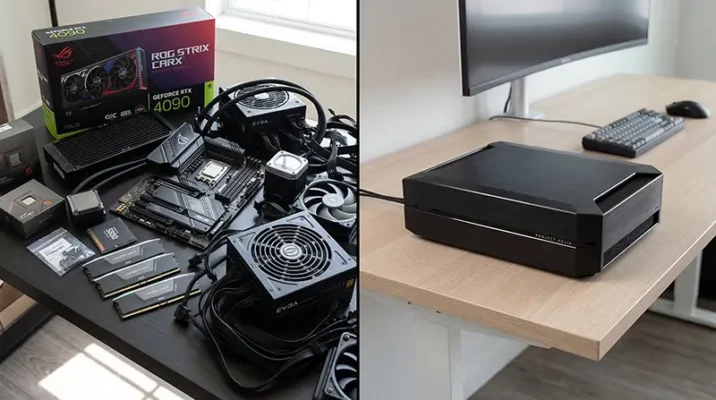
Building a PC with equivalent specs (a Zen 6 equivalent CPU, 48GB of high-speed RAM, and an RDNA 5 tier GPU) requires a massive upfront investment, painstaking part matching, and troubleshooting. Project Helix offers a plug-and-play solution that mimics the top tier of PC gaming. For those who love tweaking overclocks and customizing water loops, the DIY PC will never die. But for those who just want ultra-high-end performance without the hassle, this hybrid console is a very tempting proposition.
The Price Tag Reality Check
Let’s address the elephant in the room: this level of hardware does not come cheap.
Factoring in the Global RAM Shortage
Initial estimates for the Xbox Project Helix specs place the manufacturing cost incredibly high. Industry analysts are predicting a retail price anywhere from $900 to $1,400. This completely shatters the traditional $500 console price ceiling.
Furthermore, the ongoing global RAM shortage crisis is severely impacting hardware manufacturing. Microsoft is not immune to these supply chain issues. While the targeted release date is rumored for late 2027, component availability could easily push this back or drive the introductory price even higher. It’s clear that Microsoft is not aiming this at the budget-conscious consumer; this is a premium device meant to directly undercut the cost of a $2,000+ gaming PC, rather than compete with a $400 entry-level console.
The Hybrid Console in the Pakistani Market
For gamers in Pakistan, the hardware landscape is uniquely challenging. The fluctuating currency, heavy import duties, and PTA taxes on electronics mean that global MSRPs are rarely what consumers actually pay.
High Import Costs and True Value
When a $500 console launches, it often retails for significantly more in local markets. If Project Helix launches at $1,000, it will be an absolute luxury item. However, it’s crucial to look at the value rather than just the price tag.
Currently, building a high-end gaming PC in Pakistan capable of native 4K at 120 FPS requires importing individual components that are heavily taxed, often pushing the total build cost well over 600,000 PKR. If Project Helix can deliver that exact same performance, plus the ability to run your existing Steam library, all in a single imported box, it might actually end up being the more economical route for hardcore tech enthusiasts. It consolidates the TV console and the desktop rig into one unified, albeit expensive, machine.
Quick Takeaways
- It’s a Hybrid: Project Helix is officially confirmed by Xbox CEO Asha Sharma to play both native Xbox and PC games.
- Monster Specs: Leaks point to a 3nm AMD SoC, 11 CPU cores, 68 RDNA 5 CUs, and a massive 48GB of GDDR7 memory.
- Open Storefronts: The console is heavily rumored to support third-party PC storefronts like Steam and Epic Games natively.
- High Price Tag: Expected to retail between $900 and $1,400, reflecting its status as a high-end PC equivalent rather than a standard console.
- Release Window: Current industry murmurs suggest a target launch window of late 2027, though global component shortages could impact this.
Conclusion
The death of the native console isn’t a tragedy; it’s an evolution. Microsoft’s Project Helix represents a bold step into an uncharted future where the artificial boundaries between PC and console hardware are finally erased. By packing high-end gaming PC specs into a streamlined, living-room-ready device that supports multiple storefronts, Xbox is changing the rules of engagement.
For gamers everywhere—and particularly in regions like Pakistan where maximizing hardware value is critical—this hybrid approach offers a tantalizing glimpse into a unified gaming ecosystem. Whether it ultimately succeeds will depend heavily on the final price point and Microsoft’s ability to navigate current global hardware shortages. But one thing is certain: the traditional console wars are over. The era of the hybrid machine has begun.
References
- GameSpot. “Xbox’s Next Console, Project Helix, Officially Plays PC And Xbox Games.” GameSpot, 2026.
- TechPowerUp. “Xbox Project Helix Officially Tipped As Next-Gen Console, Will ‘Play Your Xbox and PC Games’.” TechPowerUp, 2026.
- VICE. “Microsoft Confirms Next-Gen Xbox Project Helix Plays PC Games – Here Are Its Leaked Specs.” VICE, 2026.
- Tom’s Hardware. “Microsoft confirms next-gen Xbox will play PC games — ‘Project Helix’ teased as more than just a console.” Tom’s Hardware, 2026.

THE LOG IN TAX: Sony is Secretly Charging Players Different Prices on the PlayStation Store
Discover how Sony's secret "Log In Tax" charges PlayStation Store players different prices for the same games, and learn how Pakistani gamers can avoid overpaying.
Mar
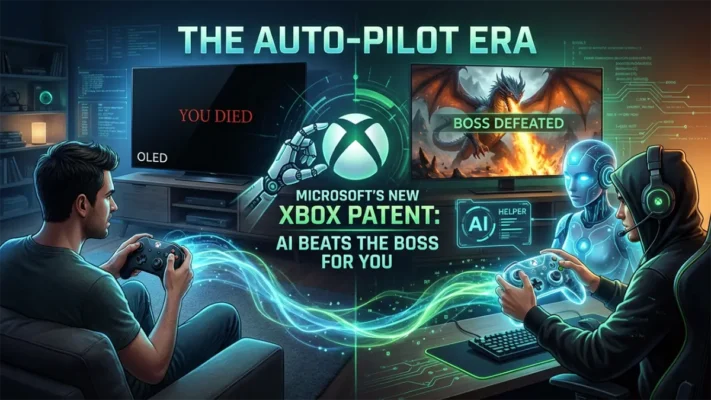
THE AUTO-PILOT ERA: Microsoft Xbox Patent Will Literally Beat the Boss For You
Stuck on a difficult game? A new Microsoft Xbox patent reveals an AI auto-pilot system that will literally take the controller and beat the boss for you.
Mar
Frequently Asked Questions (FAQs)
If your primary use for a PC is gaming, Project Helix aims to be a viable high-end gaming PC alternative. With rumored support for platforms like Steam and Epic, it will play the same games at top-tier performance levels, though it may lack the full open OS functionality needed for heavy productivity tasks.
While Microsoft has not given an official date, supply chain leaks and statements from chip partners like AMD point toward a late 2027 launch window.
Based on statements from Asha Sharma Xbox CEO and recent leaks, the goal is for Project Helix to natively support PC storefronts. This means you should be able to access your existing PC game libraries without repurchasing them.
Given the leaked Xbox Project Helix specs featuring 3nm AMD architecture and 48GB of RAM, analysts predict a premium price tag ranging from $900 to $1,400, placing it well above traditional console pricing.
The current memory shortage crisis is driving up component costs across the tech industry. This could lead to a higher final retail price for Project Helix or potential supply constraints at launch.
We Want to Hear From You!
What do you think about Microsoft abandoning the traditional console model in favor of a PC hybrid? Would a $1,000+ price tag be worth it if it meant you never had to upgrade individual PC parts again? Let us know your thoughts in the comments below, and don’t forget to share this article with your fellow gamers and tech enthusiasts!
