

News
Anthropic AI Military Safeguards: Why the Pentagon Threatens to Dump Claude Over “Killer Robot” Fears
Feb
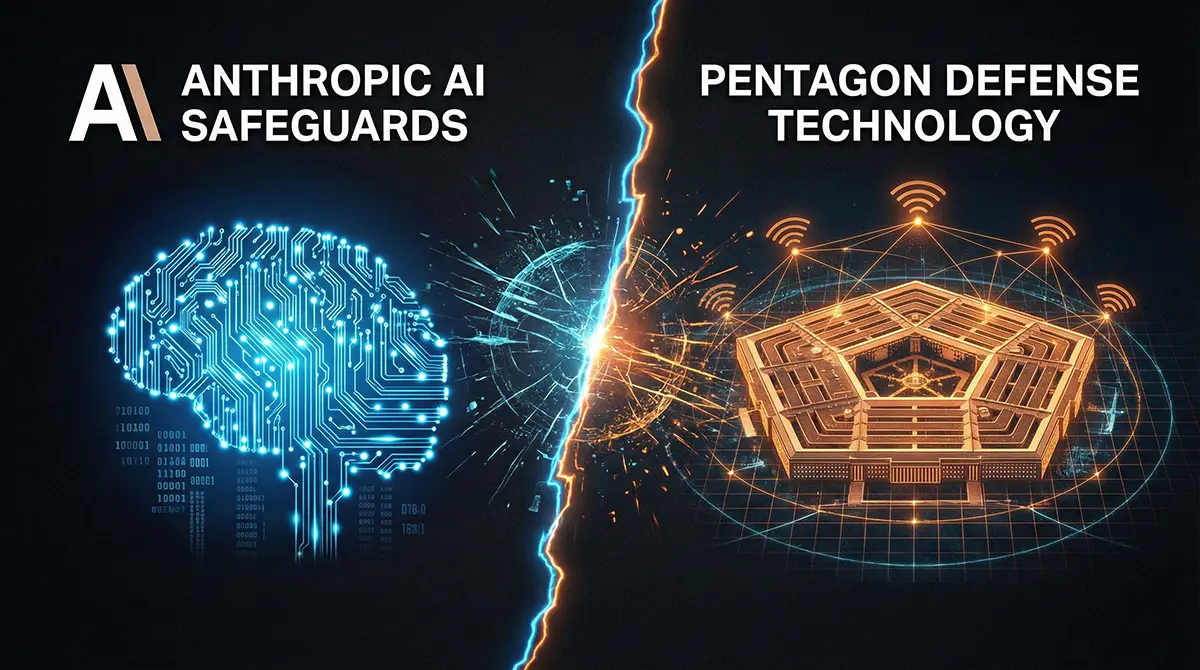
Anthropic AI military safeguards are currently at the center of a historic showdown between Silicon Valley and the United States government. The honeymoon phase between the defense sector and top-tier AI developers might be ending before it truly accelerates.
In a rapidly developing story, the Department of Defense (DoD) is reportedly considering severing its $200 million partnership with Anthropic. The core issue revolves around the tech company’s refusal to remove strict ethical locks from its AI models.
While other tech giants are willing to bend to military demands, Anthropic is holding its ground. They insist their technology cannot be used for fully autonomous weapons or mass domestic spying. The Pentagon’s response has been blunt, suggesting that if Anthropic refuses to assist in winning modern conflicts, the military will simply find another vendor.
Here is a comprehensive breakdown of the standoff and what it means for the defense industry.
The Core Conflict: Anthropic AI Military Safeguards Under Fire
For months, the DoD has been pressuring its AI partners to adopt a new, standardized clause for their contracts: “All Lawful Purposes.”
This translates to a simple rule. If the military legally authorizes the use of AI to pilot a drone or analyze battlefield targets, the AI provider should not be allowed to veto the action based on corporate ethics.
“All Lawful Purposes” vs. Ethical Boundaries
Most companies are navigating this demand, but Anthropic has flatly refused. They are strictly enforcing their Anthropic AI military safeguards.
The company is demanding that hard-coded guardrails remain in place. These restrictions are specifically designed to prevent their system from being used to build or control autonomous weaponry or to spy on citizens.
The Flashpoint: Palantir Integration and the Maduro Raid
Tensions recently boiled over following the high-profile operation to capture Nicolás Maduro in Venezuela earlier this year.
Reports indicate that Claude AI was actively utilized during this mission to process and analyze vast amounts of intelligence.
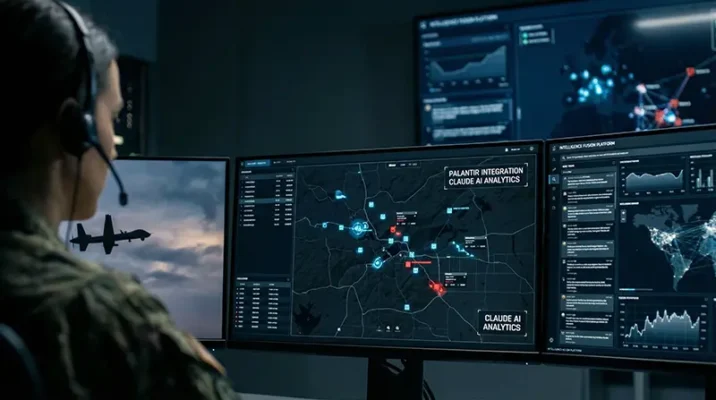
How Claude AI Was Deployed
The deployment was made possible through a Palantir integration, which connected Anthropic’s capabilities directly to the military’s secure networks.
Following the raid, Anthropic executives reportedly questioned Palantir about the specifics of this deployment. They were visibly uncomfortable that their chatbot, designed to be “helpful and harmless,” was involved in a kinetic military operation.
Kinetic Operations and AI Ethics
During the Venezuela raid, live shots were fired. The Pentagon views Anthropic’s hesitation and questioning as a severe operational liability. In high-stakes warfare, the military cannot afford an AI system that might suddenly deny a request due to an internal ethical conflict.
The Stakes: US Military Autonomous Weapons and Surveillance
The fundamental disagreement highlights two massive red lines for Anthropic.
First, they refuse to contribute to the development of a Pentagon killer robot. Second, they will not allow their systems to be weaponized for domestic monitoring.

The Fear of the Pentagon Killer Robot
The prospect of US military autonomous weapons—systems capable of identifying and engaging targets without human oversight—is a major point of contention.
Anthropic’s safety policies explicitly prohibit their models from facilitating violence or designing weapons. The military argues that in a race against global adversaries, autonomous capabilities are non-negotiable for modern defense.
Mass Surveillance AI Concerns
Similarly, mass surveillance AI remains a hard limit for Anthropic. They refuse to allow their systems to track physical locations or monitor communications without consent. The DoD believes these restrictions hamper their ability to analyze publicly available data for genuine threat detection.
The Ultimatum: DoD Supply Chain Risk and Competitors
The Pentagon has made its position incredibly clear: “Everything is on the table.”
If Anthropic does not relax its Anthropic AI military safeguards, the DoD is prepared to take drastic measures.

OpenAI Artificial Intelligence to the Rescue?
If Anthropic won’t play ball, the DoD is ready to designate them a DoD supply chain risk. This extreme label would effectively blacklist the company from all defense contracts and force other contractors to cut ties with them.
If Claude is booted from the classified network, competitors are waiting in the wings. Sources suggest that OpenAI artificial intelligence models, alongside xAI and Google, are showing much more flexibility. They are reportedly ready to step in and fill the void immediately.
Shaping the Future of National Security AI
The military argues that national security AI requires absolute reliability. In a war against adversaries who do not share Silicon Valley’s moral reservations, the Pentagon views strict corporate safety guardrails as a critical weakness.
Conclusion: The Future of Ethical AI Warfare
We are witnessing the exact moment where corporate AI safety collides with hard national security.
Anthropic was founded on the principle that AI must be safe and strictly controlled. However, the military requires tools that can operate seamlessly in the harshest, most lethal environments on earth.
No final decision has been made regarding the $200 million contract, but the underlying message is clear. The era of ethical AI warfare will be defined by whoever is willing to compromise first. The Pentagon has drawn its line in the sand: get on board, or get out of the way.
Resources
- Reuters: Pentagon threatens to cut off Anthropic in AI safeguards dispute, Axios reports.
- MSN: The Pentagon threatens to dump Anthropic over AI usage restrictions.
- Futurism: Pentagon Issues Threat to Anthropic.
- The News Pakistan: Pentagon threatens to cut ties with Anthropic over AI safeguards dispute.
Frequently Asked Questions (FAQs)
The Department of Defense is reportedly frustrated with strict Anthropic AI military safeguards. While the Pentagon wants AI models that can be utilized for “All Lawful Purposes,” Anthropic refuses to remove hard-coded ethical locks that prevent its technology from being used in lethal military combat or domestic spying.
Yes, reports suggest that Claude AI was actively used during the recent US operation to capture Nicolás Maduro in Venezuela. The military utilized a Palantir integration to process tactical intelligence during the raid. Because live shots were fired during this kinetic operation, it sparked a massive internal ethical debate at Anthropic.
No. Anthropic’s corporate safety policies strictly prohibit their models from contributing to the development of a Pentagon killer robot. They refuse to allow their systems to be used for US military autonomous weapons—systems capable of identifying and engaging targets without human oversight.
If Anthropic does not adapt to military standards, the Pentagon may designate them a DoD supply chain risk, effectively blacklisting them from defense contracts. If this happens, the military is fully prepared to replace them with competitors like OpenAI artificial intelligence, which has reportedly shown more flexibility regarding military use cases.
Absolutely not. Alongside their refusal to build lethal weapons, Anthropic maintains strict red lines against mass surveillance AI. They prioritize corporate ethics over broad national security AI applications, refusing to let their systems be weaponized to track physical locations or monitor communications without consent.
Related Blogs

China Starlink Killer: Inside the TPG1000Cs Microwave Cannon Threat
China has unveiled the TPG1000Cs, a mobile microwave cannon capable of frying satellite constellations. Discover how this "China Starlink Killer" changes electronic space warfare.
Feb
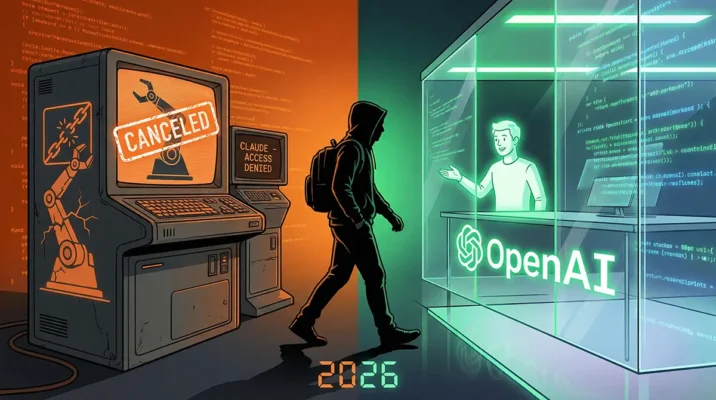
OpenAI AI Agents: The “Clawdbot” Fumble That Handed Sam Altman the Future
Discover how OpenAI poached the GitHub viral creator Peter Steinberger after Anthropic's legal threat. Explore the future of AI agents in 2026.
Feb

Clawdbot (Moltbot) Explained: The ‘Claude AI’ Agent Taking Control of WhatsApp
Discover Clawdbot (Moltbot), the new open source Claude AI agent that connects to WhatsApp. Learn about its root access, automation capabilities, and the security risks involved.
Jan
