

Feb
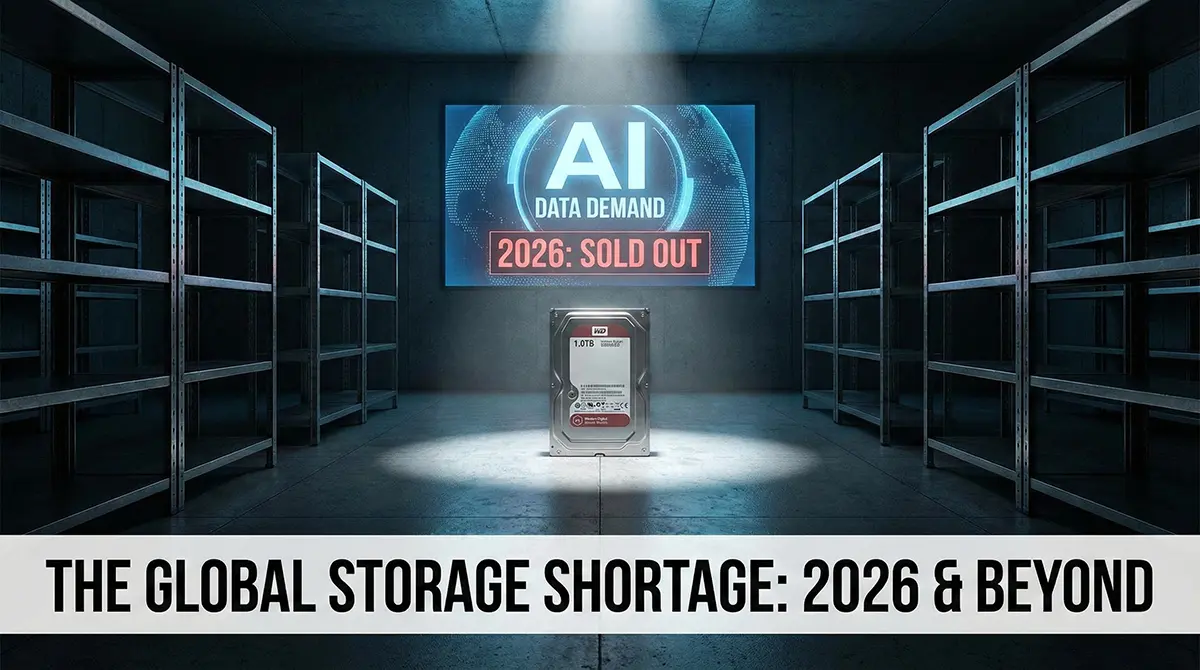
The Western Digital storage shortage is officially upon us, and if you were planning to build a server or upgrade your hardware this year, you are already too late. In a stunning admission that confirms our worst fears about the hardware industry, Western Digital has zero remaining production capacity for hard disk drives for the entirety of 2026.
This is not just a temporary tight market. It is a complete industry blowout. Every single drive rolling off the assembly lines between now and December has already been purchased. Even more concerning, the world’s biggest buyers are already aggressively locking down supply well into 2027 and 2028.
Here is exactly why the era of cheap storage has ended, how the AI boom is responsible, and what you need to know to adapt.
The Reality of the Western Digital Storage Shortage in 2026
During a recent quarterly earnings call that sent shockwaves through the tech industry, Irving Tan CEO of Western Digital did not mince words. He plainly stated that the company is “pretty much sold out for calendar 2026.”
The entire year’s supply of drives has been devoured by firm purchase orders from just seven top enterprise customers. This unprecedented Western Digital storage shortage marks a dramatic shift in how data infrastructure is procured and allocated.
The most terrifying detail isn’t about this year—it is about how far ahead these massive buyers are planning:
- 2027 Supply: Two major customers have already bought out a significant portion of Western Digital’s capacity for next year through Long-Term Agreements (LTAs).
- 2028 Supply: One major enterprise customer has already secured their supply for two years from now.
How Artificial Intelligence Data is Devouring the AI Supply Chain
You might be wondering why AI models, which typically run on lightning-fast HBM memory and SSDs, are causing a hard drive shortage. The answer lies in the sheer volume of artificial intelligence data.
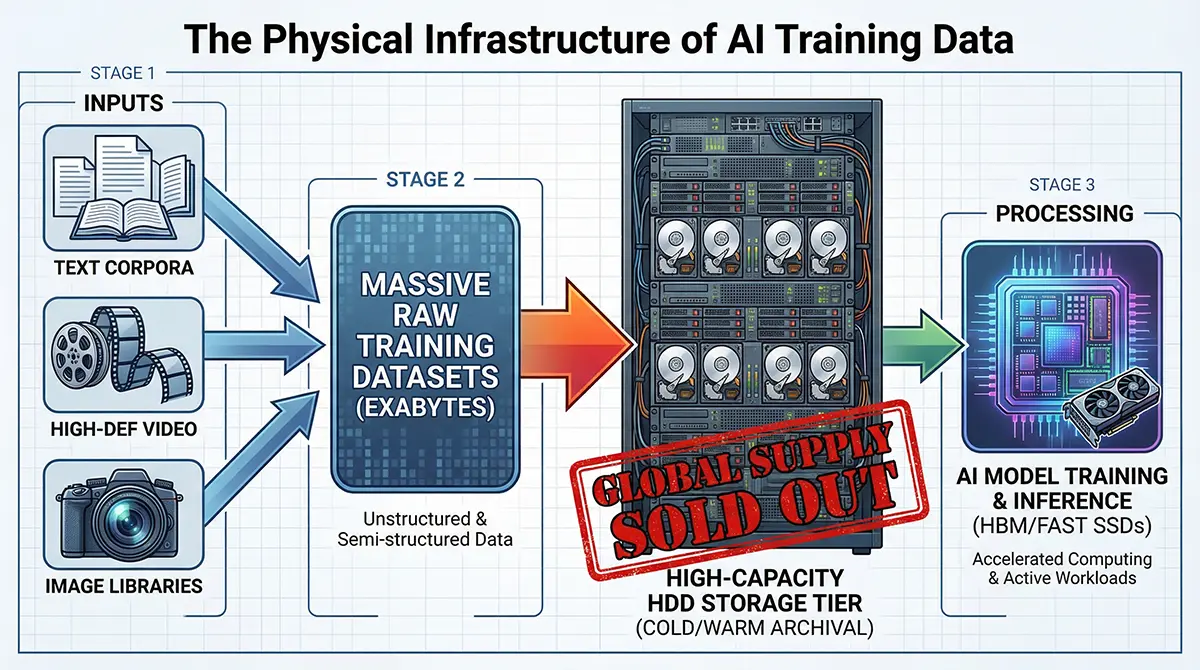
AI models require massive, unyielding datasets—spanning text, high-definition video, and complex images—to learn and train effectively. All of that underlying data has to live somewhere, placing immense strain on the AI supply chain.
Why Cloud Giants Depend on Hard Disk Drives
Storing Exabytes of raw training data exclusively on SSDs is simply too expensive for even the largest tech corporations. The cloud giants—companies like Microsoft, Google, Amazon, and Meta—are buying millions of high capacity HDDs (specifically 26TB+ models) because they offer the most cost-effective “cost per bit” for mass archiving and storage.
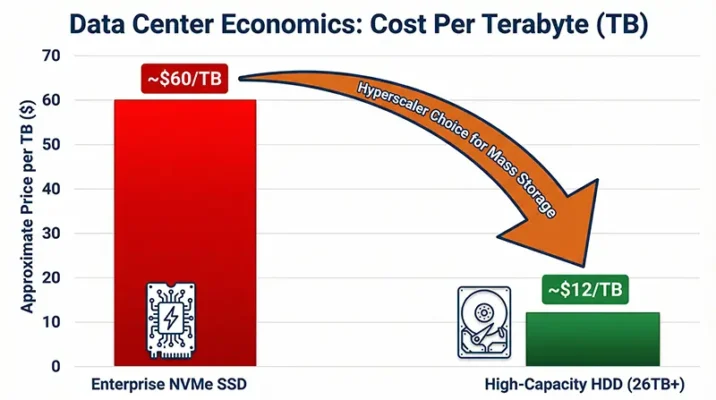
Hard disk drives remain the economic backbone of data centers. As AI capabilities expand, the reliance on these traditional spinning drives is only increasing, pulling inventory directly away from store shelves.
What the End of Cheap Storage Means for the Consumer Market
The days of walking into a retail store and picking up an affordable, high-capacity drive are over. We are currently witnessing the cheap storage end as we know it.
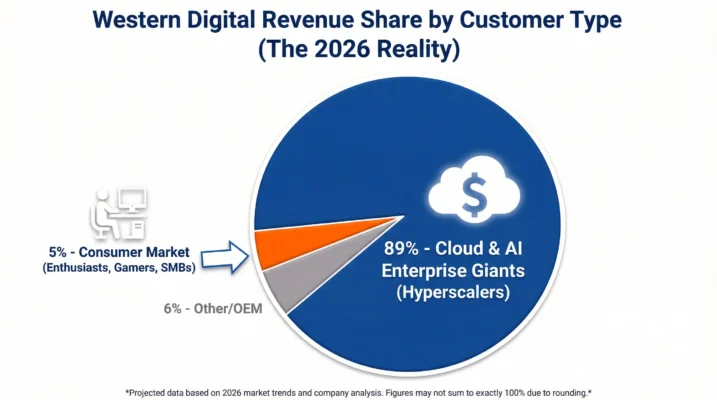
Western Digital is rapidly pivoting away from everyday users. Recent industry reports indicate that a staggering 89% of their revenue now comes directly from Cloud and AI enterprise clients. The consumer market—which includes independent creators, gamers, and small businesses—now accounts for a meager 5% of their total business.
The Immediate Impact on Network Attached Storage
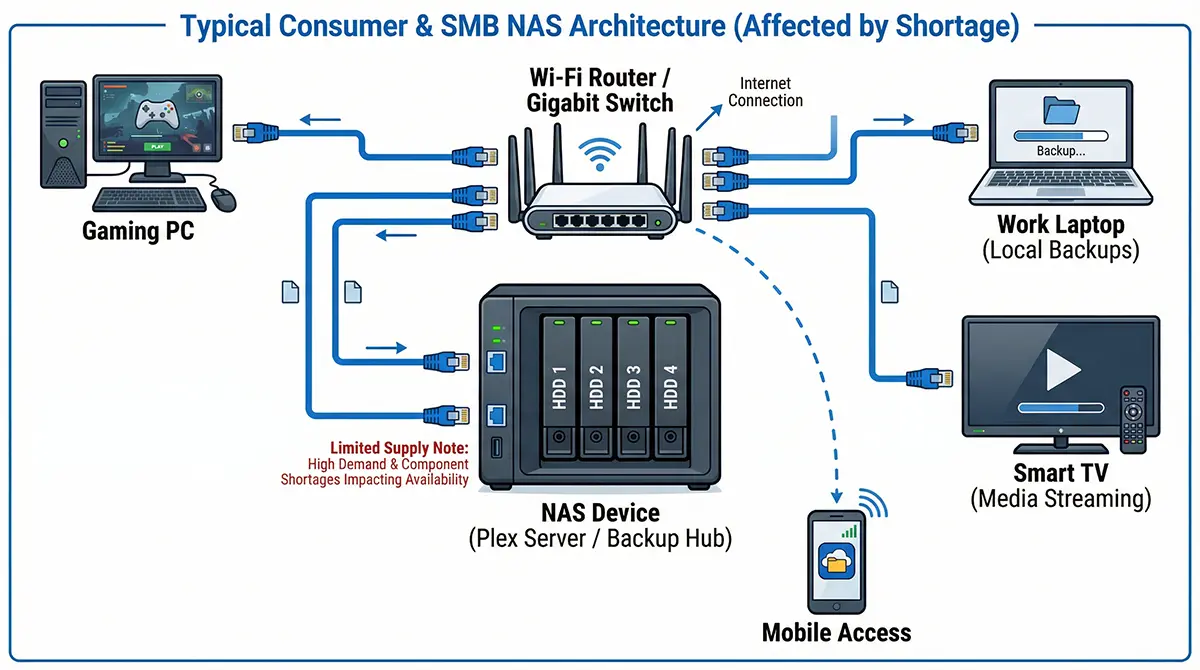
For enthusiasts and IT professionals building their own network attached storage (NAS) solutions, the news is grim. Whether you are running a Plex media server or securing local backups for a small business, you are now competing directly against trillion-dollar AI companies for the same physical resources.
Because Western Digital is effectively exiting the consumer space to serve AI overlords, we are facing a permanent and painful price correction for NAS drives.
Securing Your Hardware Amid High Capacity HDDs Deficits
Navigating the Western Digital storage shortage requires immediate action and a shift in buying strategies. If you rely on local storage, waiting for prices to drop is no longer a viable option.
- Buy What You Can Find: If you see a hard drive on a shelf today at a normal MSRP, buy it immediately. It may be the last one you see at that price point for a long time.
- Audit Your Storage Needs: Delete redundant files, aggressively compress your archives, and only expand your physical storage when absolutely necessary.
- Consider Hybrid Cloud Options: While local storage gives you control, you may need to offset your hardware deficits by utilizing cloud backups for non-essential data.
The Final Verdict
The insatiable appetite of AI has fundamentally altered the hardware landscape. With 2026 production entirely spoken for, the Western Digital storage shortage is a stark reminder that the consumer is no longer the priority in the hardware supply chain.
Resources
- Yahoo Finance: Western Digital Sold Out All 2026 Hard Drive Production as AI Centers Scramble.
- Toms Hardware: Western Digital is already sold out of hard drives for all of 2026 — chief says some long-term agreements for 2027 and 2028 already in place.
- Tech Radar: ‘We’re pretty much sold out for calendar 2026’: Western Digital CEO says storage firm is completely sold out of HDD capacity already, so does that mean more price rises to come?
- T3: Western Digital’s entire 2026 hard drive stock already sold out – RAMageddon could prove even more disastrous on your pocket.
Frequently Asked Questions (FAQs)
The current deficit is entirely driven by unprecedented enterprise demand. Western Digital has confirmed that its production capacity for the entirety of 2026 is completely sold out. Trillion-dollar tech companies have secured firm purchase orders and long-term agreements for the year to support their massive data infrastructure needs, leaving virtually no inventory for standard retail channels.
Training complex AI models requires archiving massive datasets, including text, high-definition video, and complex imagery. Because this artificial intelligence data requires immense physical space, tech companies are buying physical storage at an unprecedented scale. This hoarding has fractured the global AI supply chain, shifting manufacturing priorities exclusively toward enterprise-scale hardware.
Yes. Cloud giants like Amazon, Google, Meta, and Microsoft are aggressively purchasing high capacity HDDs (specifically 26TB and larger models). According to recent earnings reports, these enterprise buyers now account for a staggering 89% of Western Digital’s total revenue, effectively monopolizing the global output of spinning disks.
We are witnessing the cheap storage end because manufacturers are no longer prioritizing everyday buyers. The consumer market currently makes up merely 5% of Western Digital’s revenue. With supply restricted and demand at an all-time high, everyday buyers should expect permanent price hikes and severe scarcity for standard consumer storage products.
If you rely on network attached storage for home media servers, local backups, or small business data, expanding your capacity will be much harder and significantly more expensive. Because you are now competing directly with enterprise AI companies for the same hard disk drives, you will face higher MSRPs and frequent “out of stock” notices at major retailers.
Related Blogs
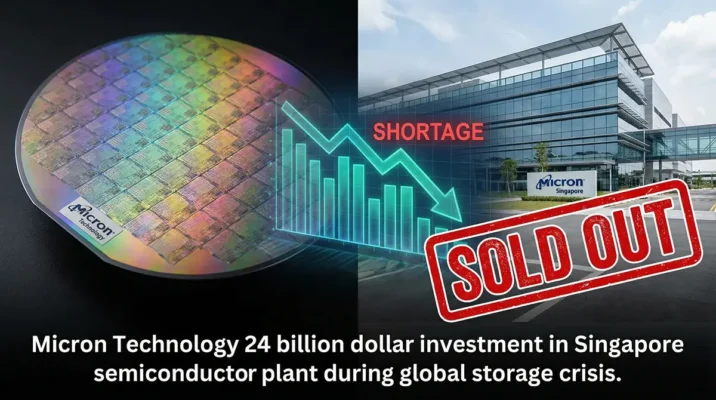
Micron Technology Drops $24B: Why the Storage Crisis Will Worsen Until 2028
Micron Technology invests $24 billion in a new Singapore plant, but the global storage crisis and NAND flash shortage will persist until 2028 due to AI impact.
Feb
SSD Price Crisis 2026: Why Cheap Storage Is Dead & Sold Out (Critical Update)
The era of cheap storage is over. Kioxia confirms the global SSD price will skyrocket in 2026 due to AI impact. Read the full report on the storage shortage here.
Jan

Samsung Memory Shortage Crisis: Why No One Can Escape the 2026 AI Tax
Samsung CEO TM Roh warns of an unprecedented Samsung memory shortage caused by OpenAI's Stargate project. Learn how this crisis will hit electronics prices in Pakistan and what you can do before [...]
Jan
