

News
Explosive Microsoft Copilot Shift: Why the USD 13 Billion OpenAI Partnership is Cracking

Feb
Microsoft Copilot is standing at the precipice of a massive internal revolution. For the last three years, Microsoft and OpenAI operated as the undisputed “Power Couple” of the technology industry. Microsoft provided the computing infrastructure and billions in cash, while OpenAI delivered the foundational models that shocked the world.
But according to explosive new reports surfacing this week, this historic marriage is on the rocks. Inside Redmond, Microsoft executives are reportedly growing weary of OpenAI’s insatiable appetite for funding. Driven by the leadership of CEO Mustafa Suleyman, Microsoft is actively building a gigawatt-scale exit strategy to ensure its flagship AI products survive any potential split.
Here is the comprehensive breakdown of why the biggest partnership in tech is starting to fracture, and what it means for the digital landscape.
Microsoft Copilot Faces a Crossroads: The Dawn of a New Era
Initially, the division of labor was clear: Microsoft wrote the checks, and OpenAI built the models. This synergy gave birth to Microsoft Copilot, embedding advanced generative capabilities into the operating systems and productivity software used by millions globally.
However, the dynamic has fundamentally shifted. Microsoft leadership is reportedly tired of acting as an open-ended ATM for a company it does not fully own. The tech giant is no longer willing to bet its entire future, and the underlying architecture of Microsoft Copilot, on an external vendor whose strategic goals are rapidly diverging from its own.
The Root of the Friction: OpenAI’s Unprecedented Cash Burn
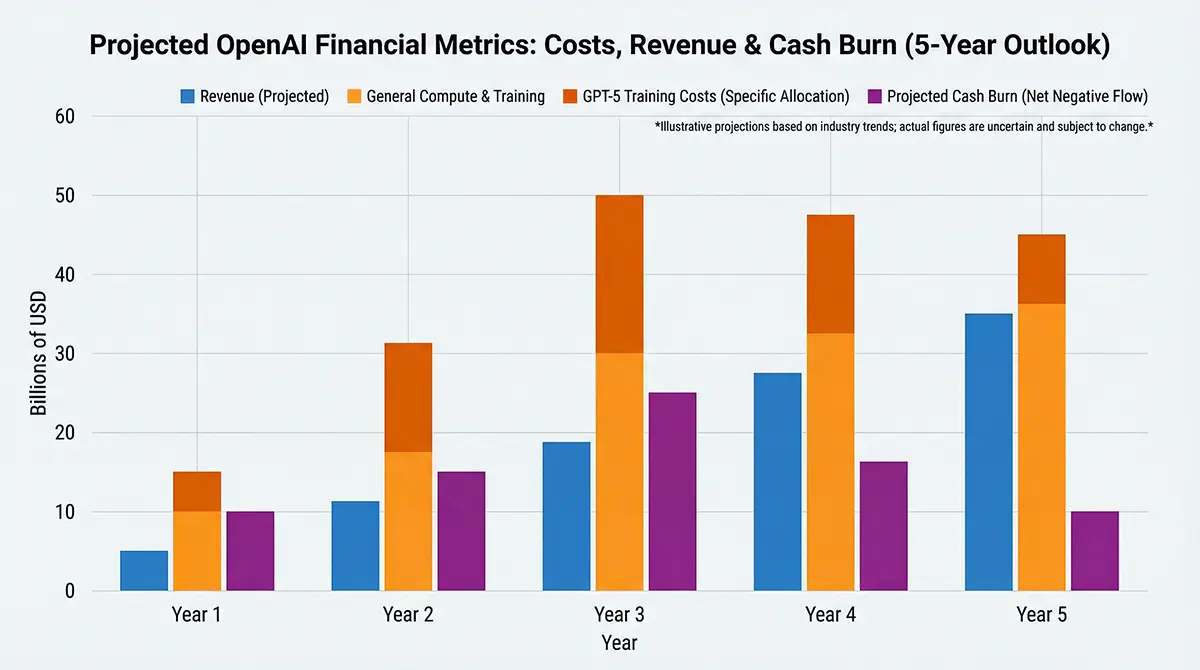
OpenAI is burning cash at a rate that would make a small nation blush. Developing frontier models is not cheap, and the financial trajectory of the company is a primary source of tension.
- Skyrocketing Expenses: Reports indicate OpenAI expects its cash burn to peak at nearly USD 7 billion this year alone.
- Long-Term Costs: Between 2025 and 2030, OpenAI reportedly plans to invest over USD 320 billion into training and operating its next-generation models.
- Shifting Loyalties: To fund this massive deficit, OpenAI is looking beyond Microsoft, preparing financing rounds with outside entities like SoftBank to stay afloat.
Microsoft leadership is reportedly “weary” of these frequent capital requests. They want a reliable partner, not a dependent, and this staggering cash burn has accelerated Microsoft’s desire to secure its own infrastructure.
Stargate: The USD 500 Billion Supercomputer Ambition
The breaking point in the partnership may be traced to infrastructure. As OpenAI trains GPT 5 and envisions future models, its need for compute has outgrown what Microsoft alone can provide.
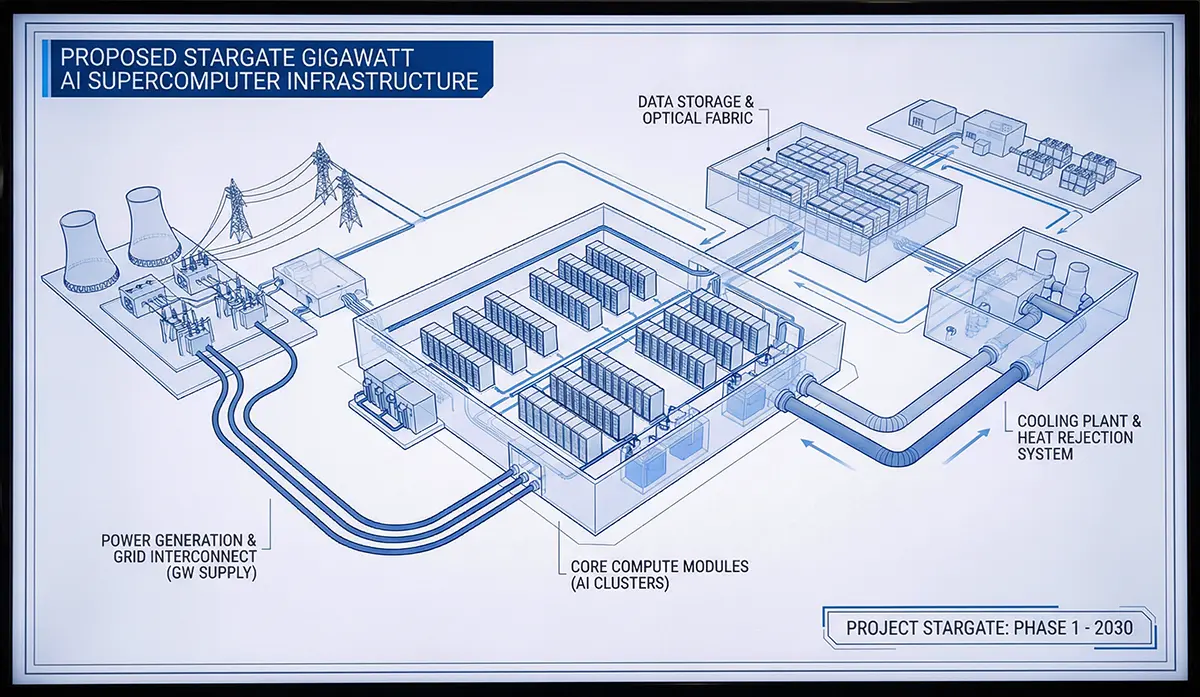
Enter the Stargate project. OpenAI recently unveiled a USD 500 billion initiative to build a global network of massive AI data centers. Partnering with SoftBank, Oracle, and international governments in places like the UAE and Norway, OpenAI aims to build 8-gigawatt facilities to train its models.
By looking to Oracle and SoftBank to fund the Stargate supercomputer network, OpenAI is signaling its own independence. In response, Microsoft is realizing it can no longer rely on exclusive cloud deals to keep OpenAI tethered to Azure.
Mustafa Suleyman and the In-House Rise of Microsoft AI
Recognizing the vulnerability of its position, Microsoft made a decisive move in early 2024 by hiring Mustafa Suleyman (co-founder of DeepMind) to lead the newly formed Microsoft AI division.
Suleyman was not brought in simply to manage the OpenAI relationship; he was hired to build a competitor.
- The MAI-1 Model: Microsoft AI is actively training its own homegrown models, including the MAI-1, designed to rival the capabilities of OpenAI’s flagship products.
- Strategic Realignment: Suleyman has publicly confirmed that Microsoft is focusing heavily on off-frontier and frontier models built entirely in-house, significantly reducing the company’s dependency on the creator of ChatGPT.
Gigawatt-Scale Independence: Securing Microsoft Copilot
This isn’t just an industry rumor. Mustafa Suleyman publicly confirmed that Microsoft’s strategy has decisively changed toward internal development.
“We have an enormous five-year roadmap that we’re investing in quarter after quarter… We have to be able to have the in-house expertise to create the strongest models in the world.” — Mustafa Suleyman
Microsoft is now training its own models at a “gigawatt scale.” A gigawatt-scale model is massive—likely as powerful, if not more capable, than what OpenAI is currently building.
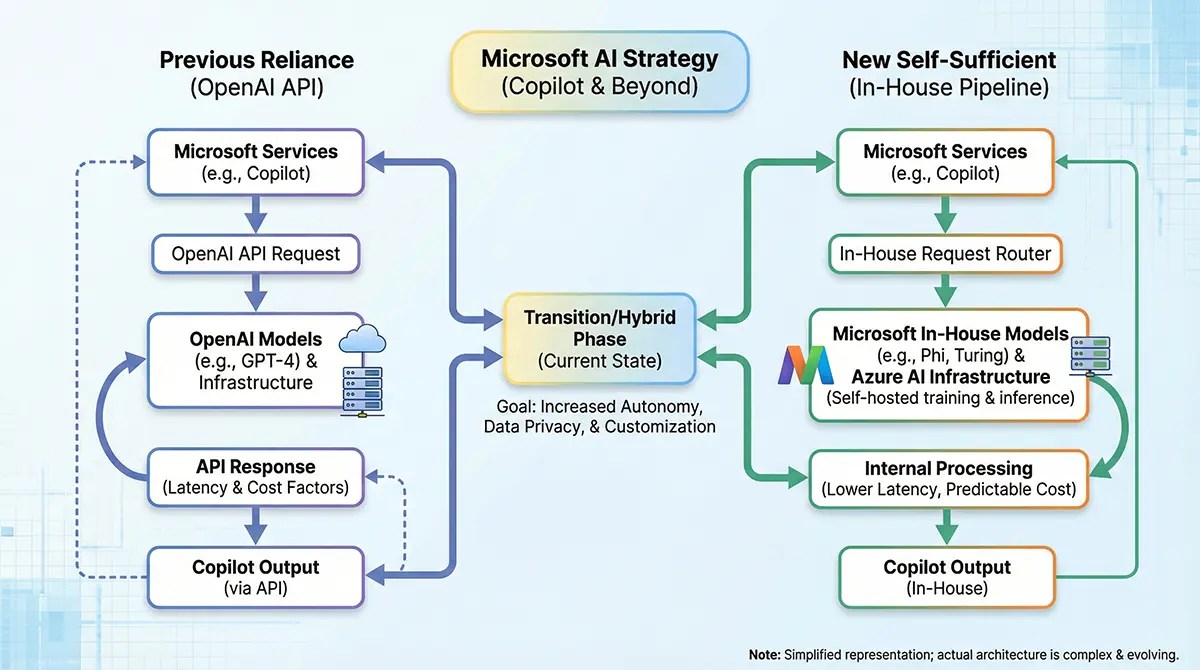
The goal is blunt: “True self-sufficiency.” Microsoft wants to reach a point where, if OpenAI disappeared tomorrow or cut ties entirely, Microsoft Copilot would continue running for enterprise and consumer users without a single hiccup. They refuse to be relegated to a mere “wrapper” for external technology.
The Broader Impact on Artificial Intelligence
This shifting dynamic is sending shockwaves through the global artificial intelligence industry. For markets like Pakistan, where adoption of these digital tools is rapidly growing, the competition between tech giants ensures that innovation will not be monopolized by a single entity.
As Microsoft builds its own brain and OpenAI expands its infrastructure with outside investors, the broader AI ecosystem will benefit from accelerated hardware development, lower computing costs, and diverse model availability.
Conclusion: The Final Verdict on the Partnership
The partnership isn’t dead—yet. Microsoft still powers the infrastructure behind ChatGPT, and OpenAI’s technology still acts as a foundational pillar for Microsoft Copilot.
However, the honeymoon is definitively over. The days of Microsoft writing blank checks are in the past. If OpenAI wants to secure the billions needed for its Stargate ambitions in 2026, it will have to lean heavily on SoftBank and Oracle. Meanwhile, Microsoft is already busy securing its own future, ensuring that its AI ecosystem thrives entirely on its own terms.
Resources
- Financial Times: Mustafa Suleyman plots AI ‘self-sufficiency’ as Microsoft loosens OpenAI ties. (Paid)
- Ai Expert UK: Microsoft Ditching OpenAI: What This Seismic Shift Means for Your Business.
- Windows Central: Microsoft confirms plan to ditch OpenAI — as the ChatGPT firm continues to beg Big Tech for cash.
Frequently Asked Questions (FAQs)
Microsoft is building its own in-house artificial intelligence to achieve “true self-sufficiency.” Driven by OpenAI’s massive cash burn and frequent funding requests, Microsoft wants to ensure its flagship products, like Microsoft Copilot, are not entirely dependent on a single external partner.
Stargate is a proposed USD 500 billion project by OpenAI to build an 8-gigawatt supercomputer network. This massive infrastructure is designed to provide the necessary compute power to train next-generation frontier models, such as GPT 5, independent of Microsoft’s exclusive Azure cloud ecosystem.
Not immediately. Currently, Microsoft Copilot is still powered by OpenAI’s technology. However, with the rise of Microsoft AI, the company is training massive, gigawatt-scale models of its own. The long-term goal is to have internal models capable of running Copilot seamlessly if the partnership ever dissolves.
Mustafa Suleyman is the CEO of the newly formed Microsoft AI division. As a highly respected figure in the tech industry, he was brought in to spearhead Microsoft’s internal AI development, shifting the company’s strategy away from relying solely on the creator of ChatGPT and toward building its own competitive frontier models.
No, the partnership is not officially over. Microsoft still provides the cloud infrastructure for ChatGPT, and OpenAI still powers many Microsoft services. However, the dynamic has permanently shifted from an exclusive alliance to a more competitive relationship as both companies build their own independent futures.
Related Blogs
Microsoft Copilot+ PC Gaming Review: A Serious Rig or Just Hype?
Microsoft claims the new Microsoft Copilot+ PC is a "serious gaming rig." We analyze the performance, Snapdragon ARM issues, and pricing to see if you should buy or build.
Feb
Microsoft Copilot AI Strategy: The End of Physical Libraries?
Microsoft Copilot AI is replacing physical libraries at Redmond. Discover why the tech giant is shifting from books to AI learning and what it means for the future of engineering.
Feb
SoftBank OpenAI Investment: Masayoshi Son’s Massive $70 Billion AGI Bet
SoftBank is in talks for a fresh $30 billion SoftBank OpenAI investment. Discover why Masayoshi Son is betting $70 billion on GPT-6, Project Stargate, and the future of AGI.
Feb
OpenAI Financial News 2026: The Shocking $14 Billion Loss & Bankruptcy Risk
Explosive OpenAI financial news 2026 reveals a $14 billion loss. Discover why Sam Altman's AI giant faces bankruptcy risk by 2027 and what it means for ChatGPT users.
Jan
