

Feb
Micron Technology has officially confirmed what industry analysts have feared for months: the storage crisis is not a myth, and it is not going away anytime soon. If you have been waiting for SSD prices to drop, the latest announcements from the semiconductor giant serve as a harsh reality check.
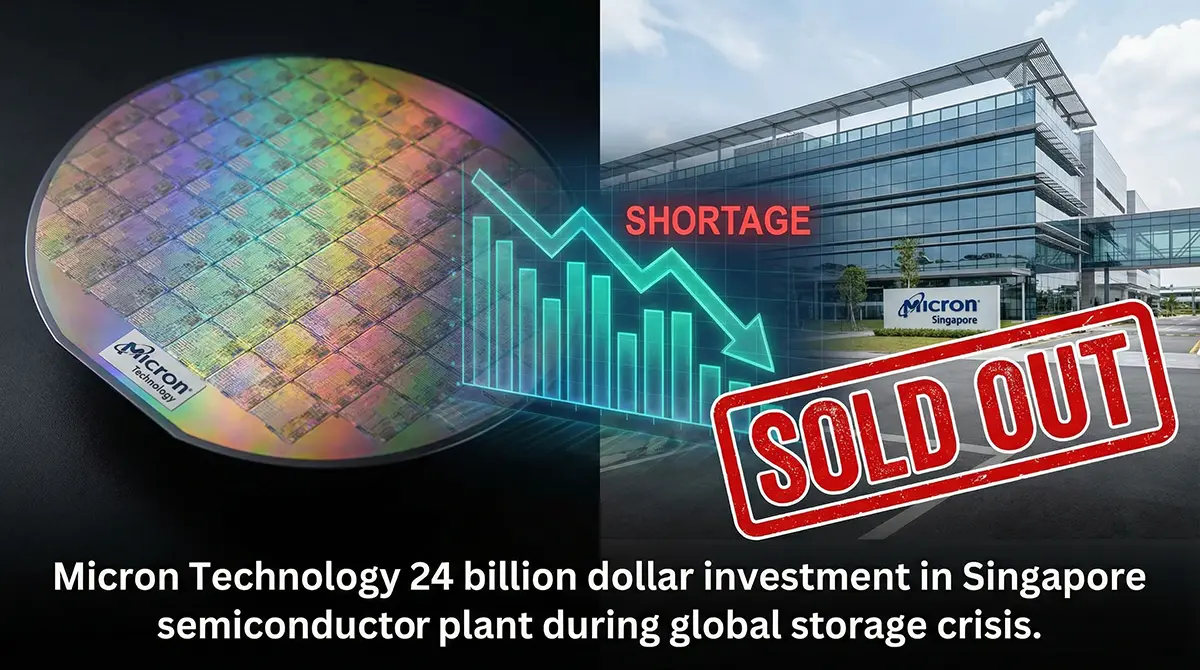
On January 30, 2026, Micron put an eye-watering $24 billion on the table to break ground on a massive new fabrication facility. While this sounds like good news for supply chains, the fine print tells a different story. This investment is a desperate race to catch up with demand, and for consumers, relief is years away.
The “Storage Crisis” is being driven by a perfect storm of limited supply and the voracious appetite of Artificial Intelligence. As we move deeper into 2026, the gap between what the world needs and what manufacturers can produce is widening.
Micron Technology: The $24 Billion Bet on AI
In a historic move, Micron Technology has broken ground on a new state-of-the-art semiconductor fabrication plant in Singapore. This is one of the most significant investments in memory manufacturing history, signaling just how critical NAND flash memory has become to the global economy.
The Scale of the Investment
This isn’t just another factory; it is a “Mega-Fab.” The facility is designed to churn out petabytes of storage to meet the exploding needs of the tech industry.
- Location: Singapore (Micron’s NAND stronghold).
- Cost: $24 Billion USD.
- Product: Advanced NAND Flash memory (essential for SSDs and Data Centers).
- Target: The AI impact on global infrastructure.
Micron is explicitly building this facility to feed the machines. The rise of Large Language Models (LLMs) like GPT-6 requires storage speeds and capacities that current global infrastructure simply cannot support.
Why 2026 and 2027 Are the “Lost Years” for Hardware
Here is the critical catch that every enthusiast and business owner needs to understand: building a semiconductor fab takes a long time.
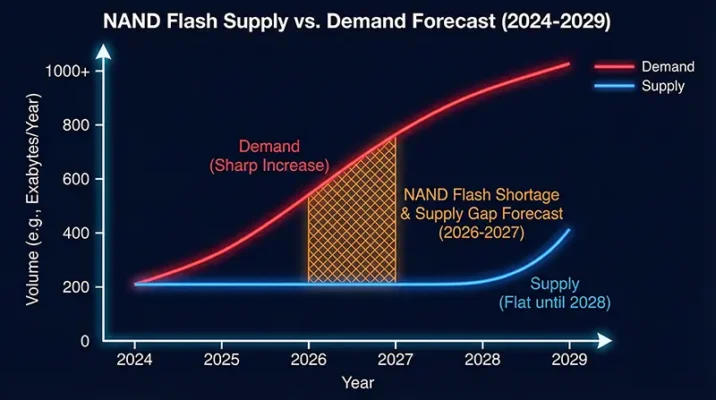
While Micron Technology is pouring money into the ground today, the new Singapore facility is not expected to ramp up meaningful production until 2028.
The Supply Gap
This timeline creates a dangerous two-year hole in the market for 2026 and 2027. During this period:
- Demand for storage will skyrocket due to AI adoption.
- Global supply will remain capped at current levels.
- SSD prices are virtually guaranteed to rise.
This aligns perfectly with recent warnings from other industry leaders. Executives from Kioxia, another major memory manufacturer, recently warned that their production lines are “sold out until 2027.”
The industry is currently failing to meet demand. Micron Technology is rushing to build capacity, but their cavalry will not arrive in time to save your current budget.
The AI Impact: Data Centers vs. Consumer PCs
The driving force behind this NAND flash shortage is the unprecedented AI impact on the technology sector.
In the past, gamers and PC users were the primary drivers of high-speed storage sales. Today, you are competing against trillion-dollar companies. Data centers training next-generation AI models require massive arrays of ultra-fast storage.
The “New Oil”

Memory has become the “New Oil” of the AI age.
- Priority: Chipmakers are prioritizing high-margin enterprise contracts over consumer SSDs.
- Allocation: A significant portion of the global NAND flash supply is being diverted to server farms.
- Consequence: The consumer market is left fighting for scraps, leading to the storage crisis we see unfolding now.
What This Means for PC Building in Pakistan
For tech enthusiasts and businesses in Pakistan, this global shift has local consequences. The PC building community and local retailers are already feeling the pinch.
Rising Costs in Local Markets
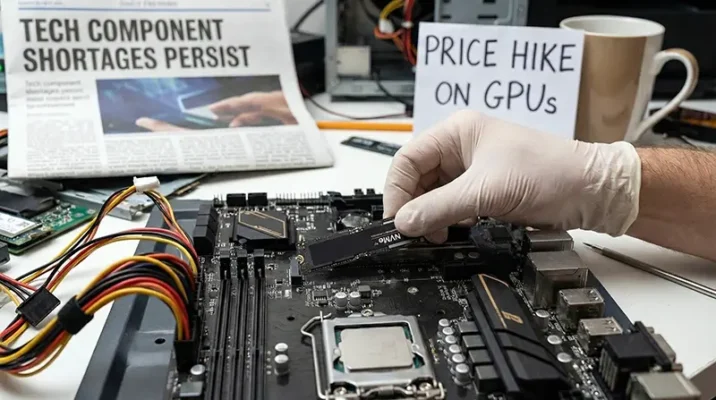
As global supply tightens, the import cost for hardware in Pakistan increases. We are already seeing the effects in local pricing for SSDs and NVMe drives.
- Price Hikes: Expect the price of 1TB and 2TB drives to climb steadily throughout 2026.
- Availability: High-end drives may become scarcer as stock is allocated to Western data centers.
- Advice for Buyers: If you are planning a build or a server upgrade, buying now is safer than waiting. The “wait for prices to drop” strategy is risky in a market defined by a shortage.
Conclusion: Don’t Wait for 2028
The $24 billion investment by Micron Technology validates the severity of the situation. While it promises a solution in the distant future, the immediate outlook is challenging.
The investment in Singapore is a beacon of hope for 2028, but for the next two years, we are facing a supply drought. Whether you are managing a data center or just trying to upgrade your gaming rig, the era of cheap, abundant storage is paused.
Actionable Advice:
- Secure Inventory: If your business relies on flash storage, lock in your supply now.
- Adjust Budgets: account for higher hardware costs in your 2026 and 2027 financial planning.
- Stay Informed: The market is volatile; keep an eye on SSD prices and manufacturer announcements.
Micron is building the future, but we have to survive the present shortage first.
Key Takeaways:
- Micron Technology invests $24B in a new Singapore fab.
- Production won’t alleviate the storage crisis until 2028.
- NAND flash shortage is driven by AI impact and data center demand.
- 2026 and 2027 will see tight supply and higher prices.
- PC building costs in Pakistan and globally will rise.
Resources
- CNBC: Micron to invest $24 billion in Singapore plant as AI boom strains global memory supply.
- CRNAsia: Micron invests US$24 billion on new Singapore manufacturing facility.
- SwissQuote: Micron to Invest $24 Billion in Singapore to Boost Chip Production.
Frequently Asked Questions (FAQs)
Yes, industry analysts and manufacturers like Kioxia and Micron warn that SSD prices are likely to rise throughout 2026 and 2027. The global storage crisis is being driven by a supply shortage of NAND flash memory, while demand from AI data centers continues to skyrocket.
The shortage is expected to last until at least 2028. While Micron Technology has invested $24 billion in a new Singapore fabrication plant, meaningful production volume from this facility will not reach the market until 2028, leaving a supply gap for the next two years.
Building semiconductor factories takes years. The current investment by Micron is a long-term solution. In the short term (2026-2027), the explosive growth of AI impact and Large Language Models (LLMs) is consuming existing inventory faster than manufacturers can produce it, creating a temporary but severe deficit.
AI models require massive amounts of ultra-fast storage (High-Bandwidth Memory and enterprise SSDs). Manufacturers are prioritizing these high-profit data center contracts over consumer hardware. This leaves fewer chips for consumer SSDs, driving up the cost of PC building components globally and in markets like Pakistan.
If you need storage for a business server or a personal PC, it is recommended to buy now. With production capacity “sold out” until 2027 and no major relief arriving until Micron’s new plant opens in 2028, waiting for a price drop carries a significant risk of paying more later.
Related Blogs
The Legacy Trap: Why DDR4 RAM Prices Are Skyrocketing in 2026
Are you caught in the "Legacy Trap"? Discover why DDR4 RAM prices are exploding in 2026 and why upgrading your old gaming PC might be a financial mistake.
1 Comment
Feb

RAM Price Pakistan 2025 Shock: Why The “Stargate” Crisis Will Explode Costs
The RAM price Pakistan 2025 forecast is terrifying. Discover how OpenAI's "Stargate" project is draining global supplies and why Hafeez Center rates are skyrocketing.
2 Comments
Dec
RAM Prices are Skyrocketing: The 2025 RAM Price Increase & Why Your Next PC Will Cost Double
The era of cheap memory is officially over. With analysts predicting a 200% RAM price increase in 2025, the so-called "AI Tax" is set to double the cost of your next gaming [...]
Dec

Samsung Memory Shortage Crisis: Why No One Can Escape the 2026 AI Tax
Samsung CEO TM Roh warns of an unprecedented Samsung memory shortage caused by OpenAI's Stargate project. Learn how this crisis will hit electronics prices in Pakistan and what you can do before [...]
Jan
The Great Downgrade: Why Future Flagship Phones Will Have LESS RAM
Is your next upgrade actually a downgrade? Why 2026 flagship phones are ditching 16GB RAM standards and pivoting to a controversial 'Cloud AI' future.
Dec
