

News
The Terminator Era: Robot Soldiers in Ukraine
Mar
Let’s be honest for a second: whenever we used to hear the term robot soldiers, our minds instantly jumped to Arnold Schwarzenegger marching through a post-apocalyptic wasteland. It was pure Hollywood fiction. But fast-forward to early 2026, and science fiction has rapidly transformed into science fact. For tech enthusiasts and the general public alike in Pakistan—a nation that keeps a very close eye on global defense trends—this is a massive paradigm shift. Robot soldiers are no longer confined to movie screens; they are currently being deployed in the battlefields of Ukraine.
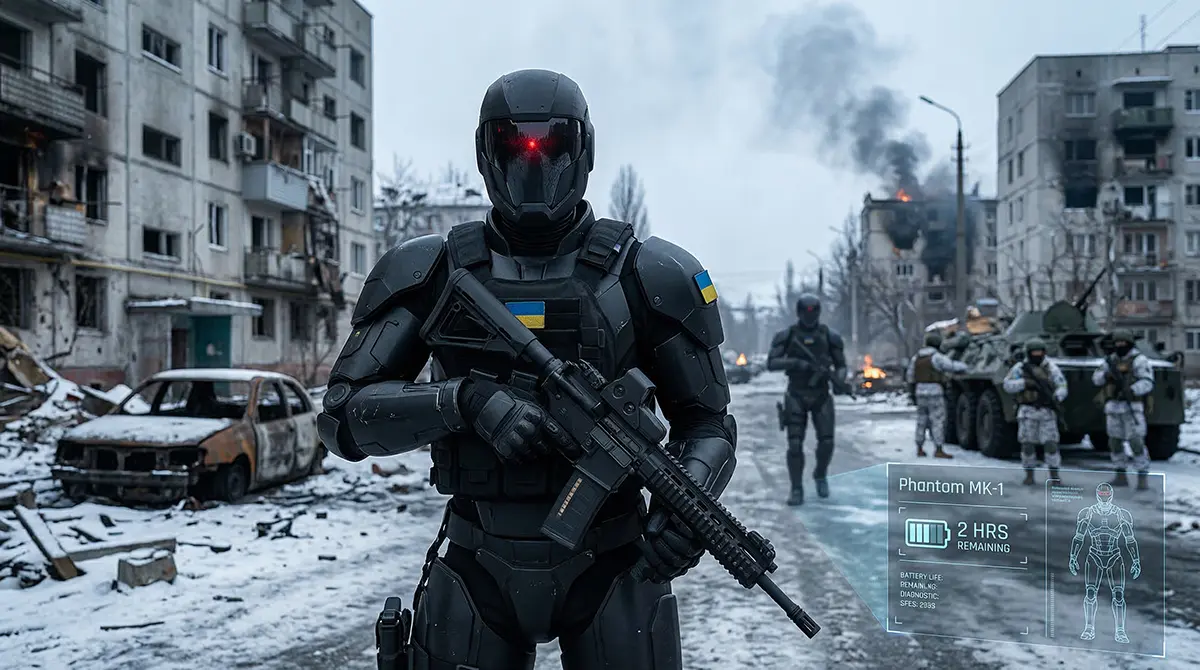
In February 2026, a San Francisco-based tech startup delivered actual humanoid robot soldiers to the Ukrainian frontlines to evaluate their combat readiness. These aren’t just remote-controlled cars with cameras; these are walking, bipedal machines designed to handle human weaponry, clear bunkers, and eventually, replace human infantry in high-risk zones.
In this deep dive, we are going to explore exactly what these machines are, how they are reshaping the future of modern warfare, the technical limitations they still face, and the staggering ethical questions this raises for the global community. Buckle up, because the rules of engagement are being rewritten right before our eyes.
From Sci-Fi to Reality: The Dawn of Robot Soldiers
The idea of replacing flesh and blood with steel and code has been the holy grail of military strategists for decades. Today, that vision is spearheaded by the Foundation robotics company, a Silicon Valley firm that is aggressively pushing robot soldiers from the laboratory directly onto the battlefield. While most robotics companies are building humanoids to fold laundry or move boxes in warehouses, Foundation has taken a decidedly different, much more controversial route.
What Are the Phantom MK-1 Humanoids?
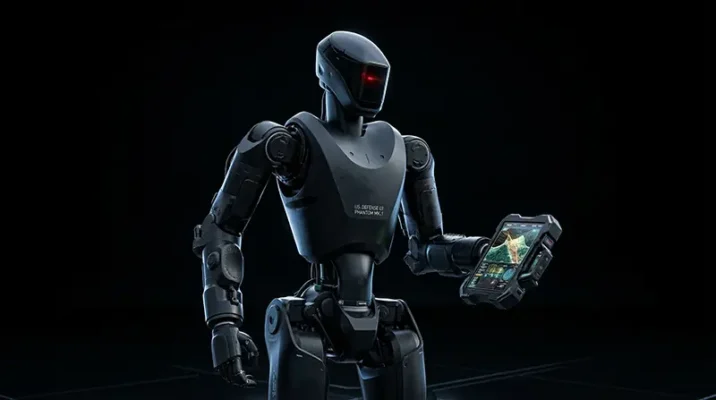
The flagship model currently causing a global stir is the Phantom MK-1 humanoid. Standing upright and encased in jet-black steel with a tinted, ominous glass visor, it looks exactly like what you would expect an AI-powered military technology to look like. It is designed specifically for defense applications. The co-founder of Foundation, Mike LeBlanc—a Marine Corps veteran with multiple combat tours—has openly stated that the goal is for these robot soldiers to operate any weapon system designed for a human. They do not get tired, they do not suffer from PTSD, and they do not hesitate out of fear. When a squad needs a door breached or a dangerous bunker explored, the Phantom is sent in first. The psychological impact alone of facing a cold, faceless machine that doesn’t retreat is a new kind of warfare entirely.
The Tech Behind the Machines: AI and Robotics
What makes these robot soldiers tick? It’s not just hydraulics and metal; it is incredibly advanced neural networks and agentic AI. Unlike older unmanned ground vehicles (UGVs) that required constant, step-by-step remote control, modern autonomous combat robots use reinforcement learning to navigate complex terrain. They process visual data in real-time, allowing them to balance on uneven rubble, track moving objects, and theoretically, identify targets.
Unique Insight: The true breakthrough here isn’t just physical balance—it’s the “plug-and-play” nature of their design. Because they are humanoid, militaries do not need to invent new weapons for them. A Phantom MK-1 can simply pick up a standard-issue rifle dropped by a human and keep pushing forward. It seamlessly integrates into an infrastructure built for humans, making the transition to robotic armies surprisingly frictionless.
Why Ukraine? The Testing Ground for Future Tech
Since the conflict escalated, Ukraine has inadvertently become the “Silicon Valley of warfare.” It is a live, high-stakes testing ground where experimental tech is stress-tested against the harsh realities of peer-to-peer combat. The deployment of robot soldiers here is not random; it is the culmination of years of escalating drone warfare.
Frontline Reconnaissance and High-Risk Ops
In February 2026, TIME magazine broke the news that two Phantom MK-1 units had been delivered to Ukraine. Their primary mission? Frontline reconnaissance drones have their limits—they can’t fly deep into heavily fortified underground bunkers or navigate dense, jammed urban interiors effectively. This is where humanoid robot soldiers shine. Because they have a heat signature somewhat similar to humans (due to their motors and batteries), they can also act as decoys, confusing enemy thermal surveillance systems. They are currently being used to assess the environment, carry resupplies, and conduct robotic combat evaluation in areas where sending a human would be a guaranteed suicide mission.
The “Robot War” Phenomenon in 2026
We are currently witnessing what operators on the ground are calling a “complete robot war.” To put this into perspective, Ukrainian state media reported an astonishing 7,495 robotics operations in January 2026 alone. While most of these were aerial drones or tracked delivery bots, the introduction of humanoid machines marks a tipping point. Humans are slowly being pushed back from the absolute edge of the frontline, transitioning into roles where they manage and maintain fleets of machines.
Unique Insight: We are seeing an inversion of traditional combat roles. Historically, technology supported the human infantryman. In Ukraine right now, the humans are increasingly becoming the support staff for the technology. The machine is the primary fighter, and the human is the manager sitting miles away in a trench.
The Mechanics of War: How These Machines Operate
Before we assume that invincible Terminator armies are sweeping the globe, we have to look at the actual, grounded reality of 2026 technology. Robot soldiers are impressive, but they are still machines bound by the laws of physics, battery chemistry, and software limitations.
Arsenal and Weaponry Capabilities
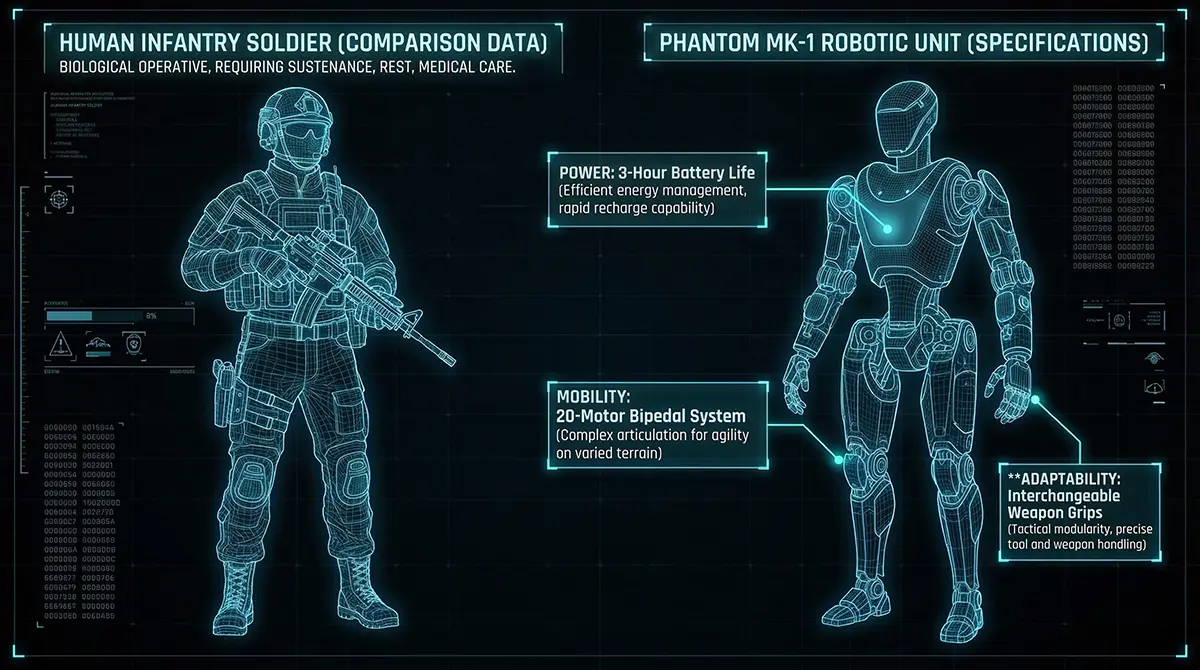
The Phantom MK-1 humanoid has already demonstrated the ability to handle an impressive array of firearms. During demonstrations at Foundation’s facilities, the robot has been tested wielding revolvers, semi-automatic pistols, shotguns, and dummy M-16 rifles. The goal is complete modularity. Furthermore, the company holds around $24 million in defense contracts with the U.S. Army, Navy, and Air Force. They are currently preparing for Marine Corps testing where these robot soldiers will be trained to plant explosives on doors for safe site breaches. The dexterity required to manipulate a firearm safety, pull a trigger, and manage recoil is immense, yet these machines are learning it at an exponential rate.
Battery Life, Movement, and Vulnerabilities
However, these humanoid military robots have glaring Achilles’ heels. First is endurance: current reports suggest a battery life of roughly two to three hours before they require a recharge. In a protracted firefight, a dead battery turns a multi-million dollar asset into a stationary paperweight. Secondly, the robot relies on roughly 20 intricate motors to mimic human movement. A single piece of shrapnel or a malfunction in one motor can critically hobble the unit. Finally, there is the cyber threat. In a warzone saturated with electronic warfare, the risk of enemies hacking, jamming, or hijacking these robot soldiers is a massive vulnerability.
Unique Insight: The physical destruction of a robot is a financial loss, but a hacked robot is a critical security breach. Captured machines, much like captured drones today, serve as intelligence goldmines. The future of warfare won’t just be about who has the strongest armor, but who has the most un-hackable code.
Ethical and Global Implications of Autonomous Combat
Whenever we talk about lethal autonomous weapons systems (LAWS), the ethical alarm bells start ringing. Handing over the “kill chain” to an algorithm is one of the most hotly debated topics in international law right now.
The Moral Imperative vs. The Slippery Slope
The creators of these robot soldiers argue from a point of morality. “We think there’s a moral imperative to put these robots into war instead of soldiers,” says Mike LeBlanc. If a machine gets blown up, a family doesn’t lose a son or daughter. There are no flag-draped coffins. But critics point out a terrifying counter-argument: if war becomes bloodless for the side with the most money and tech, the political threshold for starting a war drops to zero. Without the political backlash of human casualties, superpowers might engage in endless, reckless conflicts. Furthermore, AI is prone to “hallucinations” and errors; a machine cannot comprehend the nuance of a civilian holding a broom versus a combatant holding a rifle.
What This Means for the Developing World and Pakistan
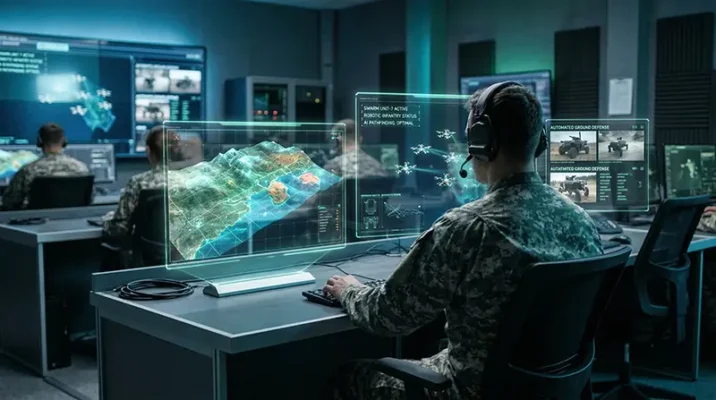
For the Pakistani audience—a region historically surrounded by complex geopolitical tension—this technological leap is a massive wake-up call. The defense applications of AI are creating an unprecedented gap between hyper-developed militaries and developing nations. If regional powers or global superpowers begin fielding armies of robot soldiers, traditional manpower and conventional military strategy become obsolete. For countries like Pakistan, investing heavily in AI, cyber-warfare capabilities, and counter-drone technologies is no longer just an option; it is an absolute necessity for national sovereignty.
Unique Insight: The deterrence theory of the 21st century will not just be nuclear; it will be robotic. A massive standing army of humans might soon be viewed as a liability rather than an asset, as they require food, logistics, and morale management, whereas a warehouse of dormant robots costs nothing to maintain until activated.
The Future of Warfare: Where Do We Go From Here?
We have permanently crossed the point of no return. The deployment in Ukraine is just the Beta test. The question isn’t if robot soldiers will become standard issue, but when they will completely dominate the battlefield.
The Phantom MK-2 and Mass Production
Foundation isn’t resting on its laurels. By April 2026, they are slated to roll out the Phantom MK-2. This upgraded model boasts consolidated electronics, full waterproofing (to survive mud and rain), a larger battery capacity, and the sheer mechanical strength to carry loads of up to 80 kilograms. The company’s audacious goal is to manufacture 30,000 units annually, bringing the per-unit cost down to under $20,000. At that price point, robot soldiers become cheaper than training, deploying, and providing lifelong healthcare for human veterans.
Will Human Infantry Become Obsolete?
So, are we looking at replacing human infantry completely? Not immediately. For the foreseeable future, the military will operate on a “human-in-the-loop” protocol. Humans will make the strategic decisions, pull the virtual trigger, and manage the logistics. However, the days of sending squads of 18-year-olds to kick down doors in hostile urban environments are numbered. The infantry of tomorrow will look more like IT specialists and drone pilots, commanding localized swarms of robot soldiers from armored, mobile command centers miles away from the kinetic danger.
Quick Takeaways
- Real-World Deployment: The U.S. startup Foundation deployed “Phantom MK-1” humanoid robot soldiers to Ukraine in February 2026 for frontline evaluation.
- Weaponry Mastery: These robots are specifically designed to operate human weapons, including pistols, shotguns, and M-16s, requiring no specialized robotic gear.
- The “Moral Imperative”: Proponents argue robots save human lives and remove combat stress/PTSD from the equation.
- Critical Vulnerabilities: They currently suffer from short battery lives (2-3 hours), vulnerability to hacking, and complex maintenance needs.
- Ethical Dangers: Critics warn that removing human casualties from war makes it politically easier for nations to start and prolong violent conflicts.
- The Next Gen: The Phantom MK-2 is arriving soon with heavier load capacities and waterproofing, signaling a rapid acceleration in this tech race.
Conclusion
The arrival of robot soldiers on the battlefields of Ukraine marks a definitive and irreversible shift in human history. We are watching the dawn of the Terminator era, driven not by a malevolent rogue AI, but by human engineers aiming to save the lives of their own troops. While the Phantom MK-1 is still constrained by battery limits and software bugs, its rapid evolution is a testament to how quickly AI-powered military technology is advancing.
For regions deeply invested in defense, including Pakistan, this serves as a critical indicator of where the future is headed. Wars will no longer be won by the side with the most boots on the ground, but by the side with the most sophisticated algorithms and the best robotics manufacturing base. The battlefield has changed forever, and the world must adapt rapidly to the ethical and strategic realities of automated warfare.
References
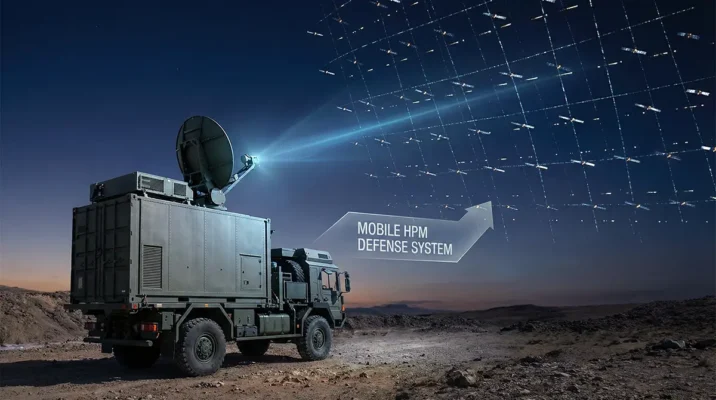
China Starlink Killer: Inside the TPG1000Cs Microwave Cannon Threat
China has unveiled the TPG1000Cs, a mobile microwave cannon capable of frying satellite constellations. Discover how this "China Starlink Killer" changes electronic space warfare.
Feb
Frequently Asked Questions (FAQs)
No, currently, the Phantom MK-1 humanoid military robots deployed in Ukraine are primarily being evaluated for frontline reconnaissance and logistical support. The Pentagon and the companies involved still mandate a “human-in-the-loop” protocol for any lethal action.
While prototype costs are high, Foundation aims to achieve mass production of up to 30,000 units per year, which they project will bring the cost of these autonomous combat robots down to under $20,000 per unit.
This is one of the biggest concerns with the defense applications of AI. If hacked or captured, a robot could be turned against friendly forces or reverse-engineered by the enemy. Extensive cybersecurity measures are required to prevent these lethal autonomous weapons systems from being compromised.
Yes. The Phantom MK-1 humanoid is specifically designed with the dexterity to operate standard human weaponry, including revolvers, shotguns, and rifles, so militaries do not need to manufacture entirely new arsenals for their robotic forces.
The future of modern warfare means that conventional troop numbers will matter less than technological superiority. Developing nations, including Pakistan, will need to heavily invest in AI, electronic warfare, and drone technology to defend against or keep pace with these advanced robotic threats.
Would you like me to dive deeper into how specific countries are developing counter-measures against these new autonomous robotic threats? Drop a comment below and let me know your thoughts—do you think robotic armies will prevent wars, or just make them easier to start? Don’t forget to share this article with your fellow tech enthusiasts!
