

Hardware
SSD Price Crisis 2026: Why Cheap Storage Is Dead & Sold Out (Critical Update)
Jan
If you were waiting for a sale to pick up a 1TB or 2TB drive for your new Gaming PC, I have some terrible news: You waited too long. The days of finding a decent NVMe drive for $50 are gone, and the skyrocketing SSD price trend indicates they aren’t coming back anytime soon.
In a grim announcement today, a top executive from Kioxia (one of the world’s largest NAND flash manufacturers) confirmed what analysts feared: The global supply of storage is effectively “sold out” for the entire year of 2026.
This article breaks down exactly why storage prices are about to get ugly, how the AI impact is driving this shortage, and what it means for your next PC build.
The Official Announcement: “It’s Over”
Speaking to industry reporters, Shunsuke Nakato (Managing Director at Kioxia) didn’t mince words about the state of the market. His statement serves as a stark warning for consumers hoping for a budget-friendly SSD price correction.
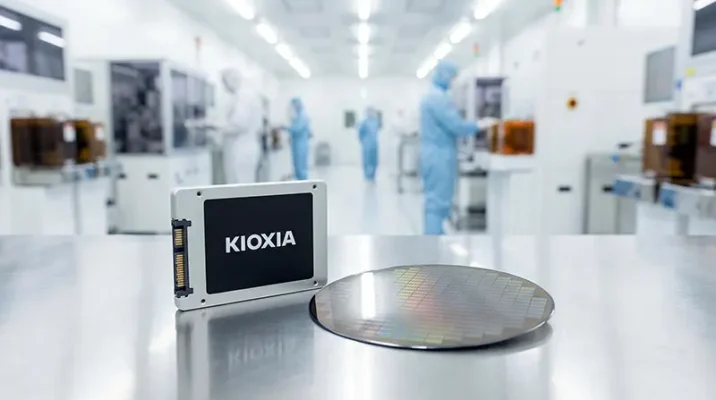
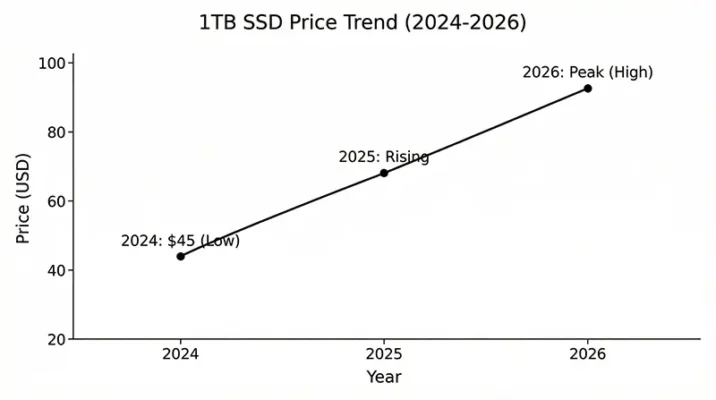
“To be honest, this year’s production volume is already sold out. The days of cheap 1TB SSDs for around $45 are over.”
Nakato went on to confirm that this isn’t just a short-term blip. Because data centers are buying up every scrap of NAND flash memory to train models, there is almost nothing left for consumer NVMe SSD production. This creates a massive supply-demand imbalance that will inevitably force prices upward for regular consumers.
The Key Players
This isn’t just a Kioxia problem. The major manufacturers dominating the NAND market include:
- Samsung
- SK Hynix
- Micron
- Kioxia
When a giant like Kioxia announces they are sold out, it sends ripples through the entire supply chain, affecting inventory from Samsung and Micron as well.
Why Is The SSD Price Rising? (The AI Tax)
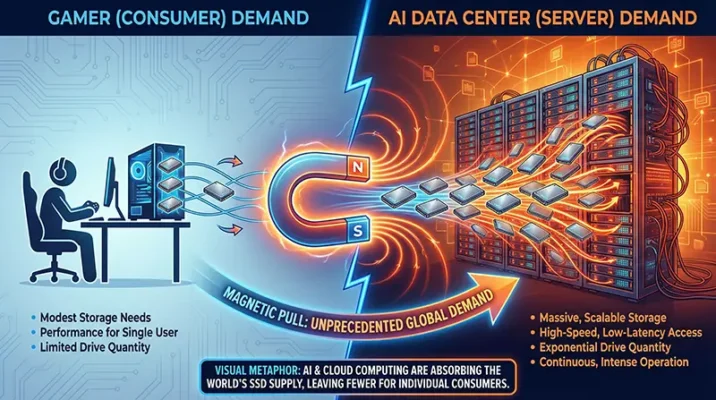
We sound like a broken record, but the villain is once again Artificial Intelligence. The AI impact on the hardware market is no longer limited to Graphics Processing Units (GPUs); it has now infected the storage sector.
1. Data Center Dominance
AI models require massive amounts of high-speed storage, known as Enterprise SSDs. Companies like OpenAI, Google, and Microsoft are outbidding PC gamers for raw NAND chips. These companies have deeper pockets and can pay premiums that consumer manufacturers cannot match.
2. Profit Priorities
Manufacturers make significantly more profit selling to AI companies than they do selling a $60 drive to a consumer.
- Enterprise Drives: High margin, bulk sales.
- Consumer Drives: Low margin, price-sensitive.
As a result, factories are shifting all their production lines to Enterprise storage. This shift creates a scarcity of consumer-grade NAND flash, directly causing the consumer SSD price to spike.
The Timeline: Sold Out Through 2026
The forecast is bleak. According to the Kioxia executive, production is fully booked through 2026.
- 2026 Status: Fully Sold Out.
- 2027 Forecast: High prices will continue until new factories can be built or AI demand stabilizes.
This means that for the next 18 to 24 months, we are in a seller’s market. If you are planning a PC build in the near future, relying on price drops is a dangerous strategy. Inflation and production costs are only adding fuel to the fire.
Impact on Gaming PCs and Builders
For the hardware enthusiast community, particularly those in Pakistan looking to build a budget Gaming PC, this is a critical blow.
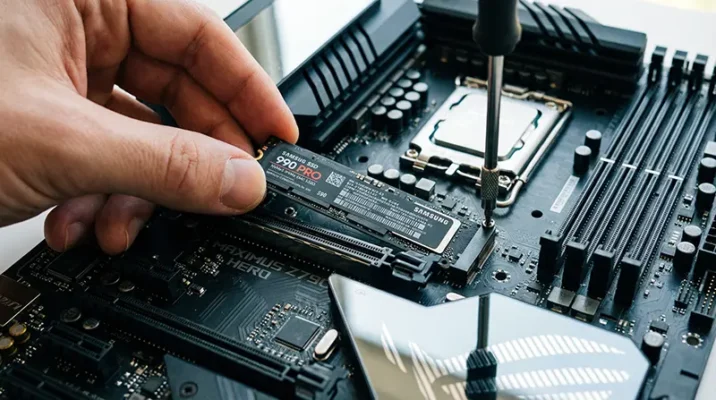
With GPUs already costing a fortune, the storage component was often the one place builders could save money. That safety net is now gone. The “budget PC” is becoming a myth as the floor price for essential components rises.
The “Add It Later” Trap
A common strategy for builders is to buy a small drive now and “add more later.” Our Advice: Do not do this in 2026. If you buy a small drive now, upgrading later will likely cost you 30-40% more than current prices. The SSD price curve is moving upward, not downward.
Community Reaction and Market Sentiment
Social media is understandably furious. The tech community is suffering from “upgrade fatigue” caused by consecutive price hikes in almost every category of hardware.
One user on X.com summed up the frustration perfectly with a bit of dark humor regarding the AI impact:
“AI will make everything cheap, yeah except what we need.”
This sentiment reflects a growing divide between the booming Enterprise tech sector and the struggling consumer market. While Samsung and Kioxia report record profits from AI sales, the average gamer is priced out of the hobby.
Final Verdict: Buy Now or Pay More
The window to upgrade your storage cheaply closed about two months ago. However, the window to buy at reasonable prices is closing right now.
The Bottom Line:
- Don’t Wait: If you see an NVMe SSD at a decent price today, buy it immediately.
- Avoid Procrastination: By next month, that same drive could cost significantly more.
- Secure Storage for Builds: If you are building a Gaming PC in 2026, do not skimp on storage now.
The SSD price explosion is here. Prepare accordingly.
Resources
- TomsHardware: Kioxia exec says the AI boom means the era of the cheap 1TB SSD is over —company’s NAND supply is sold out for this year and likely through 2027.
Frequently Asked Questions (FAQs)
The primary driver is the AI impact. Data centers training Artificial Intelligence models are buying up massive amounts of Enterprise NAND flash. This has caused manufacturers like Samsung and Kioxia to shift production lines away from consumer drives to meet high-profit enterprise demand, creating a global shortage for gamers and PC builders.
It is highly unlikely. Industry reports confirm that production capacity is fully booked (sold out) for the entire year. With inflation and raw material costs also rising, analysts predict SSD prices will remain high through 2026 and likely into early 2027.
Yes. If you see an NVMe SSD at a reasonable price, buy it immediately. Prices are trending upward, meaning that same drive could cost 30-40% more in just a few months. Waiting for a “sale” is currently a risky strategy.
All major manufacturers are affected, including Samsung, Western Digital, Kioxia, and Micron. Since these companies supply the NAND chips for almost all other third-party brands (like Corsair or Kingston), the price hike will be felt across the entire market.
For mass storage (movies, backups), an HDD is still a budget-friendly option. However, for a modern Gaming PC or operating system drive, an NVMe SSD is essential for performance. We do not recommend using an HDD as your primary boot drive in 2026.
