


Feb
The Intel warranty policy recently became the center of a monumental antitrust ruling that has sent shockwaves through the global technology sector. If you have ever attempted to claim a warranty on an Intel CPU in India, only to be rejected because the serial number originated from a different region, you have experienced this deeply frustrating system firsthand.
For years, the technology giant utilized a restrictive, region-locked framework to deny service to countless hardware owners. This localized framework essentially treated certain customers as second-class citizens compared to the rest of the world.
However, the Competition Commission of India (CCI) recently stepped in. By imposing a nearly $3 million fine (₹27.38 Crore) for abusing a dominant market position, regulatory bodies have officially validated decades of consumer frustration. Here is an analytical breakdown of why this controversial Intel warranty policy was dismantled and what it means for the future of tech hardware.
Unpacking the Intel Warranty Policy Crisis
Between 2016 and 2024, Intel operated a highly specific set of rules for its hardware in the Indian market. This was not a standard operational procedure; it was a targeted local strategy.
The Reality of a Discriminatory Warranty Claim
The foundation of the issue was the denial of service based purely on the point of origin. If a buyer submitted a discriminatory warranty claim, the company’s regional branches would refuse support unless the hardware was sourced from a highly specific, localized vendor.
- Customers with faulty hardware were turned away at service centers.
- Independent repair shops could not source localized replacement guarantees.
- Hardware enthusiasts were forced to absorb the cost of manufacturing defects.
This meant that even if a product was completely authentic and defective through no fault of the user, the Intel warranty policy ensured it was ineligible for standard replacement protocols.
Devastating Impact on Parallel Import CPU Markets
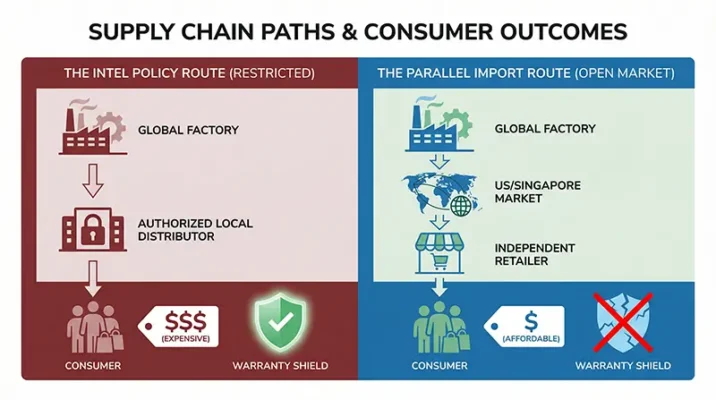
To understand the severity of this ruling, one must look at the secondary hardware market. Buyers and independent retailers routinely source components from international markets like the US or Singapore to secure better pricing.
When consumers brought a parallel import CPU into the local ecosystem, they suddenly found themselves holding hardware with zero post-purchase safety nets. Retailers were actively discouraged from importing cheaper, high-quality stock because selling those units meant selling a product devoid of manufacturer backing.
Breaking Down the CCI Penalty and Legal Verdict
The antitrust regulator did not mince words when analyzing the company’s historical practices. They concluded that Intel held a dominant position in the desktop processor market and systematically utilized that influence to suffocate healthy competition.
The Role of Cross Border Geofencing

The most damning piece of evidence in the regulatory investigation was a global market comparison. The CCI noted that the company does not utilize these aggressive restrictions in other major markets like China or Australia.
Instead, they actively utilized cross border geofencing solely in the South Asian market to trap buyers into paying regional premiums. This digital border-control strategy ensured that hardware purchased abroad lost its intrinsic service value the moment it crossed the border.
Empowering the Authorized Distributor
The primary beneficiary of this restrictive Intel warranty policy was not the consumer, but the official local vendors.
- It forced Indian retailers to buy strictly from an authorized distributor.
- It allowed local distributors to maintain artificially high pricing without fear of international competition.
- It effectively killed the thriving, competitive landscape of independent tech importation.
Because of this prolonged abuse, the resulting CCI penalty serves as a financial and symbolic restitution for eight years of monopolistic behavior.
The Ripple Effect on Right to Repair Laws
While the fine makes global headlines, the broader implications of this ruling will resonate across the consumer electronics industry. The localized Intel warranty policy is technically already dead, having been quietly withdrawn on April 1, 2024, in anticipation of this exact legal outcome.
Why Global Tech Support Matters
The regulatory order now dictates that Intel must widely publicize the removal of this geofencing tactic. Consumers must be informed that their legally imported boxed microprocessors are once again eligible for standard manufacturer support.
This ruling reinforces the necessity of global tech support. Companies can no longer use localized “Warranty Void” clauses as a corporate weapon to stop consumers from seeking out the best global prices.
Securing Coverage for Every Genuine Processor
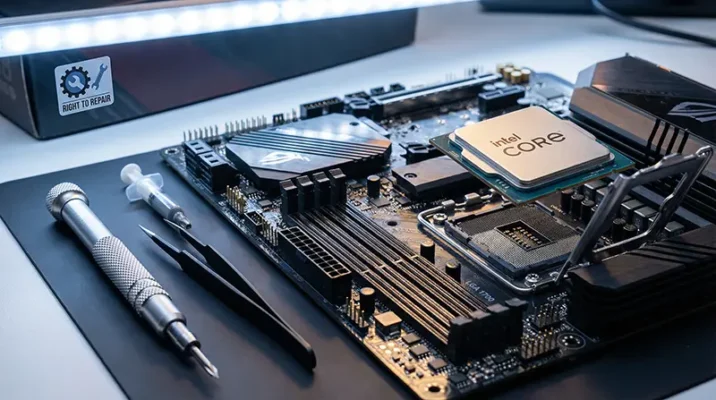
Ultimately, this is a massive victory for hardware longevity and consumer rights. This verdict strengthens the foundation of modern right to repair laws, sending a warning shot to other industry titans who might attempt similar regional lockouts.
If a consumer purchases a genuine processor, the service agreement should inherently travel with the physical hardware. The authenticity of the silicon, not the geographical coordinates of the cash register, should dictate its eligibility for repair.
What This Means for Consumers
The death of this specific Intel warranty policy marks a turning point for tech enthusiasts, parallel importers, and everyday computer users. It proves that aggressive regional monopolies can be successfully challenged and dismantled by regulatory oversight.
Moving forward, buyers can explore international hardware markets with renewed confidence, knowing their investments are protected by standardized, global consumer rights.
Resources
- Yahoo Finance: India’s Antitrust Watchdog Penalizes Intel $3.3 Million Over Discriminatory Warranty Policy.
- Toms Hardware: Intel fined $3 million by India’s antitrust regulator over discriminatory CPU warranty policy — says Intel abused its dominant position in the boxed processor market.
- Financial Express: CCI fines Intel Rs 27 Cr over ‘discriminatory’ India warranty policy; asked to deposit fine within 60 days.
Frequently Asked Questions (FAQs)
Between 2016 and 2024, the Intel warranty policy in India stipulated that buyers could only receive official hardware support if they purchased their product from a local authorized distributor. If a consumer legally imported a genuine processor from another country to save money, the company refused to honor the warranty locally, forcing the buyer to return the hardware to the original country of purchase.
The Competition Commission of India (CCI) determined that the company abused its dominant market position in the sale of boxed microprocessors. Because this discriminatory warranty claim system actively harmed consumer choice and suppressed fair competition for eight years, the regulatory body imposed a $3 million (₹27.38 Crore) CCI penalty as restitution.
A parallel import CPU is a completely authentic, original product that an independent retailer or consumer legally imports from a foreign market (like the US or Singapore) where the price is lower. Yes, it is safe to buy them now. Due to the recent legal verdict and the removal of cross border geofencing, these imported processors are once again eligible for standard local support.
Previously, the restrictive policy essentially handed a monopoly to the local authorized distributor network, allowing them to keep prices artificially high without fear of international competition. This ruling dismantles that unfair advantage, forcing local distributors to price their hardware more competitively against international markets.
This verdict is a massive win for right to repair laws. It establishes a legal precedent that hardware manufacturers cannot use regional digital locks to void support on authentic products. Moving forward, buyers are entitled to global tech support regardless of whether the hardware was purchased in New York, Beijing, or Mumbai.
Related Blogs

Intel Lunar Lake Laptop Price & Availability 2026: Shocking Market Reality
Discover the truth about Intel Lunar Lake Laptop Price & Availability 2026. Learn how Intel dodged the LPDDR5X memory shortage and what it means for your upgrade.
Jan

LEAKED: Intel Arc B770 Specs & Price in Pakistan – The “Big Battlemage” is Here
Intel Arc B770 "Big Battlemage" specs leaked ahead of CES 2026! Discover the massive 16GB VRAM features, release date, and expected price in Pakistan.
Jan

SoftBank OpenAI Investment: Masayoshi Son’s Massive $70 Billion AGI Bet
SoftBank is in talks for a fresh $30 billion SoftBank OpenAI investment. Discover why Masayoshi Son is betting $70 billion on GPT-6, Project Stargate, and the future of AGI.
Feb
