


Mar
Imagine picking up your phone to text a friend, only to remember they stubbornly refuse to download your favorite messaging app. For years, the digital world has been walled off. If you used WhatsApp, you could only talk to other WhatsApp users. But as of early 2026, those walls are finally crashing down. The world’s most popular messenger has just rolled out one of its most revolutionary features to date: WhatsApp third-party chats.
Yes, you read that correctly. Meta’s messaging giant is officially letting you communicate with people who don’t even have the app installed. Driven by aggressive new regulations in Europe, this WhatsApp interoperability update 2026 fundamentally changes how we connect. Whether you’re a tech enthusiast in Lahore keeping up with the latest digital trends or a business owner in Karachi trying to reach customers on alternative platforms, this shift impacts you.
In this comprehensive guide, we will dive deep into how this cross-platform magic actually works, explore the heavy-duty tech keeping your chats secure, and unpack what this unified digital messaging experience means for the WhatsApp ecosystem in Pakistan and beyond.
What Exactly Are “Third-Party Chats”?
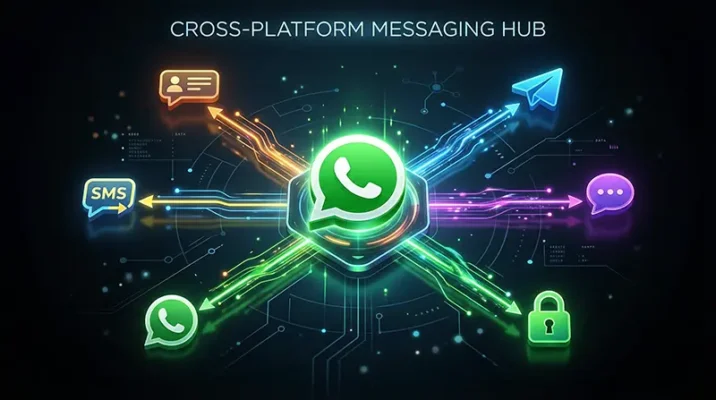
For the better part of a decade, messaging apps operated as isolated islands. A WhatsApp user couldn’t directly message a Viber user, much like someone with a PlayStation couldn’t easily play an Xbox game online. The introduction of WhatsApp third-party chats completely flips this script, offering true WhatsApp messaging interoperability.
But how did a massive corporation like Meta, which has historically kept users locked inside its own ecosystem, suddenly decide to play nice with other apps? The answer lies in international law, specifically across the pond in Europe.
The EU’s Digital Markets Act (DMA) Explained
The European Union recently enforced the EU Digital Markets Act DMA, a landmark piece of legislation designed to promote fair competition in the digital space. The DMA explicitly labels massive tech conglomerates (like Meta, Apple, and Google) as “gatekeepers.” Because WhatsApp boasts over 3 billion monthly active users globally, it undeniably holds a dominant market position.
To prevent a monopoly, the DMA mandates that gatekeepers must allow third-party services to interoperate with their own [1]. Failure to comply could result in astronomical fines—up to 10% of the company’s total worldwide annual turnover. Consequently, Meta spent years developing a compliant technical framework. While this started as an EU-centric mandate, the underlying architecture has been built globally, paving the way for a worldwide rollout.
How Cross-Platform Messaging Works on Your Screen
So, what does it look like when you actually use it? According to beta testing reports and recent updates, the user experience is designed to be seamless but distinct. Once enabled, users can opt for a WhatsApp separate inbox third-party setup or a combined inbox [4].
If you choose the separate inbox, you will see a new tab specifically dedicated to chats from outside apps. You can send text messages, voice notes, images, videos, and files to someone using a different app, just as you would in a native chat. However, highly specific native features like broadcast channels or complex stickers might not translate perfectly at first. By giving users the choice of how to organize these incoming messages, WhatsApp maintains clarity while offering a unified digital messaging experience.
The Tech Behind the Magic: Inside Meta’s “MEX” Layer

Opening up a closed system is a logistical and security nightmare. How do you let outside data into your platform without exposing your billions of users to malware, spam, or privacy breaches? To solve this, Meta engineers built an entirely new backend infrastructure known internally as the MEX (Meta Experience) layer [2].
This high-trust internal GraphQL layer is the unsung hero of the WhatsApp interoperability update 2026. It handles everything from cross-Meta identity linking to passkey authentication, and crucially, it manages how third-party messages are processed.
End-to-End Encryption and Security Protocols
One of the most legitimate fears surrounding cross-app communication features is the potential loss of privacy. WhatsApp end-to-end encryption security is a major selling point for its users. Fortunately, Meta drew a hard line in the sand: any third-party app that wants to plug into WhatsApp must prove it can match the platform’s stringent encryption standards.
When a message is sent from an external app to WhatsApp, it doesn’t just flow freely. It goes through a rigorous digital handshake within the MEX layer. The system maps the third-party user identifiers to internal WhatsApp IDs while preserving user privacy controls. Furthermore, WhatsApp has introduced features like IP address protection during calls and automatic restrictions on group invitations from outside platforms to mitigate spam.
Can You Trust Messages from Outside WhatsApp?
The short answer is: yes, but with sensible precautions. Because third-party developers have to sign strict agreements and submit requests to be included in the interoperability framework, the barrier to entry is high [3]. You won’t be flooded by random spam from unverified sketch-apps.
Furthermore, you maintain granular control. The MEX schema reveals operations like InteropPrivacySettingWithContactListUpdate, which means you can potentially control which specific external platforms are allowed to reach you on a per-contact basis [2]. It is an incredibly sophisticated approach to security that proves WhatsApp isn’t just checking a regulatory box; they are trying to do cross-platform messaging safely.
Why This is a Massive Game-Changer for Pakistan
While the DMA is a European law, the ripple effects of this update are seismic for a country like Pakistan. Here, WhatsApp is not just an app; it is the internet. From family groups planning Eid dinners to university students sharing assignments, and local grocers taking home delivery orders, WhatsApp is the undisputed king of communication.
Curing the “Which App Do You Use?” Headache
Despite its dominance, not everyone uses WhatsApp. Some privacy advocates prefer Signal. Some tech circles lean heavily on Telegram. Previously, if you wanted to talk to these holdouts, you had to maintain three different apps, eating up storage space and draining your battery with constant background notifications.
Cross-platform messaging Pakistan changes this dynamic entirely. A freelancer in Lahore can now comfortably communicate with international clients who refuse to use Meta products, straight from their primary WhatsApp interface. You no longer have to convince your tech-stubborn uncle to download the app just to see family photos; you can simply bridge the connection to his preferred app. It reduces digital friction in our daily lives, making communication democratic again.
Golden Opportunities for Local Businesses

The business implications are where things get truly exciting. Thousands of Pakistani SMEs rely on the WhatsApp Business API Pakistan to manage customer support and sales. Previously, if a customer reached out via a different platform, the business would have to juggle multiple CRM dashboards or risk losing the lead.
With WhatsApp third-party chats, the potential for a centralized customer service hub is immense. A local clothing brand could funnel queries from WhatsApp alternative messaging apps directly into their existing WhatsApp Business inbox. Furthermore, the newly introduced Business-Scoped User ID (BSUID) allows businesses to interact securely without always exposing phone numbers [1]. This not only streamlines operations but significantly cuts down the software costs for small business owners who previously had to pay for multi-channel integration services.
Supported Apps: Who Can You Message Today?
As thrilling as the concept of communicate with other apps is, we are still in the early days of this rollout. The walled garden hasn’t vanished overnight; the gates have simply been unlocked for those who hold the right key.
The Early Adopters: BirdyChat and Haiket
When the feature first went live following successful beta tests, Meta confirmed that emerging European messaging players like BirdyChat and Haiket were the first to successfully plug into the new ecosystem. These platforms worked closely with Meta’s engineering teams to ensure their encryption protocols matched the rigorous demands of the MEX layer.
For users who enable the feature, messages to and from these platforms will flow seamlessly, complete with text, voice notes, and high-quality media sharing. It is a proof-of-concept that demonstrates interoperability can be done without sacrificing performance.
Will Telegram, Signal, or iMessage Join the Party?
The billion-dollar question is whether the “big guys” will opt-in. Sending messages to Telegram or Signal directly from WhatsApp is the ultimate dream for many power users.
Currently, platforms like Signal have historically expressed skepticism about integrating with Meta due to differing architectural philosophies regarding metadata and privacy. Telegram, known for its cloud-based (rather than strictly device-based end-to-end) architecture, would require significant backend adjustments to meet WhatsApp’s interoperability criteria. As for Apple’s iMessage, while Apple is facing its own DMA pressures, their adoption of RCS (Rich Communication Services) seems to be their preferred route rather than direct WhatsApp integration. However, as user demand for a unified inbox grows, the pressure on these alternative apps to integrate will only increase.
How to Turn On Third-Party Chats
If you are eager to test out this new frontier of messaging, getting started is straightforward, provided the rollout has reached your region and device. Meta has intentionally made this an opt-in feature to ensure users who want to keep their app strictly native can do so without disruption.
Step-by-Step Setup Guide
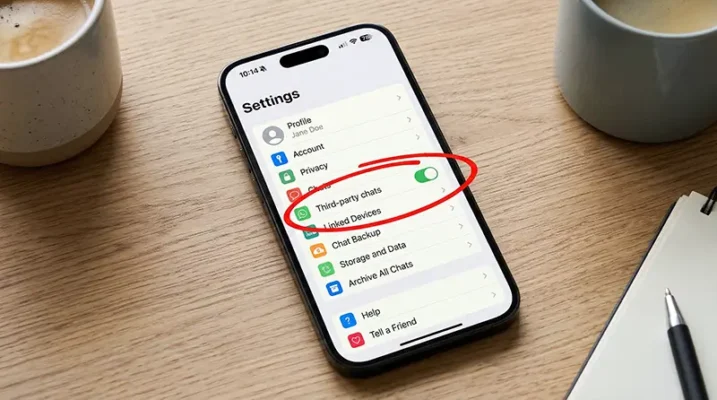
To check if you have access to the WhatsApp beta update European Union framework (which is gradually expanding globally):
- Update Your App: Ensure you are running the absolute latest version of WhatsApp from the Google Play Store or Apple App Store.
- Open Settings: Tap the three dots (Android) or the gear icon (iOS) to open your settings menu.
- Navigate to Account: Select the “Account” option.
- Find the Feature: Look for a menu labeled Third-party chats. (If you don’t see it yet, the feature is still rolling out to your specific server node).
- Opt-In and Customize: Toggle the feature on. You will be prompted to read a brief security disclaimer. From here, you can choose whether you want incoming messages to appear in a combined inbox or a separate tab to keep things organized.
Once enabled, you’re ready to start receiving messages from supported WhatsApp alternative messaging apps.
The Future of Unified Digital Communication
The launch of WhatsApp third-party chats is not just a feature update; it is a paradigm shift. It marks the end of the siloed internet and the beginning of a truly interconnected digital society.
Looking forward, Meta’s ongoing development of the MEX layer hints at even deeper integrations. The internal schematics suggest that future updates will not only refine cross-platform group chats but also lay the groundwork for a unified Meta identity [2]. Imagine a scenario where your cross-app contact list is intelligently managed, allowing you to switch between professional, personal, and third-party communications effortlessly.
For the everyday user, this means unprecedented freedom. You are no longer held hostage by the network effect of a single app. You can choose the platform that respects your privacy and UI preferences, knowing you won’t be cut off from your friends, family, or clients who chose differently.
Quick Takeaways
- The Walls are Down: You can now send and receive messages from select third-party apps directly within WhatsApp.
- Regulatory Push: This massive update is driven by the EU Digital Markets Act DMA, which forces tech “gatekeepers” to open up their platforms.
- Opt-In Experience: The feature is completely optional. You choose whether to enable the combined inbox or keep third-party chats separate.
- Security First: Meta’s new “MEX” (Meta Experience) layer ensures that WhatsApp end-to-end encryption security is maintained across platforms.
- Early Stages: While apps like BirdyChat and Haiket are the first to integrate, giants like Telegram and Signal could be next if they agree to the security terms.
- Business Potential: The WhatsApp Business API Pakistan ecosystem is set to explode as businesses can soon reach customers across multiple apps using a single interface.
Conclusion
The digital wall that kept messaging apps separated is finally coming down. By introducing WhatsApp third-party chats, Meta has fundamentally altered the landscape of global communication. Triggered by the EU Digital Markets Act DMA, this leap toward WhatsApp messaging interoperability ensures that users have more choice, better convenience, and a truly unified digital messaging experience.
While it may take time for all major WhatsApp alternative messaging apps to integrate into this system, the foundation built by the MEX layer guarantees that WhatsApp end-to-end encryption security remains intact. For the people and businesses of Pakistan, this represents a massive opportunity to streamline communication, reduce app fatigue, and reach audiences seamlessly.
The internet was built on the idea of open communication, and we are finally returning to those roots.
References
- WABetaInfo. (2025, November). WhatsApp Launches Third-Party Chats Integration in the European Region.
- Blacklovertech. (2026, March). The “MEX” Layer: Inside WhatsApp’s EU DMA Compliance Architecture. Medium.
- LiveMint. (2025, November). WhatsApp’s new update could finally let you chat across platforms: here’s how it works.
- Mobile World Live. (2025, November). WhatsApp to support third-party chats in Europe.
WhatsApp Guest Chats: Message Anyone Without the App
Learn how to use the new WhatsApp guest chat beta feature to message anyone securely without the app. Discover how it works, limitations, and what it means for you.
Mar

Clawdbot (Moltbot) Explained: The ‘Claude AI’ Agent Taking Control of WhatsApp
Discover Clawdbot (Moltbot), the new open source Claude AI agent that connects to WhatsApp. Learn about its root access, automation capabilities, and the security risks involved.
Jan

WhatsApp Privacy Scandal 2026: Lawsuit Claims Meta Can Read “Encrypted” Messages
Is your WhatsApp chat truly private? A 2026 lawsuit in San Francisco alleges Meta uses a secret backdoor to bypass encryption. Read the full security breakdown here.
Feb
Frequently Asked Questions (FAQs)
No. Meta requires any third-party app connecting to WhatsApp to use the same level of end-to-end encryption. Your messages remain secure, and the new MEX infrastructure strictly manages data flow to prevent vulnerabilities.
Not yet. Currently, early adopters like BirdyChat and Haiket are supported. Apps like Telegram and Signal must sign agreements and align their security protocols with WhatsApp’s requirements before integration can happen.
You have complete control over this. WhatsApp gives you the option to create a WhatsApp separate inbox third-party folder, keeping your external chats neatly segregated from your native conversations.
It is a huge benefit. Businesses will soon be able to receive messages from customers using different messaging apps directly into their existing WhatsApp Business CRM, streamlining customer service and broadening their reach.
While the feature was built to comply with the EU Digital Markets Act DMA, Meta’s backend architecture (the MEX layer) is global. The feature is being tested and rolled out incrementally, with broader international availability expanding throughout 2026.
Join the Conversation!
What are your thoughts on WhatsApp breaking down the walls? Are you excited to finally delete those extra messaging apps, or are you skeptical about cross-platform privacy?
Drop your thoughts in the comments below! If you found this guide helpful, make sure to share it with that one friend who still refuses to download WhatsApp.
