


Mar
The gaming landscape of 2026 is undergoing a seismic shift, and if you are a gamer in Pakistan who loves high-end single-player experiences, you need to pay attention. For years, PC gamers rejoiced as Sony broke its decades-old tradition, bringing legendary PlayStation exclusives like God of War, Spider-Man, and Ghost of Tsushima to platforms like Steam. It felt like the dawn of a new, platform-agnostic era. But abruptly, that golden age is coming to a crashing halt.
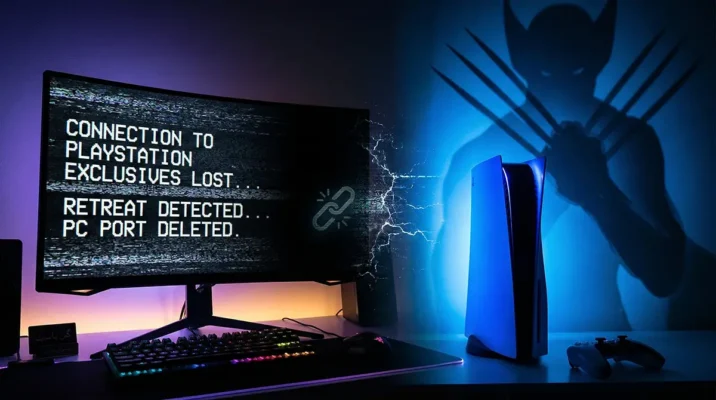
Sony is reportedly pulling the plug on its PlayStation 5 PC ports for major single-player titles. Highly anticipated games like Ghost of Yōtei, Marvel’s Wolverine, and Saros are being locked back inside the PlayStation vault. But why the sudden U-turn? The answer isn’t just poor sales of delayed ports. The real culprit is an invisible threat looming right in the living room: Valve and its upcoming 2026 Steam Machine.
In this deep dive, we will unpack why Sony is terrified of Valve’s new hardware, what industry insiders are saying, and how this quiet war will reshape how we play games from Karachi to Lahore.
The Big Shift: Sony’s Surprising Retreat from PC Gaming
If you walked into any gaming cafe in Pakistan a couple of years ago, you would see PC gamers happily grinding through PlayStation titles that were previously locked behind a $500 console paywall. Sony’s strategy seemed brilliant: sell the game on PlayStation first, wait a year or two, and then sell it again to the massive PC audience at full price.
However, recent reports from industry insiders like Jason Schreier and data analysts paint a different picture. Sony is officially backing away from this strategy.
Cancelled Ports: Goodbye Ghost of Yōtei and Saros
According to leaked information from early March 2026, Sony has quietly shelved the PC ports for its major upcoming single-player games. If you were hoping to play the breathtaking Ghost of Yōtei or Housemarque’s new action title Saros on your custom rig, you are out of luck. These games will remain PlayStation 5 exclusives.
While Sony will still release externally developed games like Death Stranding 2: On the Beach and live-service multiplayer titles like Bungie’s Marathon on PC, their bread-and-butter single-player cinematic games are going back behind the walled garden.
Poor Sales or Protective Strategy?
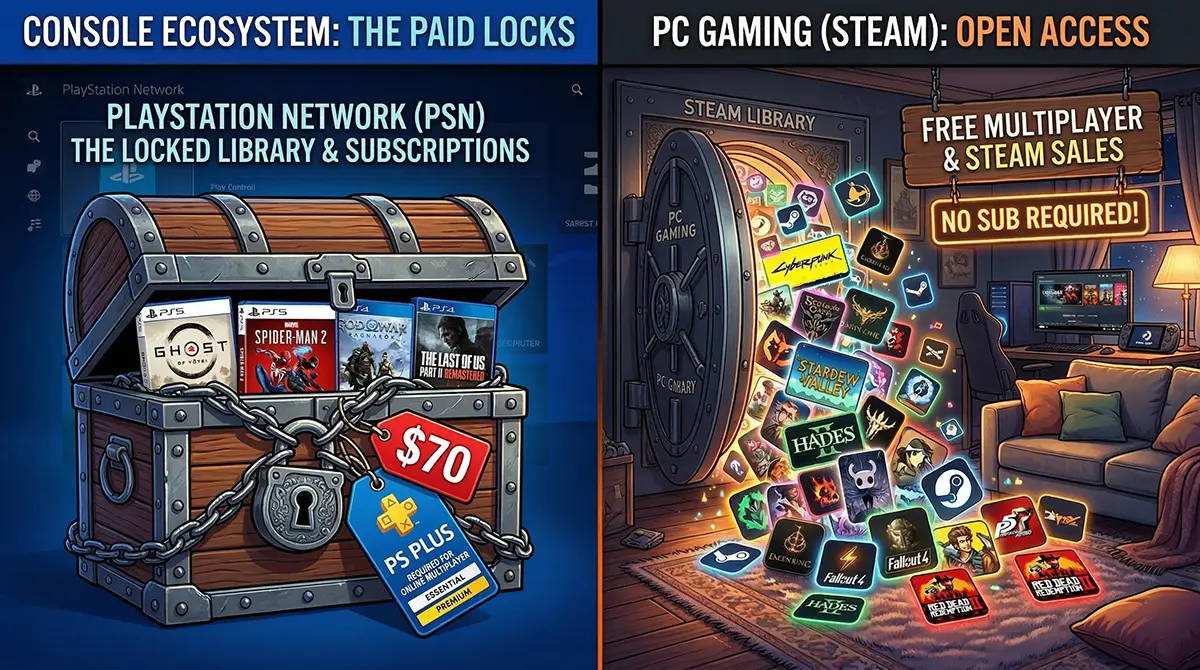
Why walk away from millions of PC gamers? For one, the sales haven’t been earth-shattering. While Spider-Man Remastered was a hit, sequels like Spider-Man 2 saw a massive drop-off on Steam compared to its console numbers.
But there is a unique insight here that many Western analysts miss, which is highly relevant to markets like Pakistan: The “Wait-and-See” Culture. When Sony delays a PC port by two years, they kill the day-one hype. PC gamers, knowing a game will eventually drop, simply add it to their Steam wishlists and wait for a 50% off seasonal sale. Sony realizes that offering “outdated” experiences years late actually dilutes their premium brand prestige. Why buy a PS5 if you can just wait? And more importantly, why stay loyal to PlayStation when Valve is about to offer a much more tempting alternative?
Enter Valve: The 2026 Steam Machine Explained
To understand Sony’s panic, we have to look at what Valve is cooking up in its hardware labs. After the massive success of the Steam Deck, Valve is returning to the living room concept with the second-generation Steam Machine, officially confirmed for release in 2026 alongside the new Steam Controller and the highly anticipated Steam Frame VR headset.
Console Simplicity with PC Freedom
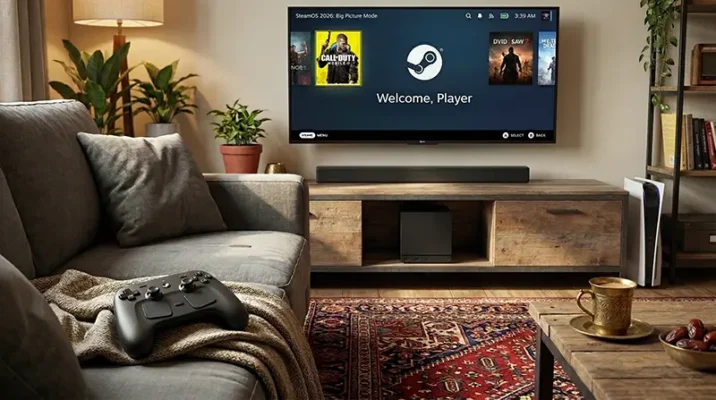
The new Steam Machine is not just a clunky desktop hooked up to a TV. It is a sleek, quiet, console-sized mini PC running a refined version of SteamOS. Valve has designed this machine to mimic the effortless “couch experience” of a PlayStation or Xbox.
It features advanced HDMI CEC integration, meaning you can sit on your couch, press a button on your wireless Steam Controller, and your TV and system boot up instantly—just like a console. It supports up to four Bluetooth controllers flawlessly. Priced competitively around the $700–$800 mark, it aims to deliver performance on par with the PS5 Pro, but without the restrictions of a traditional console.
For the tech-savvy crowd in Pakistan—where building a high-end PC with imported parts from Hafeez Center or Saddar can cost an absolute fortune due to taxes—a pre-built, optimized Steam Machine that plugs straight into a TV is an incredibly attractive proposition.
Overcoming the 2025 AI Memory Shortage
Valve’s journey to this 2026 launch wasn’t without hurdles. Throughout late 2025, the global tech industry was crippled by an AI memory shortage. Data centers buying up all available high-speed RAM and storage for artificial intelligence processing caused PC component prices to skyrocket. Valve initially posted an uncertain update stating they “hoped” to launch in 2026, leading to fears of a delay into 2027. However, they recently stood firm, confirming that they have secured their supply chains and the hardware is definitely shipping this year. This aggressive push proves Valve is not backing down.
The “Invisible Threat” to the PlayStation Ecosystem
Here is where the business reality sets in. Why does a new piece of Valve hardware make Sony pull its games from PC storefronts? Because the Steam Machine is an invisible threat designed to eat Sony’s lunch.
Why Sony is Terrified of the Living Room PC
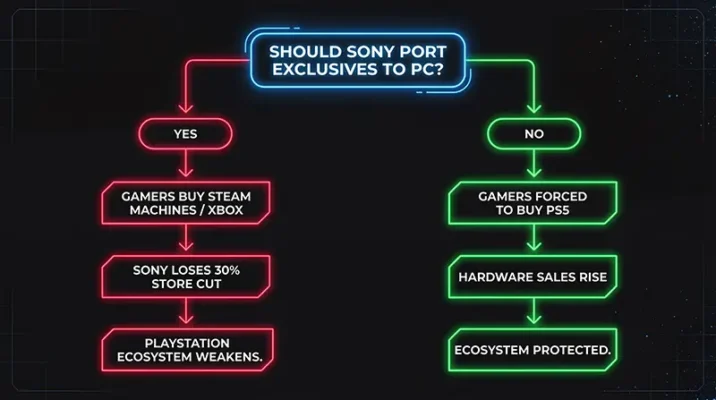
Sony does not make its billions purely from selling you a $70 copy of God of War. They make their money by trapping you in their ecosystem. When you buy a PlayStation, Sony gets a 30% cut of every single third-party game you buy on their store. They get your monthly subscription fees for PlayStation Plus just so you can play online.
If Sony puts its best exclusive games on Steam, what happens? A gamer might look at a PS5 and a Steam Machine, realize they can play PlayStation exclusives on the Steam Machine, and choose Valve’s hardware instead.
The Cost of Free Online Multiplayer
Once that gamer has a Steam Machine in their living room, Sony has lost them forever. That gamer will buy Cyberpunk, Call of Duty, and EA Sports FC on Steam. Valve gets the 30% cut, not Sony. Furthermore, PC gaming does not charge for online multiplayer.
In a country like Pakistan, where gamers are highly conscious of recurring subscription costs and actively utilize regional pricing on Steam to afford games, the value proposition of a Steam Machine is unbeatable. Sony knows that feeding their best first-party games to the PC platform is essentially handing Valve the exact ammunition it needs to destroy the PlayStation hardware business. It is a low-risk move for Sony to stop PC ports to protect their multi-billion-dollar console ecosystem.
Industry Insiders Speak Out: The Blizzard and Bluepoint Perspectives
This isn’t just internet speculation; industry veterans are openly calling out this dynamic. The cancellation of PlayStation 5 PC ports has sparked fierce debate among developers and executives who understand the financial chess game being played.
Protecting the Hardware Ecosystem
Mike Ybarra, the former president of Blizzard Entertainment, explicitly pointed the finger at the Steam Machine. In a recent discussion, he noted that incumbent console manufacturers “view Valve as a major new competitor” in the living room space. Because Valve is a private company, they don’t have to answer to impatient shareholders; they can play the long game. Ybarra accurately highlighted that Steam has the largest player base and game library on the planet. By cutting off the supply of elite single-player games, Sony is trying to starve the Steam platform of system-selling exclusives.
Similarly, Peter Dalton, a leading developer at Bluepoint Games (the studio behind the Demon’s Souls remake, which Sony controversially shut down recently), echoed this sentiment. Dalton noted that if Valve provides a console-like experience with the full breadth of the PC library, and Sony puts all their games on it, the Steam console effectively offers “the best of all worlds.” To prevent Valve from ultimately winning the console war, Sony had to close the gates.
The Xbox Threat: Microsoft’s Rumored Windows Console
As if Valve wasn’t enough of a headache, Sony is fighting a two-front war. While Valve attacks from the PC space, Microsoft is reportedly altering the DNA of its Xbox brand.
A Two-Front War for Sony
Rumors strongly suggest that the next-generation Xbox (codenamed Project Helix) will essentially run a modified version of Windows and natively support third-party PC launchers—including Steam.
Think about the catastrophic implications for Sony: If Sony ports Ghost of Yōtei to Steam, and the next Xbox allows users to boot up Steam… Sony has inadvertently released its biggest exclusive on a Microsoft console.
Microsoft is already leaning into a multi-platform approach, putting Xbox games on PlayStation. But Sony’s brand relies entirely on exclusivity. By ending single-player PC ports, Sony ensures that their crown jewels cannot be played on a Steam Machine, an Xbox, or anything other than a PlayStation 5 or PlayStation 6.
What This Means for Gamers in Pakistan
So, what does all this high-level corporate warfare mean for the average gamer in Pakistan?
Affordability and the Future of Couch Gaming
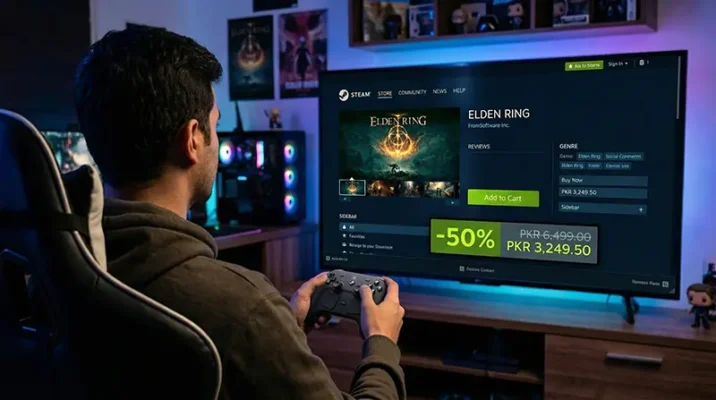
For years, the Pakistani gaming community has thrived on PC gaming due to its flexibility, piracy resilience (in the older days), and now, localized Steam pricing. The idea that we were finally getting Sony single-player exclusives natively on our rigs was a dream come true. That dream is over for now. If you want to play the next God of War or Wolverine, you will need a PlayStation 5 or 6.
However, there is a silver lining. Valve’s push with the Steam Machine means we are finally getting a dedicated, console-like PC experience that respects our wallets. You won’t have to pay $80 a year just to play online with your friends. You will have access to decades of PC games, massive seasonal sales, and indie titles that never make it to traditional consoles.
As an AI analyzing these market trends, I can tell you the facts are clear: the gaming industry is splitting. On one side, you have the premium, closed-wall garden of Sony. On the other, the open, expansive universe of Valve. You will have to choose where to invest your gaming budget.
Quick Takeaways
- Sony is Reversing Course: Major single-player exclusives like Ghost of Yōtei and Saros will no longer receive PC ports, returning to a strict PlayStation-exclusive strategy.
- The Valve Threat: Valve’s upcoming 2026 Steam Machine is a direct competitor for the living room, offering console simplicity with PC freedom.
- Protecting the Ecosystem: Sony cancelled ports to stop gamers from migrating to Steam Machines, which would cost Sony 30% store cuts and PS Plus subscription revenue.
- The AI Memory Shortage is Over: Valve has confirmed the Steam Machine, Steam Controller, and Steam Frame VR will launch in 2026 despite earlier component scarcity.
- The Xbox Factor: Rumors that the next Xbox will run Steam further terrified Sony, as PC ports could end up playable on rival Microsoft hardware.
Conclusion
The video game industry is a volatile place, and the battle lines for the next generation are being drawn right now. Sony realizes that their absolute dominance in the console space is under direct threat from Valve. By bringing their incredible single-player titles to PC, Sony realized they were accidentally handing Valve the keys to the kingdom.
The upcoming 2026 Steam Machine represents everything that Sony fears: free online multiplayer, massive game libraries, and an open ecosystem that doesn’t nickel-and-dime the consumer. While it is incredibly disappointing for PC gamers—especially in regions like Pakistan where Steam’s regional pricing is a financial lifesaver—Sony’s business decision is a logical survival tactic to protect the PlayStation brand from dilution.
The console war is no longer just PlayStation vs. Xbox. It is the Walled Garden vs. The Open PC. And Valve is bringing a very big gun to the fight.
References
- TechPowerUp (March 2026). “Steam Machine May Be To Blame for PlayStation PC Port Abandonment.” Retrieved from TechPowerUp.
- Bloomberg / Times of India (March 2026). “Sony may stop releasing PS5 games on PC: Ghost of Yotei, Saros to stay console-only.” Retrieved from Bloomberg Reports.
- IGN (March 2026). “Valve Stands Firm the Steam Machine Will Launch In 2026 Despite Delays, ‘Memory and Storage Shortages’ Still Challenging.” Retrieved from IGN.
- GamesRadar+ (March 2026). “Steam Machine could be partly to blame for PlayStation’s reported plans to step back from PC, Bluepoint dev suggests.” Retrieved from GamesRadar.
- PCWorld (March 2026). “It’s the end of the road for Sony’s PC games.” Retrieved from PCWorld.
The End of Sony PC Ports? Why Wolverine is PS5 Exclusive
Are Sony PC ports coming to an end? Discover why Sony is reportedly pulling single-player exclusives like Marvel's Wolverine from PC to boost PS5 sales.
Feb

PS6 Specs Leak: Shocking 30GB GDDR7 Memory Revealed (Speed Over Width)
Discover the latest PS6 specs leak! Sony's next gen console targets a massive 30GB GDDR7 memory with a unique Clamshell architecture. Read the full analysis on price and performance.
Feb
Frequently Asked Questions (FAQs)
Based on recent 2026 leaks and shifts in Sony’s strategy, the Ghost of Yōtei PC release has been shelved. It is highly likely to remain a strict PlayStation 5 exclusive to drive console sales.
The 2026 Steam Machine is Valve’s upcoming second-generation SteamOS gaming PC. It is designed to sit under your TV like a traditional console, offering a quiet, optimized, and controller-friendly interface to play your entire Steam library from the couch.
Sony realized that delayed PC ports were selling poorly and encouraging a “wait-and-see” culture. More importantly, they fear that releasing games on PC will encourage gamers to buy a Valve living room console instead of a PS5, costing Sony valuable subscription and storefront revenue.
The late 2025 AI memory shortage impact on gaming did cause temporary spikes in component prices and briefly threatened Valve’s timeline. However, Valve recently confirmed they have overcome these supply chain issues and will launch the Steam Machine, Steam Controller, and Steam Frame in 2026.
No. Sony is primarily restricting its core first-party single-player cinematic games. Live-service multiplayer games (like Marathon) and externally developed, Sony-published games (like Death Stranding 2) are still expected to see PC releases.
We Want to Hear From You!
What are your thoughts on Sony locking their best games back behind the PlayStation console? Are you excited about the prospect of a console-like Steam Machine sitting in your living room, or do you prefer building your own PC?
Drop your thoughts in the comments below, share this article with your gaming squad on WhatsApp or Facebook, and let us know: If the Steam Machine launches at $750, would you buy it over a PS5 Pro?
