

News, Games
THE UNBREAKABLE WALL FALLS: How Denuvo Was Bypassed (And Why the Third World is Cheering)
Mar
Denuvo, for years, stood as the ultimate fortress in video game security. To multinational publishers, it was a necessary and impenetrable shield; to gamers, it was a performance-killing nightmare. But in early 2026, the digital landscape shifted dramatically. The unbreakable wall finally began to crumble.
If you are a gamer in Pakistan, South Asia, or anywhere else in the developing world, the news of the latest Denuvo DRM bypass likely felt like a breath of fresh air. Between skyrocketing local inflation, crushing hardware prices, and modern games demanding premium retail tags, gaming has increasingly become an elite, exclusionary hobby. When restrictive anti-tamper technology artificially bloats system requirements and demands constant internet handshakes, it directly punishes the legitimate consumer who is just trying to squeeze every last frame out of a budget PC.
In this comprehensive guide, we will dive into exactly how Denuvo was bypassed, explore the recent and shocking cracking of DOOM: The Dark Ages, break down the complex hypervisor technology making it possible, and analyze exactly why gamers across the Third World are celebrating this digital revolution.
What is Denuvo and Why Do Gamers Hate It?
Denuvo Anti-Tamper is a digital rights management (DRM) scheme developed by the software security firm Irdeto. Unlike traditional DRM that simply checks if you own a license at launch, Denuvo acts as a dynamic armor protecting the underlying DRM (such as Steam, EA App, or Epic Games Store wrappers).
It continuously encrypts and decrypts itself during gameplay, utilizing unique authentication tokens based on your specific hardware configuration. For years, it was highly effective at stopping zero-day piracy, but it came at a steep, often unspoken cost to the consumer experience.
The Hidden Tax on Hardware Performance
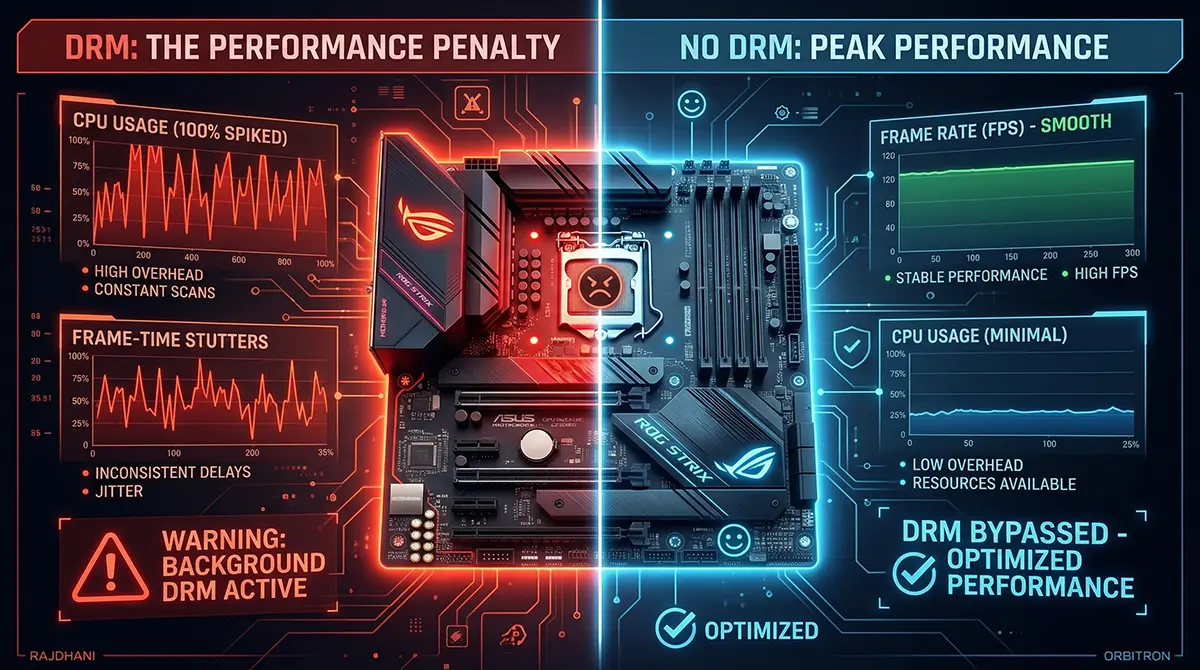
Gamers and tech enthusiasts have long argued that Denuvo creates a “digital weight” on their systems. Because the software runs constant background checks and obfuscates code in real-time, it inherently eats up valuable CPU cycles.
For high-end rigs equipped with top-tier processors, this might mean a negligible drop in frame rates. However, for a mid-range or budget setup running older CPUs, these aggressive background tasks lead to severe micro-stutters, drastically longer loading times, and inconsistent frame pacing.
Always-Online Requirements in an Offline World
Another massive pain point is the periodic online validation. Even for purely single-player, narrative-driven experiences, Denuvo requires an internet “handshake” to verify the hardware token. If Denuvo’s authentication servers go down for maintenance, or if a user lacks a stable internet connection, they are completely locked out of the game they legally paid for. In regions with frequent power outages, load shedding, and unreliable ISPs, this requirement is a significant barrier to entry.
The 2026 Breakthrough: DOOM The Dark Ages Cracked
The video game industry was shaken to its core in March 2026 when DOOM: The Dark Ages became the first major, highly protected release of the year to have its Denuvo DRM entirely bypassed within days of its launch.
For a fast-paced, high-octane franchise built on the id Tech engine, optimization is everything. The presence of background encryption was seen as a major handicap to the game’s massive medieval battlefields and physics-heavy combat. When the digital locks fell, it proved that the system, no matter how updated, was no longer invincible.
Enter the Shadows: The Anonymous Hacker Who Broke the Mold
The crack came courtesy of a completely anonymous hacker who dropped the files on a popular underground forum without warning. Bypassing the security on a flagship title so quickly sent shockwaves through the PC gaming community. Unlike previous prominent figures in the cracking scene who often courted immense controversy, demanded donations, and stirred up drama, this lone cracker quietly dropped the bypass. They left only a short text file signaling a renewed, hyper-focused technical effort against anti-tamper technology, choosing to let the code speak for itself.
The Role of Syscall-Level Emulation
While the exact source code of the bypass remains a closely guarded secret among reverse engineers, the foundation for modern bypasses has been evolving openly in security research circles. Independent researchers have recently showcased “Windows User Space Emulators.”
This tool operates at the syscall level, giving developers deep, granular control over process execution. By meticulously analyzing exactly how Denuvo interacts with the Windows OS—monitoring how it loads dynamic link libraries (DLLs) and manages memory allocations—hackers are systematically untangling the web of obfuscation that Denuvo relies on to hide its triggers.
The Technical Evolution: How Denuvo Was Bypassed
Breaking Denuvo is not a simple matter of changing a few lines of code or bypassing a serial key check. It requires an immense, almost obsessive understanding of reverse engineering, modern hardware architecture, and advanced cryptography.
Reverse Engineering the Anti-Tamper Tech
Denuvo’s core strength is its virtualization and code obfuscation. It scrambles the game’s executable file into a virtual machine, making it incredibly difficult for a standard debugger to read or alter. To bypass this, crackers have to meticulously map out the “triggers”—the specific points in the game’s code where Denuvo requests a hardware check (e.g., loading a new level, opening a menu, or performing a specific action). Once these thousands of triggers are mapped, they must be spoofed or bypassed so the game seamlessly believes it is running in a fully authenticated, original environment.
Hypervisor Methods and Kernel-Level Access
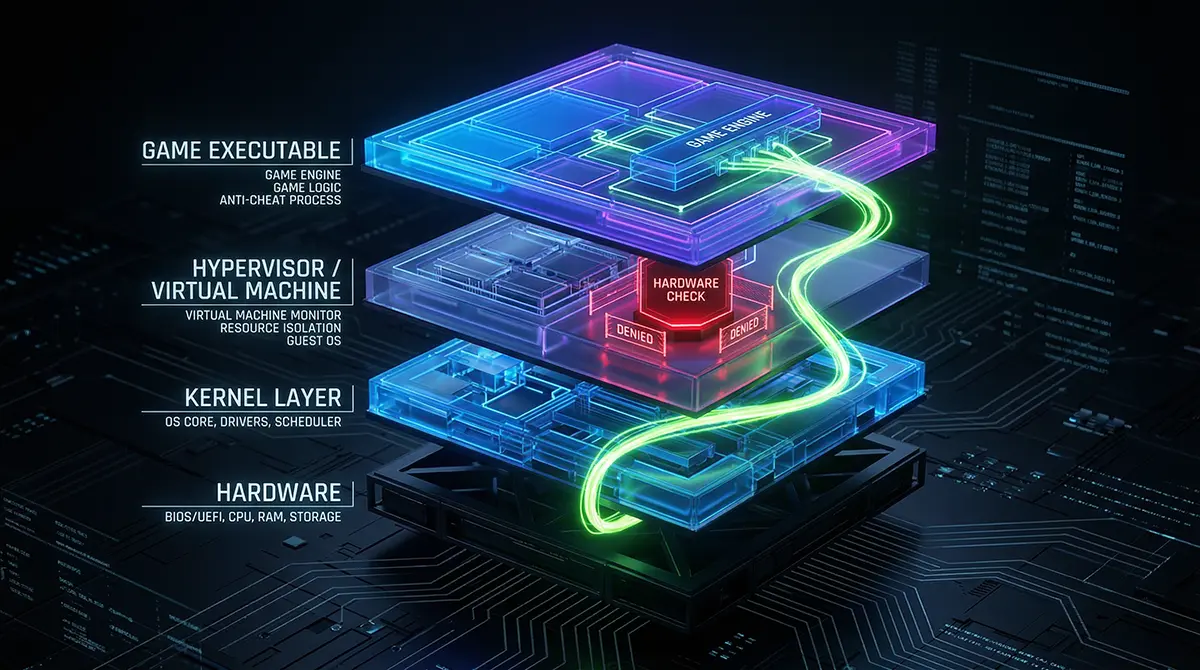
One of the most potent methods currently circulating in the reverse-engineering community involves hypervisor technology. A hypervisor creates a virtual machine layer between the operating system and the actual hardware.
By running the game within this virtualized, highly controlled environment, crackers can intercept, read, and manipulate the kernel-level checks Denuvo attempts to make. While highly effective, this method requires giving deep system access to a third-party tool. Yet, for many frustrated PC gamers seeking better performance, utilizing a bypassed executable is worth the technical leap of faith.
Why the Third World (and Pakistan) is Cheering
When a massive digital wall falls, the reverberations are felt strongest by those who were previously locked out. In Pakistan and the broader developing world, the cheering isn’t just about the prospect of piracy; it is a complex, justified reaction to systemic pricing inequality and hardware limitations.
The Unforgiving Economics of $80 Games in Pakistan
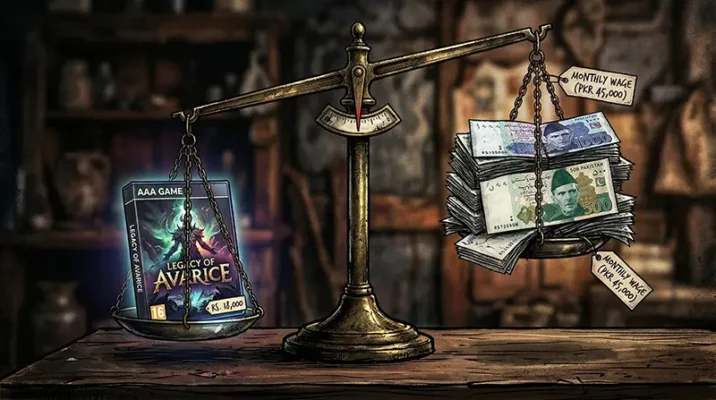
In 2026, standard “AAA” game releases routinely cost $70 to $80 USD. With volatile exchange rates and a struggling local currency, a single new release can cost upwards of 22,000 to 26,000 PKR. When you factor in banking taxes and digital storefront conversion fees, purchasing a single title represents a massive percentage of a monthly salary for the average citizen.
Regional pricing, a practice on platforms like Steam that once helped balance the scales for lower-income countries, is now frequently ignored by major western publishers. Consequently, when Denuvo is bypassed, it opens the door to media preservation and accessibility for a massive demographic of gamers who are simply priced out of the global market.
Squeezing Frame Rates out of Budget PCs
Furthermore, the hardware reality in Pakistan is vastly different from the West. A large portion of the tech-oriented population relies on older, refurbished hardware imported from abroad, or entry-level gaming laptops.
When a publisher forces heavy anti-tamper tech into a game, a system that meets the “minimum requirements” on paper might still face unplayable stuttering in reality. Removing Denuvo has historically resulted in more consistent frame pacing and lower CPU temperatures. For the Pakistani gamer playing on a four-year-old Ryzen or Intel Core i5 processor, a bypassed executable isn’t just a technical curiosity—it is the very difference between an unplayable slideshow and an enjoyable, smooth gaming experience.
The Denuvo Crack History: From EMPRESS to 2026
The digital war against DRM has been a relentless game of cat-and-mouse spanning nearly a decade, defined by distinct eras of triumph and defeat.
The Golden Age of Cracking
In the late 2010s, organized release groups like CPY (Conspiracy) and 3DM frequently broke Denuvo within weeks, sometimes days, of a game’s release. Later, the highly controversial solo hacker known as EMPRESS took up the mantle. EMPRESS single-handedly cracked heavy hitters like Hogwarts Legacy and Resident Evil Village, proving that specialized dedication and deep technical knowledge could still crack the code, even as the DRM became more complex.
The 2024 Dry Spell and the Comeback
However, 2024 and 2025 saw a massive dry spell. The anti-tamper software evolved significantly, becoming deeply entrenched and intertwined with the core game code. Almost no major titles were cracked during this period, leading publishers to boldly claim that piracy was finally a solved problem on the PC platform.
The re-emergence of cracks in 2026, led by anonymous hackers aided by sophisticated syscall emulators, proves that the security cycle is cyclical. No software is truly invincible as long as reverse engineers possess the time, intellect, and motivation to dismantle it.
The Publisher’s Dilemma: Does DRM Protect Sales?
If Denuvo is almost universally disliked by the consumer base and is eventually bypassed anyway, why do massive publishers continue to spend exorbitant amounts of money licensing it?
Analyzing the 20% Revenue Drop
The answer lies exclusively in the initial launch window. Data analytics and industry studies have repeatedly shown that the first few weeks of a game’s release are vital for its financial success. Industry metrics suggest that if a highly anticipated game is cracked during its release week, it can suffer an estimated 15% to 20% drop in initial revenue.
However, if the DRM protection holds firm for just six weeks, the potential loss shrinks drastically to about 5%. After 12 weeks, the financial impact of piracy drops to near absolute zero, as anyone who was going to buy the game at full price already has. Publishers use Denuvo purely to protect that lucrative first-month sales window. This is why many studios quietly remove the DRM via a patch six months to a year down the line—saving on continuous licensing fees while simultaneously earning a brief flash of goodwill from the PC performance community.
Quick Takeaways: The Fall of Denuvo in 2026
If you are short on time, here are the essential points regarding the latest DRM developments:
- The Barrier Broke: In March 2026, DOOM: The Dark Ages became the first major title in a long time to have its Denuvo DRM completely bypassed by an anonymous hacker.
- Performance Recouped: Bypassing this software historically frees up CPU cycles, leading to smoother frame pacing, less stuttering, and faster load times on older or budget hardware.
- New Tools Emerge: Security researchers and hackers are utilizing advanced syscall-level emulators and hypervisor techniques to intercept and analyze hardware checks.
- Economic Relief: Gamers in developing regions like Pakistan celebrate the bypass due to extreme inflation and the abandonment of fair regional pricing, making $80 games unaffordable.
- The 12-Week Rule: Industry data shows DRM only protects revenue for the first 12 weeks; after that, it serves virtually no financial benefit to the publisher.
What’s Next for Anti-Tamper Technology?
The battle for digital ownership and performance is far from over. Irdeto will undoubtedly patch the vulnerabilities exposed by hypervisor bypass methods, and the cycle of updates and cracks will repeat itself. However, pushback from the global gaming community is growing stronger and louder.
Gamers are voting with their wallets and their Steam reviews. The realization that DRM actively harms the paying customer’s experience is no longer a niche, technical opinion; it is a mainstream consensus. As developers face backlash for poor PC ports, the inclusion of heavy anti-tamper tech is becoming a massive PR liability.
Conclusion
The bypassing of Denuvo in 2026 is much more than just a technical milestone for reverse engineers; it is a moment of digital liberation for gamers operating on a strict budget. For the tech-oriented audience in Pakistan, South Asia, and across the Third World, the fall of this seemingly unbreakable wall means a return to hardware optimization and much-needed media accessibility.
While multinational publishers rightfully want to protect their multi-million dollar investments during the critical launch window, punishing legitimate, paying consumers with performance degradation and always-online mandates is a fundamentally flawed strategy. As emulation tools improve and reverse engineering becomes even more sophisticated, the gaming industry may eventually have to look for a middle ground—one that respects both the creator’s need for revenue and the consumer’s right to utilize their hardware without artificial bottlenecks.
References
- Burrows, D. (2026). “Why DOOM: The Dark Ages DRM Defeat is a Win for PC Performance.” AllKeyShop News.
- Volckmann, W. (2024). “Cracking Denuvo protection in the release week results in a 20% drop in game revenue.” Institute for Private Capital. WN Hub Analytics.
- Wikipedia Contributors. (2026). “Denuvo – Technical history and bypassing timeline.” Wikipedia, The Free Encyclopedia.
Frequently Asked Questions (FAQs)
Denuvo is a sophisticated anti-tamper technology that runs continuous, real-time background encryption checks to prevent piracy. These constant checks consume valuable CPU cycles, which can lead to micro-stuttering, frame drops, and longer load times, especially on older or budget-oriented PC builds.
In early 2026, an anonymous hacker successfully bypassed the DRM. While exact source codes are kept secretive to prevent patching, the reverse-engineering community is increasingly utilizing hypervisor methods and syscall-level emulation to intercept, read, and spoof the software’s hardware checks.
Financial data indicates that if a game’s DRM holds strong for the first 6 to 12 weeks of release, it prevents significant revenue loss during the most critical sales window. Publishers use the software to protect initial launch sales, often removing it months later to save on licensing fees.
Due to high inflation, currency devaluation, and the lack of fair regional pricing by publishers, standard AAA games can cost up to 26,000 PKR, pricing out a vast majority of gamers. When Denuvo is removed or bypassed, it allows for better performance on entry-level hardware and enables offline play in areas without stable internet.
Yes. Historically, when publishers officially remove the DRM in a later patch (or when it is successfully bypassed), players with mid-to-low-tier CPUs report more stable frame pacing, lower operating temperatures, and a noticeable reduction in sudden lag spikes.
Join the Conversation
We want to hear from you! How has restrictive DRM impacted your gaming experience here in Pakistan? Have you noticed performance drops in officially protected games compared to DRM-free titles?
Drop a comment below sharing your thoughts, and don’t forget to share this article on your social media to keep the conversation going!
