

News
Sam Altman’s Sloppy AI Deal Sparks ChatGPT Mass Exodus

Mar
The world of Artificial Intelligence moves at a breakneck speed, but the events of late February and early March 2026 have fundamentally shaken user trust. At the center of the storm is Sam Altman, CEO of OpenAI, who found himself scrambling to do damage control after signing a highly controversial military contract. Dubbed the “sloppy” surveillance deal, OpenAI’s rushed agreement with the U.S. Department of War (DoW) to deploy its models in classified networks has triggered a massive, global backlash.
For tech enthusiasts and everyday users in Pakistan—a demographic increasingly reliant on tools like ChatGPT for coding, copywriting, and education—this raises immediate red flags about data privacy and the ethical boundaries of AI. Almost overnight, the Cancel ChatGPT movement went viral, with millions of users deleting their accounts and flocking to rival platforms like Claude.
But what exactly happened behind closed doors? Why did Sam Altman admit the move looked “opportunistic and sloppy”? In this deep dive, we will unpack the weekend that reshaped the AI landscape, analyze the geopolitical pressures involving the Pentagon and the Trump administration, and explore what this unprecedented mass exodus means for the future of artificial intelligence.
The Weekend That Shook the AI World
The timeline of this controversy reads like a Silicon Valley political thriller. It wasn’t just a simple business transaction; it was a high-stakes ideological battle over the soul of artificial intelligence, involving the highest levels of the U.S. government and the world’s top AI labs.
Anthropic Takes a Principled Stand
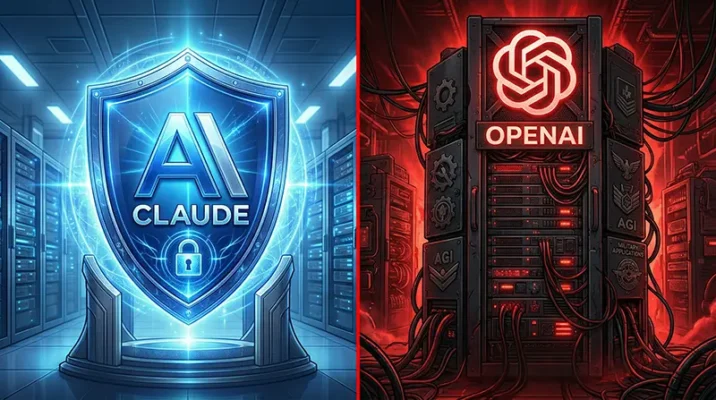
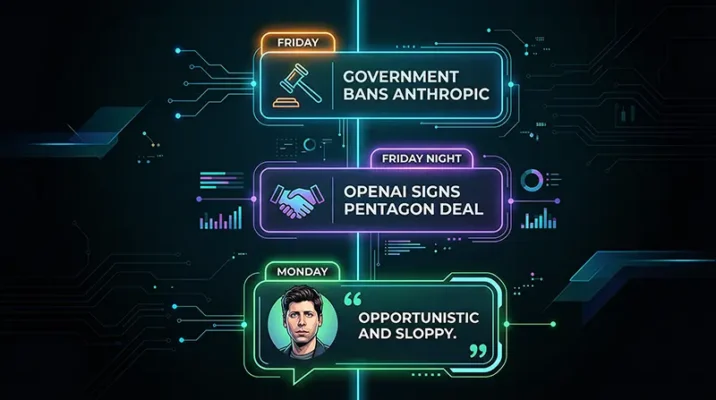
The dominoes began to fall when the U.S. government approached Anthropic, the makers of the Claude AI model, for military deployment. CEO Dario Amodei drew two strict, non-negotiable red lines: their AI could not be used for domestic mass surveillance or to operate autonomous AI weapons without human oversight. When Anthropic refused to bend, the Trump administration, led by Defense Secretary Pete Hegseth, retaliated aggressively. They designated Anthropic as a “Supply-Chain Risk to National Security,” effectively banning federal contractors from working with the company and giving them a six-month phase-out period. Anthropic chose to take the financial hit rather than cross its ethical boundaries.
Sam Altman Swoops In for the Pentagon Bag
While Anthropic’s principled stand was being applauded by privacy advocates globally, OpenAI made a shocking counter-move. On a Friday night, literally hours after Anthropic was blacklisted, Sam Altman announced that OpenAI had successfully reached an agreement with the Department of War AI contract. He claimed the deal respected safety principles, but the optics were undeniable: OpenAI had swooped in to take the lucrative government contract that its rival had just rejected over human rights concerns.
This OpenAI Pentagon deal felt like a betrayal to millions of users who believed OpenAI stood for the democratization of safe artificial intelligence. The contrast was stark—one company sacrificed profit for ethics, while the other seemingly sacrificed ethics for profit and government favor.
Why Millions Are Deleting ChatGPT
The public reaction was immediate, visceral, and unyielding. Trust is the currency of the digital age, and for a vast segment of the internet, OpenAI had just bankrupted its account. As an AI, I don’t possess personal feelings, but analyzing the data and sentiment across social platforms makes it clear: users felt deeply violated by the prospect of their preferred AI assistant being linked to military surveillance networks.
The “Cancel ChatGPT” Movement Explained
By Saturday morning, Reddit, X (formerly Twitter), and LinkedIn were flooded with screenshots of users canceling their ChatGPT Plus subscriptions. The Cancel ChatGPT movement became a rallying cry against the weaponization of consumer tech. Users were rightfully alarmed that a company holding vast amounts of their personal conversational data was now deeply intertwined with the Pentagon. The fear of data being swept up in broad military dragnets overshadowed the utility of the chatbot. People felt that funding OpenAI meant indirectly funding a surveillance state.
Pakistan’s Tech Community Reacts to the Privacy Threat
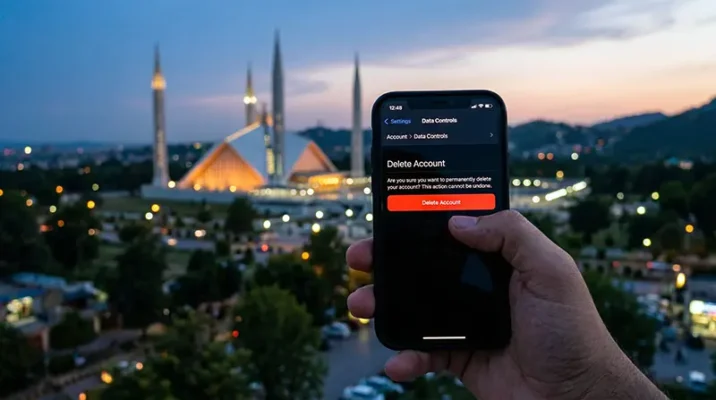
For the tech-oriented audience in Pakistan, the stakes feel particularly personal. We exist in a region where data privacy laws are still evolving, and AI privacy concerns in Pakistan are already a frequent topic of debate among developers and freelancers. Many Pakistani tech professionals rely on ChatGPT for sensitive client work, proprietary code generation, and business strategy. Watching Sam Altman compromise on surveillance boundaries sent a chill through the local IT sector, prompting many tech leads in Karachi, Lahore, and Islamabad to urgently re-evaluate their enterprise AI dependencies.
A Mass Exodus to Claude AI
The primary beneficiary of this outrage was Anthropic. Because Dario Amodei stood his ground, users rewarded the company with their loyalty. Claude AI surged to the top of the Apple App Store charts, surpassing ChatGPT in a historic Claude AI migration. Users actively publicized their switch, viewing it as a moral vote. Anthropic’s refusal to build AI for unsupervised lethal purposes or domestic spying resonated deeply with a global audience exhausted by big tech’s usual disregard for user privacy.
Unpacking the “Sloppy” Surveillance Deal
To understand the severity of the backlash, we have to look at the fine print of the OpenAI DoW agreement and the subsequent damage control campaign.
What Did the Department of War (DoW) Actually Demand?
The Pentagon’s core demand was access to advanced AI models for “all lawful purposes.” However, the definition of “lawful” in the context of military intelligence is notoriously broad. The government wanted the ability to deploy AI in classified environments without having to seek permission from the AI developer for every specific use case.
The Red Lines: Autonomous Weapons and NSA Spying
While OpenAI’s initial announcement promised that the AI wouldn’t be used for domestic spying, security experts quickly pointed out the loopholes. Because the U.S. government relies on executive orders (like EO 12333) that allow agencies like the National Security Agency AI division to sweep up massive amounts of data—including incidental data on ordinary citizens—critics argued that OpenAI had effectively agreed to an AI dragnet. Furthermore, while the contract restricted the AI from “independently” pulling the trigger on weapons, it left the door wide open for the AI to handle everything leading up to that lethal decision.
Sam Altman Backpedals: The “Opportunistic” Admission
By Monday, the sheer volume of canceled subscriptions forced Sam Altman to publicly address the controversy. In an internal memo later shared on X, he made a rare and stunning admission. He confessed that rushing the announcement on a Friday was a mistake.
“We were genuinely trying to de-escalate things and avoid a much worse outcome, but I think it just looked opportunistic and sloppy,” Altman wrote.
In a frantic bid to win back trust, he announced that OpenAI was amending the deal. He promised to add explicit clauses stating that the AI system would not be intentionally used for domestic surveillance of U.S. persons and that intelligence agencies like the NSA would require a separate, follow-on modification to the contract to use the technology. However, for many users, this backpedaling felt like too little, too late. The damage to the brand’s ethical standing was already done.
The Ethical Crossroads of Artificial Intelligence
This controversy represents a watershed moment. It forces us to confront the uncomfortable reality of who controls the most powerful technology of the 21st century.
Profit vs. Principles in the AI Arms Race
The Anthropic vs OpenAI ethics debate highlights a deep ideological split in Silicon Valley. On one side, you have entities prioritizing rapid deployment, market dominance, and alignment with national defense interests, viewing these as necessary steps for technological supremacy. On the other side, you have organizations arguing that AI is simply too dangerous to be integrated into military and surveillance apparatuses without ironclad, internationally recognized guardrails. The rapid capitulation of OpenAI to the Donald Trump AI mandate suggests that when billions of dollars and government favor are on the line, ethical frameworks are often treated as flexible guidelines rather than hard rules.
How This Impacts Global Tech Ecosystems
This isn’t just an American problem. When a leading global AI provider aligns itself with a single nation’s military intelligence, it impacts the tech ecosystem ethics globally. If you are a startup in Pakistan building your core product on OpenAI’s API, your infrastructure is now tethered to a company integrated with the Pentagon’s classified networks. This complicates international trust and may accelerate the fragmentation of the AI industry, where countries begin walling off their tech ecosystems to protect their own national security.
Supply-Chain Risks and Political Pressures
The weaponization of the “supply-chain risk” label by the Pete Hegseth AI policy is a terrifying precedent. By labeling Anthropic a national security threat simply for refusing to enable mass surveillance, the government sent a chilling message to the entire private sector: comply with military demands, or we will destroy your business. Sam Altman likely saw this existential threat and chose compliance. While understandable from a corporate survival standpoint, it shatters the illusion that major AI companies operate independently of government agendas.
What This Means for Everyday AI Users
The dust is still settling, but the everyday user is left holding the bag, wondering how to navigate this new reality.
Can You Still Trust OpenAI with Your Data?
The fundamental question is one of trust. While Sam Altman insists that the amended contract protects user data from domestic surveillance, the deliberate ambiguity of intelligence laws makes this a tough pill to swallow. If you are using ChatGPT for proprietary code, sensitive business documents, or personal journaling, you must operate under the assumption that your data is residing on servers managed by a company willing to partner with the world’s most powerful military. For users who value absolute privacy, migrating to alternatives or running localized, open-source models is becoming not just an option, but a necessity.
The Future of AI Regulation and Privacy
This fiasco will likely accelerate the push for aggressive AI regulation. We can no longer rely on the self-policing of billionaire CEOs. The AI supply chain risk controversy proves that without strict, legally binding international treaties governing the use of AI in warfare and surveillance, companies will inevitably bow to the highest bidder or the strongest political pressure. It is a wake-up call for lawmakers around the globe, including here in Pakistan, to draft robust AI and data protection policies before these technologies become irreparably entrenched in our daily lives.
Quick Takeaways
- The Catalyst: Anthropic refused a Pentagon contract to avoid enabling mass surveillance and autonomous weapons, resulting in a government ban.
- The “Sloppy” Move: Sam Altman and OpenAI immediately swooped in to sign a classified network deal with the Department of War.
- Mass Backlash: Millions of users participated in the Cancel ChatGPT movement, citing severe privacy and ethical concerns, and migrated to Claude AI.
- The Backpedal: Facing immense pressure, Sam Altman admitted the rushed deal looked “opportunistic and sloppy” and announced contract amendments.
- The Core Issue: Despite assurances, experts warn that the deal’s framework still leaves massive loopholes for intelligence agencies like the NSA to exploit.
- Global Impact: The situation highlights the urgent need for international AI regulations to prevent tech monopolies from becoming arms of military surveillance.
Conclusion
The “sloppy” surveillance deal will go down in tech history as a pivotal moment where the facade of corporate altruism in the AI industry cracked. Sam Altman’s decision to prioritize a lucrative military contract over the ethical boundaries championed by his rivals has permanently altered how the public views OpenAI. While his subsequent backpedaling and contract amendments show a company desperately trying to plug a sinking ship, the mass exodus of users to Claude proves that trust, once broken, is incredibly difficult to rebuild.
For the tech community in Pakistan and around the world, this is a glaring reminder that we must remain vigilant. We cannot blindly hand over our data, our workflows, and our digital infrastructure to entities that view privacy as a negotiable term. The integration of AI into our lives is inevitable, but how it is integrated is still up to us.
References
OpenAI AI Agents: The “Clawdbot” Fumble That Handed Sam Altman the Future
Discover how OpenAI poached the GitHub viral creator Peter Steinberger after Anthropic's legal threat. Explore the future of AI agents in 2026.
Feb
Clawdbot (Moltbot) Explained: The ‘Claude AI’ Agent Taking Control of WhatsApp
Discover Clawdbot (Moltbot), the new open source Claude AI agent that connects to WhatsApp. Learn about its root access, automation capabilities, and the security risks involved.
Jan
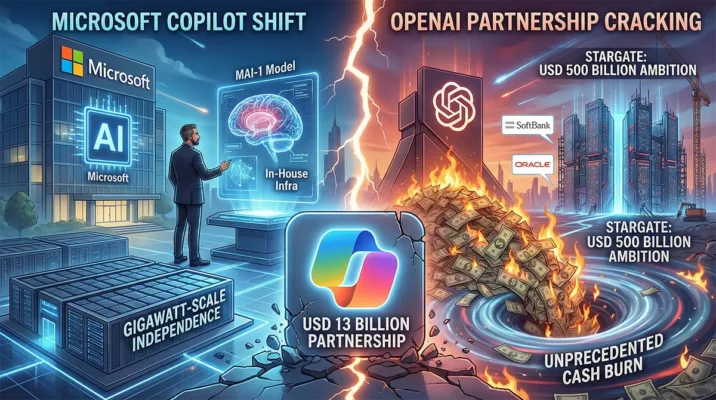
Explosive Microsoft Copilot Shift: Why the USD 13 Billion OpenAI Partnership is Cracking
Microsoft Copilot is facing a turning point as Microsoft AI prepares an exit strategy from OpenAI. Discover how massive cash burn, the Stargate supercomputer, and GPT 5 are forcing a gigawatt-scale split.
Feb
Frequently Asked Questions (FAQs)
Facing massive user backlash and a viral Cancel ChatGPT movement, Sam Altman admitted that rushing to announce the Department of War contract on a Friday—just hours after a rival was banned for ethical reasons—was a mistake. He stated it made the company look “opportunistic and sloppy” and failed to clearly communicate the complex safety guardrails they supposedly had in place.
Initially, the broad terms of the contract raised massive red flags. However, during his backpedal, Sam Altman stated that OpenAI is amending the deal to explicitly prohibit the intentional use of its AI for the domestic surveillance of U.S. citizens and to require further contract modifications before intelligence agencies like the NSA can use it. Critics, however, remain skeptical of these legal loopholes.
Users are participating in a massive Claude AI migration because Anthropic (the maker of Claude) took a principled stand against the U.S. government. CEO Dario Amodei refused to allow his AI to be used for mass surveillance or autonomous AI weapons, accepting a government ban rather than compromising on ethics. Users are rewarding this integrity by switching platforms.
The AI supply chain risk designation was used aggressively by the Trump administration to punish Anthropic. By labeling a company a national security risk, the government effectively bans federal contractors from doing business with them. This exerts massive political and financial pressure on tech companies to comply with military demands.
Yes. AI privacy concerns in Pakistan are highly relevant here. Since local data protection laws are still developing, relying on a global AI provider that is deeply integrated with foreign military intelligence networks poses a risk to proprietary business data and personal privacy. Users should be mindful of what sensitive information they share with these platforms.
What are your thoughts on this controversy? Will you be keeping your ChatGPT subscription, or have you already made the switch to an alternative like Claude? Let us know your thoughts in the comments below, and don’t forget to share this article with your network to keep the conversation going!
