

News
Shocking Meta Fact Checking Cuts: The Dangerous Rise of Fake News in South Asia
Feb
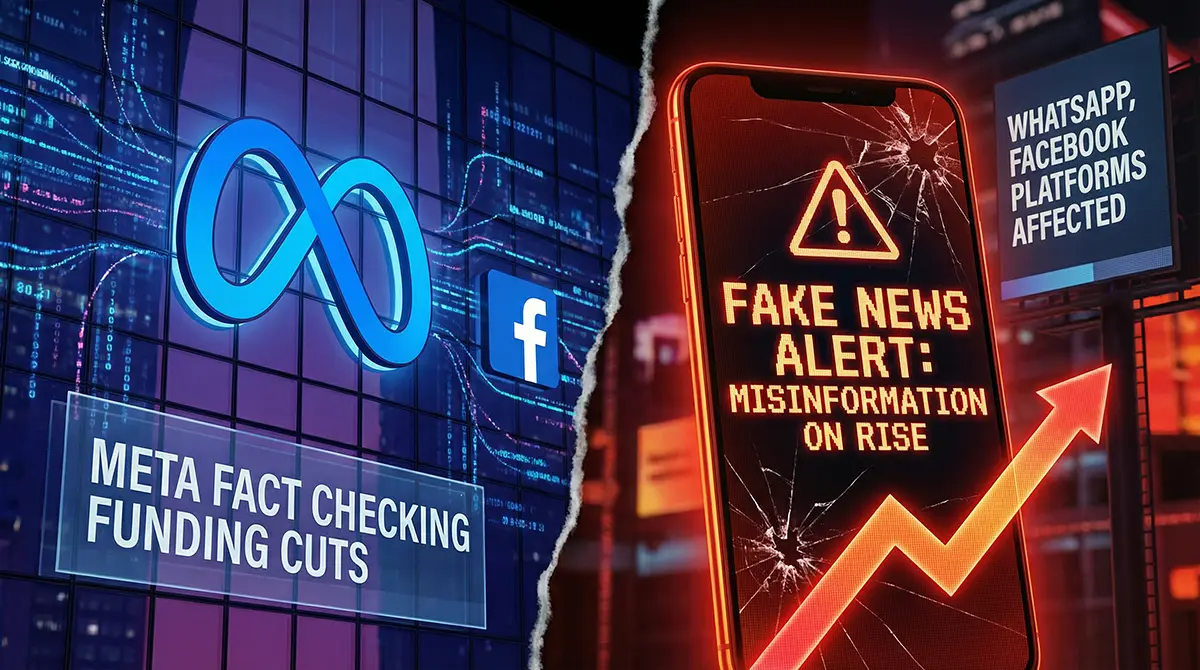
Meta fact checking is officially under threat, signaling a dangerous shift in how information is verified online. If you thought the death of professional verification was purely a Western phenomenon, recent developments indicate otherwise.
The “post truth” era has firmly established its roots in South Asia. According to exclusive reports, Meta (the parent company of Facebook and Instagram) has quietly notified its verification partners in India that their financial support is drastically shrinking.
By slashing payouts by a staggering 33% to 50% for the upcoming six-month contract period, Meta is dismantling the very infrastructure meant to protect users from dangerous digital falsehoods. This decision is not just a standard corporate budget cut; it is a glaring warning sign for the future of digital truth.
The Massive Budget Cut: Starving Independent Outlets
India currently boasts the largest network of Meta-certified verification partners globally. This network includes over 11 prominent partners, such as The Quint, India Today, and Factly.
For years, Facebook paid these organizations handsomely to verify viral posts, analyze political claims, and downrank harmful misinformation before it could spread. Now, sources confirm that Meta is reducing this critical funding by up to half.
While large, legacy media houses might absorb the financial pinch, smaller independent outlets are facing an existential crisis. Many of these specialized organizations rely almost entirely on Meta’s funding to pay the salaries of their investigative journalists.
When you remove the financial incentive to verify the truth, the volume of unverified claims on social media will inevitably multiply.
The Mark Zuckerberg Policy Shift: Emulating the US Model
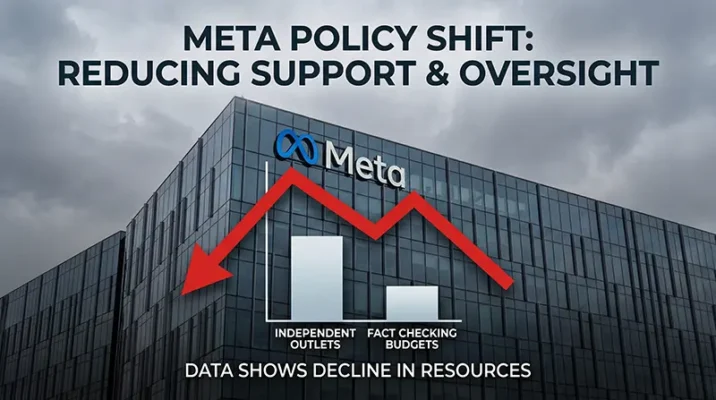
This alarming reduction in Meta fact checking funding did not happen in a vacuum. It is the direct result of a massive policy shift that began in the United States following the 2024 elections.
Earlier this year, Mark Zuckerberg signaled that Meta would actively move away from relying on professional journalists, whom critics often accuse of institutional bias. Instead, the company is pivoting toward a crowdsourced model.
By starving international markets of funding, Meta is clearing the runway to replace trained experts with unpaid users. The tech giant wants to wash its hands of the “truth business,” as arbitrating facts has proven to be expensive, politically volatile, and a continuous public relations headache.
Community Notes vs. Professional Fact-Checkers
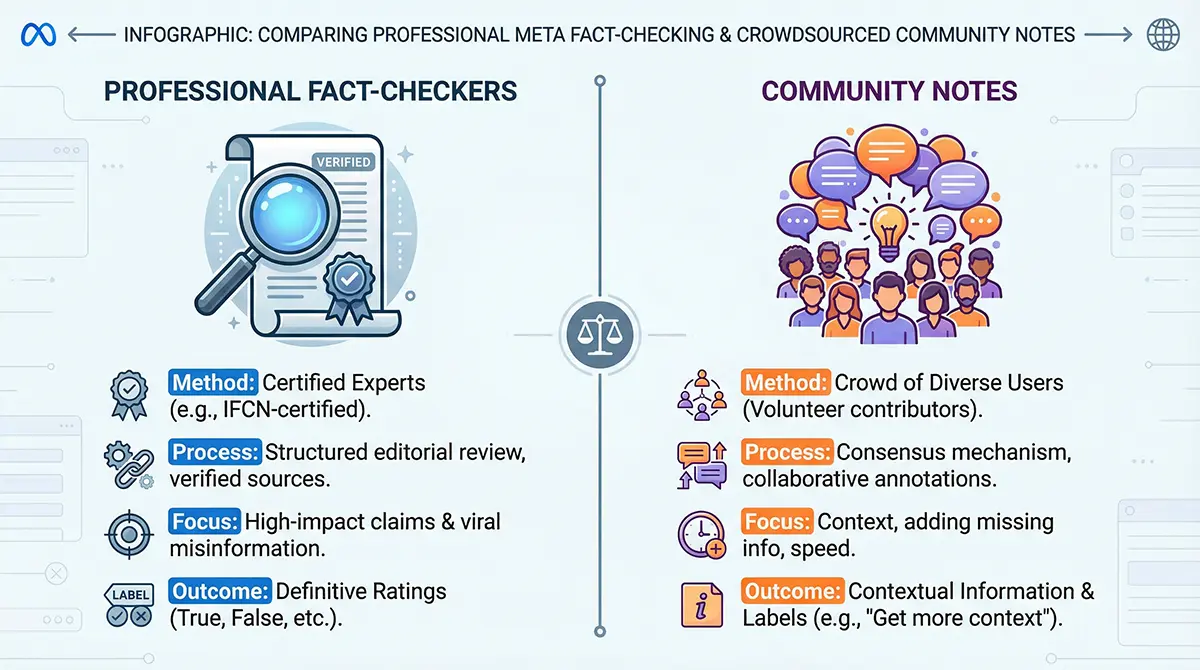
Meta’s new direction heavily favors a community notes model, heavily inspired by the system currently used on X (formerly Twitter). Meta argues that crowdsourced checking is inherently more democratic and resistant to political bias.
However, the reality of implementing this in highly polarized regions is deeply flawed. Professional fact-checking relies on rigorous methodology, primary source verification, and journalistic ethics.
In contrast, crowdsourced notes rely on popular consensus. In regions where political IT cells operate with massive scale and coordination, community notes can easily be manipulated. Bad actors can mass-report facts they disagree with, effectively turning the truth into a popularity contest rather than an objective reality.
Why WhatsApp Misinformation Will Skyrocket in India and Pakistan
The consequences of this policy shift will be felt most severely across South Asia. India is frequently referred to as the “misinformation capital of the world,” but neighboring Pakistan faces an equally severe crisis regarding digital literacy.
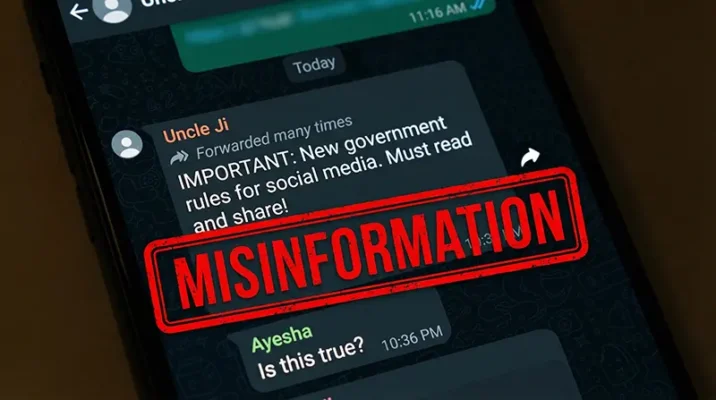
The primary vehicle for this digital chaos is WhatsApp. Because the messaging app is end-to-end encrypted, falsehoods spread rapidly in private family groups and community chats without any public oversight.
- The Volume Problem: Millions of messages containing doctored videos and audio deepfakes are forwarded daily across India and Pakistan.
- Real-World Consequences: Unlike harmless internet rumors, fake news in South Asia frequently incites mob violence, sectarian clashes, and severe political instability.
- The Failure of Crowds: Expecting a polarized public to objectively moderate its own encrypted messages is an incredibly dangerous gamble.
Without Meta fact checking professionals actively identifying and tracing the origins of these viral lies on Facebook—which often serve as the launchpad for WhatsApp forwards—the region will be left entirely defenseless.
Layoffs and the Dawn of the Post Truth Era
As funding dries up, mass layoffs across the region’s fact-checking ecosystem are inevitable. Highly trained journalists will lose their jobs, and specialized verification desks will be shuttered.
Fewer professionals monitoring the web means fewer viral lies get debunked. Consequently, misinformation will spread faster, reach wider audiences, and cause more damage before anyone can intervene.
We are entering a definitive post truth era. If trained professionals vanish from the digital landscape, the only “truth” left on your social media feed will be whatever the loudest, most organized mob decides it is.
Conclusion: Navigating Social Media Without a Safety Net
Meta is effectively sending a clear message to its global user base: “We no longer want to be the arbiters of truth. Good luck figuring it out yourselves.”
The drastic reduction in Meta fact checking funding is not just a business decision; it is an abandonment of corporate responsibility. As Facebook and WhatsApp become increasingly vulnerable to organized disinformation campaigns, users in Pakistan and India must become their own digital gatekeepers.
The responsibility now falls on the individual to question every forwarded voice note, doctored image, and sensational headline.
Resources
The Hindu: Meta to cut pay outs to fact-checking partners in India.
Frequently Asked Questions (FAQs)
Meta is quietly cutting its funding for Meta fact checking partners in India by up to 50%. This massive budget reduction will severely impact independent outlets that rely on these payments, leading to potential layoffs and a decrease in verified news on the platform.
Following recent policy shifts in the US, Mark Zuckerberg is moving Meta away from professional journalists toward a crowdsourced community notes model. This shift aims to cut costs and avoid political bias, but critics argue it allows the loudest voices to dictate the truth rather than objective facts.
Because Facebook often serves as the launchpad for viral content, reducing professional moderation means more unverified claims will slip through the cracks. Once this fake news enters encrypted WhatsApp groups in India and Pakistan, it becomes nearly impossible to track or stop, significantly increasing the risk of real-world harm.
The post truth era refers to a digital landscape where objective facts matter less than emotional appeals and personal beliefs. As platforms like Meta abandon professional verification in favor of crowdsourced opinions, users are left without a reliable safety net to distinguish fact from fiction on social media.
For large media corporations, the 50% cut is a setback, but for smaller independent outlets dedicated strictly to debunking misinformation, it is an existential threat. Without this vital funding, many of these specialized organizations will face severe layoffs or be forced to shut down entirely.
Related Blogs

WhatsApp Privacy Scandal 2026: Lawsuit Claims Meta Can Read “Encrypted” Messages
Is your WhatsApp chat truly private? A 2026 lawsuit in San Francisco alleges Meta uses a secret backdoor to bypass encryption. Read the full security breakdown here.
Feb
Meta Premium Subscription Alert: New Paywall Hits Facebook, Instagram & WhatsApp (2026)
Meta is rolling out a new Meta Premium Subscription in 2026. Unlock Instagram Anonymous Story Viewer, Meta AI tools, and WhatsApp Business upgrades. See what is behind the paywall.
Feb

WhatsApp Premium Pakistan: The Shocking €4 Ad-Free Subscription Truth (2026)
Is WhatsApp Premium coming to Pakistan? Discover the truth about the new €4 ad-free subscription, the "Pay or Consent" model, and why Pakistani users might be stuck with ads in 2026.
Feb
