

News
OpenAI Financial News 2026: The Shocking $14 Billion Loss & Bankruptcy Risk
Jan
While Sam Altman is busy designing screenless devices and promising Artificial General Intelligence (AGI), his company’s bank account tells a very different, terrifying story. OpenAI financial news in 2026 has taken a dark turn, revealing that the world’s most famous AI company is bleeding out.
According to explosive new financial projections reported by Windows Central and 99Bitcoins, the creator of ChatGPT is burning cash at a rate that is mathematically unsustainable. The latest reports indicate that OpenAI is on track to lose a staggering $14 billion this year (2026) alone.
If you rely on ChatGPT for your work, studies, or daily tasks, this news should concern you. Here is the breakdown of why the AI giant might be driving off a financial cliff and what it means for your wallet.
The Numbers: A $14 Billion Black Hole
We knew AI was expensive, but nobody knew it was this expensive. The latest OpenAI financial news 2026 leaks paint a grim picture of a company that is growing in popularity but failing in profitability.
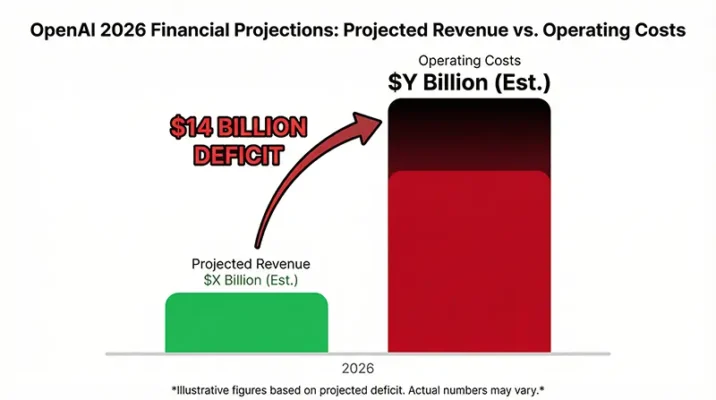
The Projected Loss
Despite earning billions in revenue from ChatGPT Plus subscriptions and enterprise API fees, OpenAI’s operating costs are obliterating its income. The projected loss for 2026 is $14 Billion. To put this in perspective, this loss is larger than the GDP of many small nations.
The Daily Burn Rate
The “Burn Rate”—the speed at which a company spends its cash reserves—is alarming. OpenAI is currently losing roughly $38 million every single day.
- Per Hour: $1.58 Million
- Per Minute: $26,000
Imagine a bonfire where money is the fuel; that is the current state of OpenAI’s finances.
Why Is OpenAI Bleeding Money?
Where is all the cash going? It isn’t going to fancy office parties. It is primarily flowing into the pockets of hardware manufacturers and elite engineers.
Compute Costs: The NVIDIA Tax
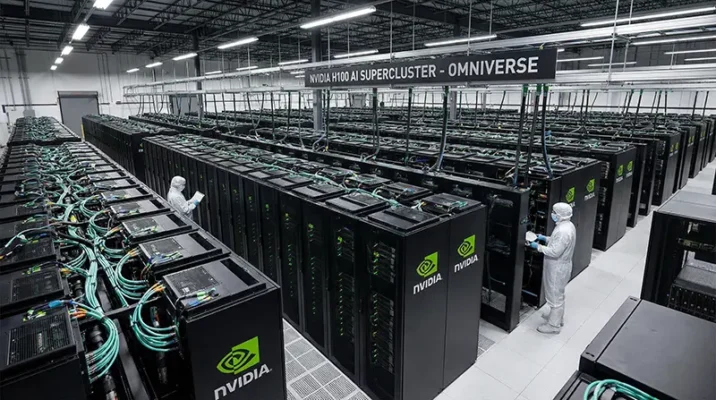
The primary culprit is NVIDIA. Training next-generation models like ChatGPT 5 (and the rumored “Arrakis” model) requires hundreds of thousands of NVIDIA H100 and Blackwell GPUs running 24/7.
- Hardware Costs: A single high-end GPU can cost upwards of $30,000 to $40,000. OpenAI needs massive clusters of these chips to function.
- Electricity: The energy required to cool and power these data centers is astronomical.
- Training Runs: A single training run for a frontier model can cost over $1 billion in pure compute time. If the model fails or needs retraining, that money is gone forever.
Talent Wars: The Million-Dollar Salaries
The second major drain is the cost of human intellect. To keep top-tier AI researchers from defecting to competitors like Google (DeepMind), Anthropic, or Elon Musk’s xAI, OpenAI is forced to pay exorbitant wages.
Compensation packages for senior engineers now average between $800k and $1.5M+ per employee. With thousands of employees, the payroll liability alone is a massive anchor dragging the company’s finances down.
The “2027 Cliff”: Raise Money or Die
The analysis paints a grim timeline for Sam Altman and his team. If OpenAI cannot secure another massive injection of venture capital (likely a Series G or H round), their cash reserves could run dry by 2027.
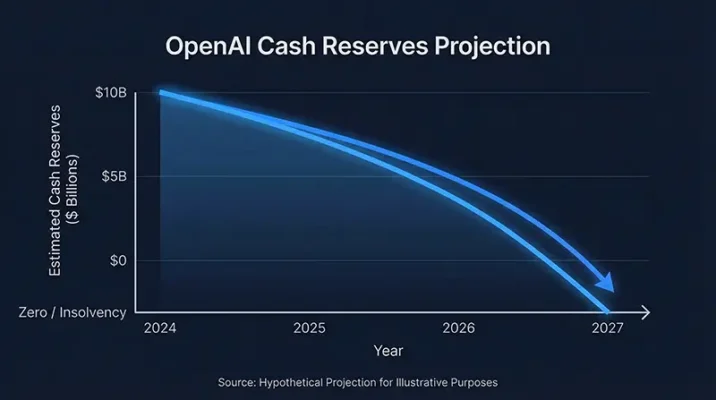
This creates a bankruptcy risk that was previously unthinkable.
Investor Fatigue
The problem is that investors are getting jittery. The “AI Hype” of 2023-2025 is cooling down as true profitability remains elusive. Asking investors for another $100 billion when you are losing $14 billion a year is a hard sell.
Note: OpenAI is currently in the “Uber Phase”—growing massive while losing money on every ride. But unlike Uber, OpenAI’s costs (compute) don’t get cheaper with scale; they actually get more expensive as models get smarter.
What This Means for You (The User)
If OpenAI is desperate for cash, they will eventually come for your wallet. Whether you are a free user in Pakistan or a paid subscriber in the US, the impact will be felt globally.
We are likely to see aggressive monetization tactics in late 2026 to plug the financial hole:
ChatGPT Plus Price Hikes
The current $20/month fee for ChatGPT Plus is likely unsustainable. Analysts predict a price jump to **$30 or $40 per month**.
- Impact on Pakistan: For users in Pakistan, where the exchange rate is a major factor, a $10 increase is significant. Paying nearly 11,000+ PKR per month for a chatbot may force many students and freelancers to cancel their subscriptions.
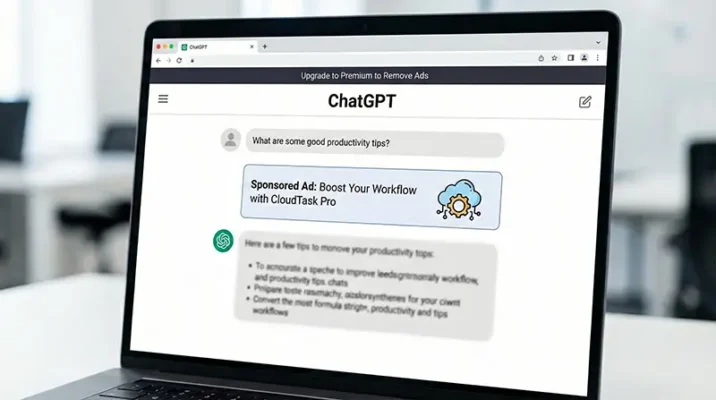
Ads and Privacy Concerns
- Ads in ChatGPT: We might start seeing “Sponsored Responses” inside your chats. Imagine asking for a dinner recipe and getting a recommendation for a specific brand of pasta sauce.
- Data Selling: To generate quick revenue, the company might be forced to loosen its privacy morals and license user data to third parties.
Can ChatGPT 5 Save Them?
All hopes are pinned on the release of ChatGPT 5. The theory is that this new model will be so advanced that businesses will pay any price to access it, finally turning the company profitable.
However, the competition is fierce. Google’s Gemini and open-source models (like Meta’s Llama) are catching up fast—and often for free. If ChatGPT 5 is not a revolutionary leap forward, users may not be willing to pay the increased prices required to keep OpenAI alive.
Conclusion: The Verdict
OpenAI financial news 2026 serves as a reality check for the entire tech industry. They are likely “Too Big to Fail”—Microsoft will probably bail them out again—but the era of “unlimited, cheap AI” is running on fumes.
Sam Altman is facing his biggest challenge yet: proving that his company is a viable business, not just a research lab burning through billions.
What you should do next: If you rely heavily on ChatGPT, consider exporting your important data and familiarizing yourself with cheaper alternatives like Claude or Google Gemini, just in case the bankruptcy risk forces OpenAI to make drastic changes to their service.
Key Takeaways
- Projected Loss: $14 Billion in 2026.
- Daily Burn: ~$38 Million.
- Primary Costs: NVIDIA GPUs and Engineer Salaries.
- Risk: Potential insolvency by 2027 without new funding.
- User Impact: Expect higher subscription prices and ads.
Resources
- TomsHardware: OpenAI could reportedly run out of cash by mid-2027 — analyst paints grim picture after examining the company’s finances.
- CNN: Why OpenAI went into crisis PR mode Thursday.
- TimesOfIndia: Legendary investor George Noble says OpenAI is falling in realtime, writes 600-word long note saying why he thinks Sam Altman’s company is in deep trouble.
Frequently Asked Questions (FAQs)
While OpenAI is not bankrupt yet, financial projections indicate a severe risk. Reports show the company is on track to lose $14 billion in 2026 due to massive compute costs and employee salaries. Without a new injection of capital (likely a Series G funding round), analysts predict their cash reserves could run dry by mid-2027.
It is unlikely that ChatGPT will become entirely paid-only, but the free version may become significantly limited. To cover its $38 million daily burn rate, OpenAI is expected to introduce Ads in ChatGPT for free users and potentially restrict advanced features (like the upcoming GPT-5) to paid subscribers only.
Currently, the price is $20/month, but analysts predict a price hike is imminent to offset operating losses. We could see the ChatGPT Plus subscription jump to $30 or $40 per month by late 2026. OpenAI has also recently introduced a higher-tier “ChatGPT Pro” plan at $200/month for power users.
The primary reason is the cost of “compute.” Training and running advanced AI models like ChatGPT 5 requires thousands of NVIDIA H100 GPUs, which consume massive amounts of electricity. Additionally, OpenAI pays average salaries of $800k – $1M to retain top engineering talent, further draining their bank account.
Financial pressure often forces companies to find new revenue streams. There is a valid concern that OpenAI might be forced to loosen its strict privacy standards and license user data to advertisers or third parties to avoid bankruptcy. We recommend users export important data regularly as a precaution.
It is wise to have a backup. Competitors like Google Gemini and Anthropic’s Claude are backed by massive tech giants (Google and Amazon) with deeper pockets, making them financially safer alternatives if OpenAI’s service faces interruptions or aggressive paywalls.
