

News
OpenAI Jony Ive Device: Is This the Revolutionary “Anti-Smartphone” of 2026?

Jan
The future of technology might not have a screen at all. For years, rumors have swirled that Sam Altman is planning something bigger than just a chatbot in your browser. Now, the picture is becoming clearer. The highly anticipated OpenAI Jony Ive device is reportedly set to be unveiled later this year (Late 2026), and it promises to be nothing short of a revolution.
If you are expecting a “ChatGPT Phone” with a massive OLED screen, you are likely wrong. This new hardware is reportedly screenless, designed by the legendary Jony Ive (the genius behind the iPhone), and it has a singular goal: to make you stop looking at your phone entirely.
Here is everything we know about the project—codenamed “Sweet Pea” in some circles—and why it might finally succeed where others have failed.
The “Sweet Pea” Project: What We Know
The tech world is buzzing with tech news regarding OpenAI’s shift into hardware. Reports suggest that the collaboration between OpenAI and Jony Ive’s design firm, LoveFrom, has been ongoing for nearly three years.

While initial whispers suggested a simple AI pin, recent leaks point to something more sophisticated. The device, potentially codenamed “Sweet Pea,” is rumored to be a “pocket-sized” or wearable unit. Some sources describe it as a discreet wand or a pebble-like device that fits into the palm of your hand, while others hint at a behind-the-ear wearable that redefines audio interaction.
Unlike a smartphone, this device does not demand your attention. It is built to be a “calm” computer—a tool that exists in the background, ready to assist you without the distraction of apps, notifications, or doom-scrolling.
Design Philosophy: The Anti-iPhone
It is ironic that the man who designed the iPhone is now designing the device meant to replace it. Jony Ive’s involvement guarantees that the OpenAI Jony Ive device will prioritize aesthetics and human connection over raw utility.

- Form Factor: Expect premium materials—glass, aluminum, or perhaps something entirely new. The design will likely be minimalist, stripping away buttons and screens to focus purely on voice and gesture.
- The Concept: Altman and Ive reportedly share a vision of “natural computing.” The goal is to reduce the friction between human thought and artificial intelligence.
- Interaction: instead of typing on a glass slab, you will likely communicate with the device just as you would with a person standing next to you.
This philosophy aligns with the growing desire for digital detoxing. Users are tired of being glued to screens; they want technology that helps them live in the moment.
The Technology: When “Her” Comes to Life
Hardware is just the vessel; the real magic lies in the software. This device will likely run on a custom-built version of OpenAI’s most advanced models, potentially GPT-5 or a specialized voice AI model.
Advanced Voice Mode
Sources claim OpenAI will debut a massive upgrade to its “Advanced Voice Mode” specifically for this hardware. This isn’t just a faster Siri or Google Assistant.
- Zero Latency: The device is expected to respond instantly, eliminating the awkward “AI lag” that plagues current voice assistants.
- Interruption Handling: It will understand non-verbal cues, pauses, and tone. You can interrupt it, change the subject, or speak softly, and it will adapt immediately.
- Context Awareness: The device will likely have cameras or sensors to “see” what you see, allowing it to answer questions about your surroundings in real-time.
Manufacturing Shift: Foxconn and Global Trade
In a strategic move that reflects current geopolitical tensions, OpenAI is reportedly avoiding manufacturing in China.

Instead, the company has partnered with Foxconn to establish production lines elsewhere. Reports indicate that the OpenAI Jony Ive device will be manufactured in Vietnam or potentially even the United States (USA).
This shift mirrors a broader trend where American tech giants are diversifying supply chains to avoid trade disputes between the US and China. For consumers, this ensures a more stable supply chain and potentially higher build quality, though it may come with a premium price tag.
Why Previous Screenless AI Failed
We have seen “screenless AI” fail before. Devices like the Rabbit R1 and the Humane Pin launched with massive hype but crashed upon release. Why will this be different?
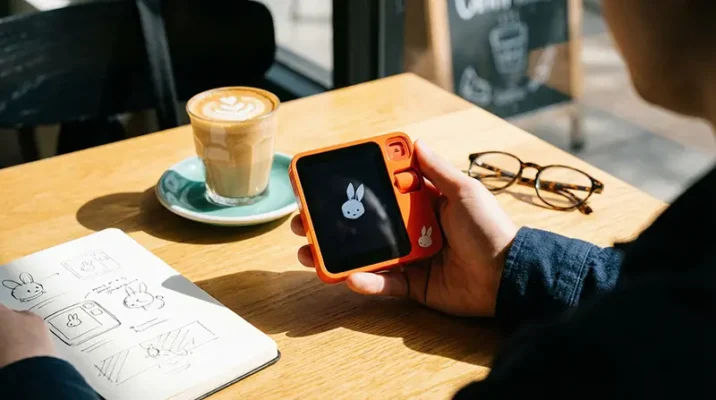
- Latency: The Humane Pin was too slow. By the time it answered, you could have Googled it yourself. OpenAI’s native model integration should solve this.
- Intelligence: Previous devices relied on “wrapping” existing models. OpenAI owns the brain (the model) and is now building the body (the device), ensuring perfect optimization.
- Design: No previous competitor had Jony Ive. His understanding of how humans hold and wear objects is unmatched in the industry.
Release Date and Availability
When can you get your hands on this revolutionary technology?
- The Reveal: We expect an official announcement and potentially a “Dev Kit” reveal in Late 2026.
- The Launch: Full consumer availability is pegged for 2027.
- The Market: While the US will be the primary launch market, tech enthusiasts in regions like Pakistan and Europe will likely see availability shortly after via global shipping channels.
Conclusion
The OpenAI Jony Ive device represents a gamble on the future of computing. Can we really give up our screens? Sam Altman and Jony Ive believe we can—or at least, that we should.
With artificial intelligence advancing at breakneck speed, 2026 might be the year we finally stop staring at our phones and start talking to the world around us again. If anyone can make the “Anti-Smartphone” succeed, it is this team.
Resources
- Jang – The News: OpenAI set to launch its first AI device soon.
- Blockchain-Council: OpenAI to Launch Its First Device in 2026.
- TechCrunch: OpenAI aims to ship its first device in 2026, and it could be earbuds.
Frequently Asked Questions (FAQs)
The new OpenAI Jony Ive device, reportedly codenamed “Sweet Pea,” is a screenless hardware product designed to replace the smartphone for many daily tasks. Unlike a traditional phone, it focuses on Voice AI and natural conversation, acting as a “calm” computer that helps you without demanding your constant attention.
Sam Altman and Jony Ive are reportedly designing this device as an “Anti-Smartphone.” While it may not fully replace your phone immediately, the goal is to reduce screen time by handling complex tasks—like booking appointments, answering questions, or managing emails—entirely through advanced artificial intelligence and voice commands.
Current tech news leaks indicate that OpenAI is targeting a reveal in Late 2026, likely between September and December. A limited “Developer Kit” may launch first, with full consumer availability expected in 2027.
Previous screenless devices failed due to slow response times (latency) and lack of intelligence. The OpenAI device is expected to succeed because it runs natively on OpenAI’s own models (potentially GPT-5), offering zero-latency, real-time responses. Additionally, Jony Ive and his firm LoveFrom are handling the design, ensuring a level of hardware quality that competitors lacked.
Reports suggest that Foxconn has been tapped to manufacture the hardware. In a strategic move to navigate US–China trade tensions, production will reportedly take place in Vietnam or the United States, rather than China.
