

Hardware
AMD Radeon RX 9070 Disappearing: Why the Best Budget Graphics Card Is Dying
Jan
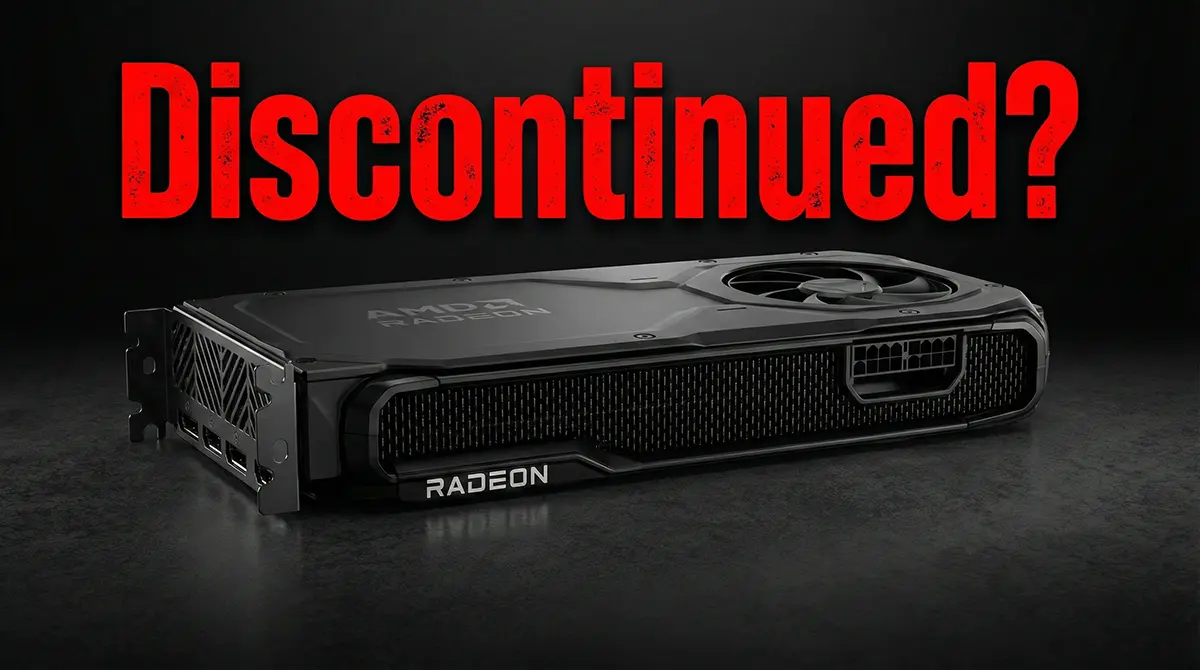
If you have been waiting to upgrade your PC, you might have missed the window for the AMD Radeon RX 9070.
First, we saw NVIDIA kill off the RTX 5060 Ti 16GB, leaving mid-range gamers scrambling. Now, it seems AMD is quietly pulling the plug on its own “value” option. For months, the non-XT version of the 9070 was hailed as the ultimate “bang for buck” graphics card for gamers in Pakistan and globally. It offered high-end performance without the high-end price tag.
However, if you were planning to buy the standard AMD Radeon RX 9070 because it offered the best value, you might be out of luck.
According to new reports from reputable tech outlets like VideoCardz and Sportskeeda, AMD is officially shifting its production priority away from this base model. Instead, they are focusing almost exclusively on the more expensive, higher-margin RX 9070 XT.
Here is why the “Budget Hero” is dying, why the shortage is real, and why your wallet is about to take another hit in 2026.
Why Is the AMD Radeon RX 9070 Disappearing?
The disappearance of this card isn’t an accident; it is a strategic maneuver. The report clarifies that the standard RX 9070 isn’t being officially cancelled—unlike some of NVIDIA’s discontinued cards—but it is being heavily deprioritized.
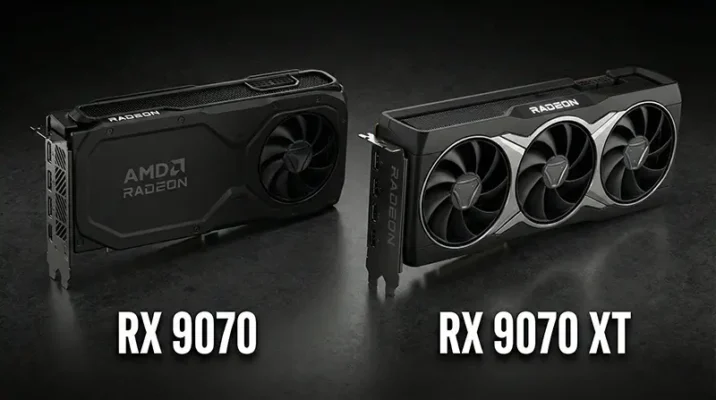
This creates a scenario of artificial scarcity. AMD knows that the best graphics card for the money was the non-XT model, but that doesn’t help their bottom line if production costs are too high.
The New Reality for Gamers
-
RX 9070 XT: You will see plenty of these on store shelves. AMD wants you to buy this card because it sells at a higher premium.
-
RX 9070 (Non-XT): Supply will be incredibly “tight.” Expect it to be perpetually out of stock or marked up by retailers.
In markets like Pakistan, where import costs already inflate GPU prices, this shift is devastating. We are likely to see the non-XT model priced so close to the XT version that the “budget” option ceases to exist entirely.
The 16GB Trap: Brutal Economics of VRAM
Why is this happening now? The situation comes down to simple, brutal economics involving the memory modules used in these cards.
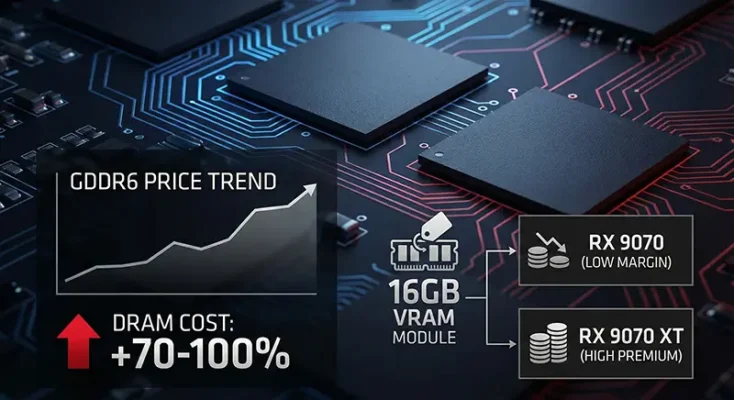
Both the AMD Radeon RX 9070 and the RX 9070 XT utilize the exact same memory configuration: 16GB of GDDR6. This 16GB buffer was the main selling point, making it perfect for 1440p gaming and future-proofing against demanding titles.
The Math Behind the Shortage
As we have covered extensively this month, global memory prices have skyrocketed. Recent data indicates a 70-100% increase in DRAM costs.
-
The Cost: The memory chips cost AMD the same amount for both the cheap card and the expensive card.
-
The Profit: Because the selling price of the non-XT is much lower, the profit margin on the cheaper card has completely evaporated.
To stay profitable, AMD is reportedly diverting its limited supply of GDDR6 memory to the XT model. The XT sells for a higher premium, allowing it to absorb the increased manufacturing costs while still generating profit.
NVIDIA vs AMD: A Bad Year for the Mid-Range
This move signifies a death blow for the mid-range market in 2026. Historically, the battle of NVIDIA vs AMD usually resulted in better prices for consumers. AMD would undercut NVIDIA to gain market share, offering a budget friendly alternative. That dynamic has changed.
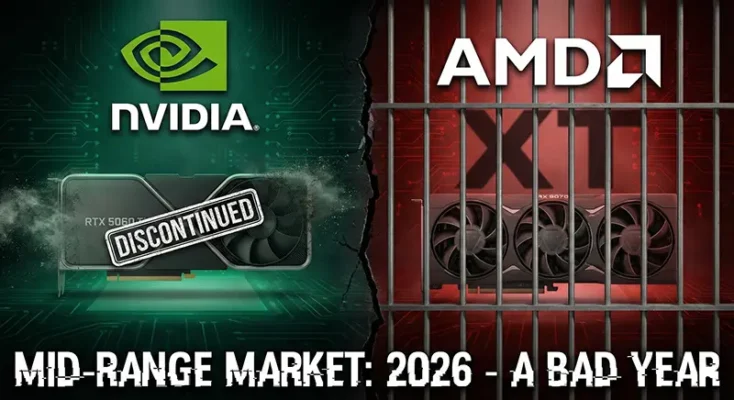
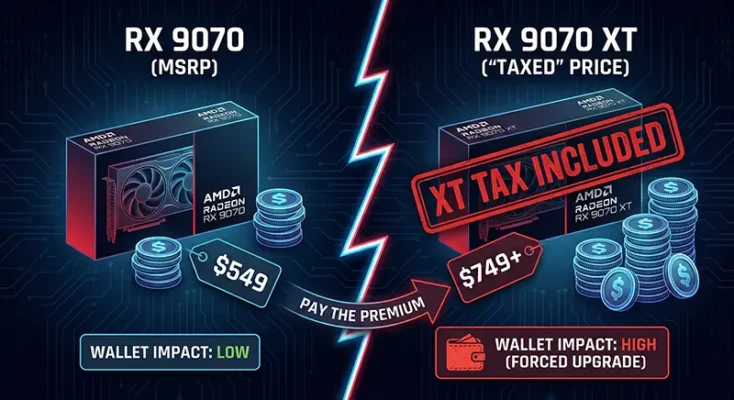
The standard RX 9070 was positioned as the “smart buy.” It offered 16GB of VRAM for a reasonable price, perfect for gamers who wanted high-texture fidelity without paying the “XT Tax.” By artificially restricting the supply of this card, AMD is effectively forcing gamers to upsell themselves.
If you cannot find the $550 card, you are forced to buy the $700 XT model just to get a working GPU for your system. This eliminates the competitive pressure that usually keeps prices down.
The “XT Tax”: What This Means for Your Wallet
For the average gamer, this results in a significant price hike. The concept of a “mid-range” build is slowly disappearing as the entry-level price floor rises.
If retailers in Pakistan and globally cannot get stock of the non-XT model, they will push the XT model aggressively. This creates a “pay-to-play” barrier where 1440p gaming becomes a luxury rather than a standard.
What to Expect in Stores:
- Low Stock: The non-XT model will rarely be seen at MSRP.
- Scalping: Any available stock may be bought up and resold at inflated prices.
- Forced Upgrades: Users will have to spend $150-$200 more than planned to get the XT version.
Final Verdict: Buy Now or Pay the Premium
The era of the value-king AMD Radeon card might be over for this generation.
If you manage to see a standard AMD Radeon RX 9070 at its original Manufacturer’s Suggested Retail Price (MSRP) today, buy it immediately. It is likely one of the last batches you will see before the artificial scarcity kicks in fully.
For everyone else, get ready to pay the “XT Premium” whether you want the extra cores or not. The mid-range market is shrinking, and the days of high-performance “bang for buck” cards are fading fast.
Sources
- VideoCardz: AMD reportedly now prioritizes RX 9070 XT over non-XT variant
- NtebookCheck: Rising memory prices put AMD’s Radeon RX 9070 in an awkward spot
Frequently Asked Questions (FAQs)
While AMD has not officially announced a cancellation, reports indicate that the standard RX 9070 is being heavily deprioritized. Production is shifting toward the more expensive RX 9070 XT due to rising manufacturing costs, making the non-XT model extremely difficult to find in stock.
The shortage is driven by a global spike in GDDR6 memory prices (up nearly 70%). Since the budget-friendly RX 9070 uses the same 16GB VRAM configuration as the expensive XT model, AMD is diverting the limited memory supply to the XT version to maintain higher profit margins.
Both cards feature 16GB of VRAM and excellent 1440p performance. However, the RX 9070 XT has more compute units and higher clock speeds. The standard RX 9070 was considered the better value because it offered most of that performance for roughly $150-$200 less.
If you need a PC immediately, you may be forced to buy the XT. However, be aware that you are paying a “premium” (or “XT Tax”) effectively for availability rather than just performance. If you can find a standard RX 9070 at MSRP, it is strictly the better financial choice.
It is highly unlikely. With memory prices continuing to rise and supply being artificially restricted, prices for the remaining stock of RX 9070 cards will likely increase or hover near the XT’s price point due to scalping and retailer markups.
