

News
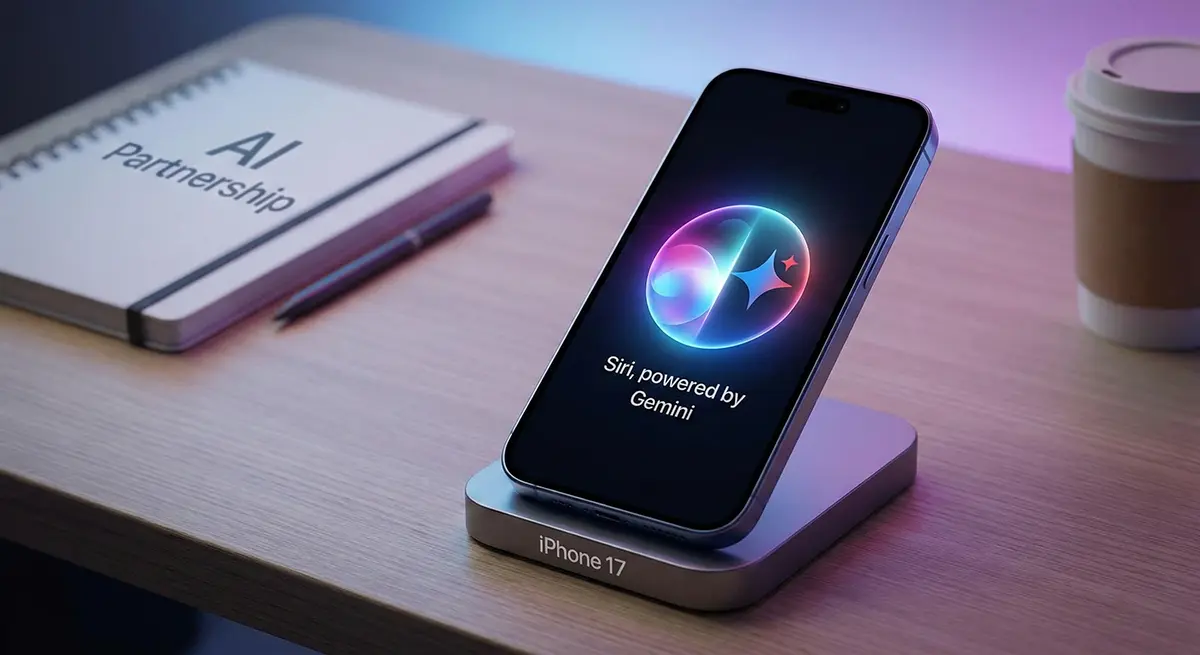
Google Gemini Powered Siri: Why Apple’s New Deal Changes Everything (2026)
Jan
For over a decade, Siri has been the butt of every tech joke. While ChatGPT and Google Gemini were writing code and poetry, Siri was still struggling to set a timer or misunderstanding basic queries.
But that era of incompetence is officially ending.
In a move that has shaken the tech world, Apple has confirmed a landmark partnership to integrate Google Gemini directly into the iPhone ecosystem. This isn’t just a software update; it is a fundamental shift in how we will use our devices. With the upcoming iPhone 17 and iOS 20, Apple is finally admitting that to win the AI war, it needs a little help from its biggest rival.
Here is everything you need to know about the new Google Gemini-powered Siri, the controversy behind the deal, and exactly what it means for users in Pakistan.
The Deal: If You Can’t Beat Them, Join Them
Apple has famously spent billions trying to build its own “Apple GPT” (codenamed Ajax). However, internal reports suggest that Apple’s proprietary models simply weren’t ready for prime time. Facing fierce competition from Gemini 3 and ChatGPT, Tim Cook made a pragmatic choice: instead of shipping an inferior product, he turned to Google.

This partnership allows Apple to leapfrog years of development. By integrating Google Gemini (specifically the advanced Gemini 2.0 Ultra and the rumored Gemini 3 models), Apple instantly transforms Siri from a liability into a market-leading asset.
Note: This partnership is non-exclusive, meaning Apple could still integrate other models like ChatGPT in the future, but for now, Google is the main engine driving the iPhone’s intelligence.
How the Hybrid Model Works: Apple vs. Google
One of the most critical aspects of this update is the “Hybrid Model.” Apple is not giving up control entirely. Instead, the iPhone 17 and devices running iOS 20 will split tasks between two distinct systems:

-
On-Device (Apple Intelligence): Simple, personal tasks will be handled by Apple’s own Neural Processing Unit (NPU). If you ask Siri to “Open WhatsApp,” “Set an alarm for 7 AM,” or “Summarize this text message,” the data never leaves your phone.
-
Cloud (Google Gemini): When you ask complex questions like “Write a formal email to my boss regarding the project delay,” “Plan a 3-day itinerary for a trip to Hunza,” or “Explain quantum physics in simple terms,” Siri will seamlessly hand the request off to Google Gemini in the cloud.
This split ensures that simple tasks remain fast and private, while heavy-duty AI tasks get the processing power they need.
Why Google? The $20 Billion Reason
Why didn’t Apple choose OpenAI? While Apple flirted with OpenAI during the iOS 18 and 19 cycles, the bond with Google is deeper—and significantly more lucrative.
Google already pays Apple an estimated $20 billion annually to remain the default search engine on Safari. This new Apple Gemini deal likely cements that relationship for another decade. It ensures Google maintains its dominance over the world’s most valuable user base, while Apple gets access to the world’s most comprehensive information database.
New AI Features: The “Super Siri” We Were Promised
This integration brings features that users have been dreaming of for years. The days of “Here’s what I found on the web” are over.

-
True Contextual Awareness: Siri will finally remember what you said five minutes ago. You can have a back-and-forth conversation without repeating details.
-
Multi-Modal Capabilities: You can show Siri a picture of a broken circuit board via your camera and ask Google Gemini, “How do I fix this?” The AI will analyze the image and provide step-by-step repair instructions.
-
Direct Synthesis: Instead of dumping a list of links, Siri will synthesize answers directly, drafting emails, creating lists, and solving math problems in real-time.
The Privacy Question: Is Your Data Safe?
Apple’s brand is built on privacy. Google’s brand is built on data. How can these two coexist? According to reports, Apple has negotiated a strict “Blind Server” agreement.
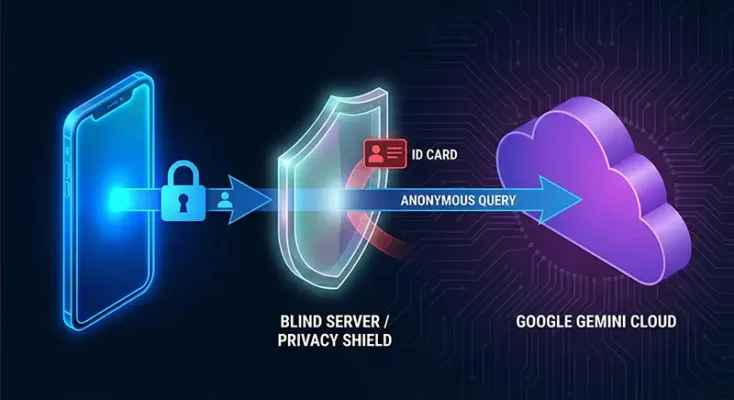
- IP Masking: When Siri sends your data to Google Gemini, your IP address is masked. Google cannot see who is asking the question.
- No Training Data: Google is reportedly forbidden from using iPhone queries to train its AI models or build an ad profile on you.
- Opt-In: Users will likely be notified when a request is being sent to the Google Cloud, maintaining Apple’s transparency standards.
What This Means for Users in Pakistan
For iPhone users in Pakistan, this update is a game-changer. Historically, Siri has struggled with our accents, mixed Urdu-English commands, and local context.

With Google Gemini providing the backend intelligence, the iPhone 17 (and supported older models) will gain significantly better language processing capabilities. Google’s data on Pakistan—from local maps to regional dialects—is far superior to Apple’s. This means:
-
Better navigation and location awareness in cities like Karachi and Lahore.
-
Improved understanding of “Roman Urdu” queries.
-
More accurate local search results for businesses and services.
The Verdict
The Google Gemini and Apple partnership is not just a corporate deal; it is the “Super Siri” update we have been waiting for. With the raw power of the iPhone 17 and the software intelligence of iOS 20, Apple is finally ready to compete in the AI era.
While privacy concerns remain valid, the “Blind Server” technology appears to be a solid compromise. As we approach the full rollout at WWDC later this year, one thing is certain: Siri is finally getting a brain transplant, and it’s going to be powered by Google.
Resources:
- CNBC: Apple picks Google’s Gemini to run AI-powered Siri coming this year.
- CNN: Apple teams up with Google Gemini for AI-powered Siri.
Frequently Asked Questions (FAQs)
While the full on-device capabilities will be optimized for the iPhone 17‘s neural engine, the cloud-based Google Gemini features will likely be available on all devices supported by iOS 20. This means users with an iPhone 15 or 16 may still access the “Super Siri” features via an internet connection.
Yes. Apple has implemented a “Blind Server” technology for this partnership. When Siri sends a complex request to Google Gemini, your IP address is masked, and Google is contractually forbidden from using your queries to build an advertising profile or train their AI models.
Unlike ChatGPT, which is a standalone app, Google Gemini is integrated directly into the iPhone’s operating system. This allows it to control apps, set reminders, and access personal context (like your calendar) which a standard chatbot cannot do. Additionally, Gemini’s multi-modal skills allow it to “see” through your camera in real-time.
The update is expected to roll out globally, including in Pakistan, with the release of iOS 20 later this year. The features will be showcased at WWDC and likely launched to the public in September alongside the iPhone 17.
The decision was likely driven by both performance and economics. Google pays Apple an estimated $20 billion annually for search dominance. Deepening this partnership with Gemini 3 ensures financial stability for Apple while gaining access to Google’s superior real-time data and “World Knowledge,” which is crucial for improving Siri.
