

Games
Is Cloud Gaming Killing Ownership? NVIDIA’s 100-Hour Cap Explained

Dec
If you have been waiting for GPU prices to finally drop so you can build your dream PC, you might be waiting for a train that’s never coming. According to a scathing new report from Gamers Nexus and recent pricing updates from NVIDIA, the future of cloud gaming isn’t just about convenience—it’s about control.
NVIDIA is currently pushing consumers toward a reality where you own nothing and pay for everything, forever. With the latest changes to GeForce NOW, the company is laying the groundwork for a “hardware-as-a-service” ecosystem where your gaming habits are capped, metered, and monetized.
Is this the golden age of the cloud gaming service, or the death of personal computing ownership?
The New “Usage Tax”: 100 Hours or Bust
The most aggressive move in this pivot is the introduction of strict playtime limits on GeForce NOW, NVIDIA’s premier cloud gaming platform. Starting January 1, 2026 (for existing members), subscribers to the Performance and Ultimate tiers will be strictly capped at 100 hours of playtime per month.
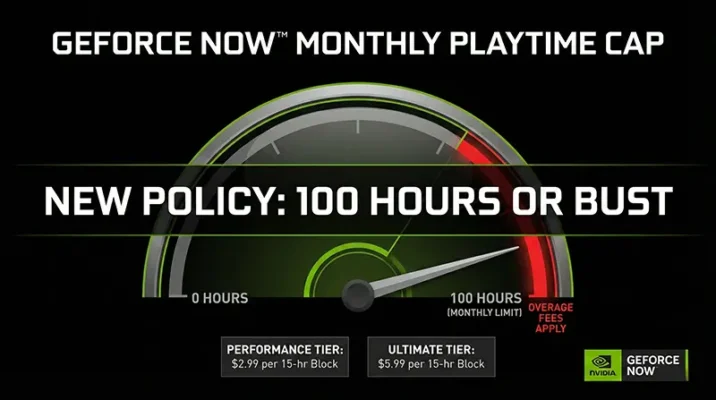
While 100 hours might sound substantial to a casual user, it averages out to just over 3 hours a day. For dedicated gamers, streamers, or households that share a single account to play their favorite cloud gaming games, hitting that limit is inevitable.
Once you cross that line, NVIDIA charges you for “additional time” in 15-hour blocks. This fundamentally changes the value proposition of the service, moving it from an “all-you-can-eat” buffet to a metered utility bill.
What Happens When You Hit the Cap?
-
Performance Tier: You pay $2.99 for every extra 15-hour block.
-
Ultimate Tier: You pay $5.99 for every extra 15-hour block.
-
Unused Time: Only up to 15 hours of unused time rolls over to the next month.
If you are a legacy user, you might be safe—for now. “Founders” members are currently exempt, provided their membership never lapses. However, for the vast majority of users searching for Nvidia GeForce NOW, these limits are the new reality.
The Cost of Playing More: The Math Doesn’t Lie
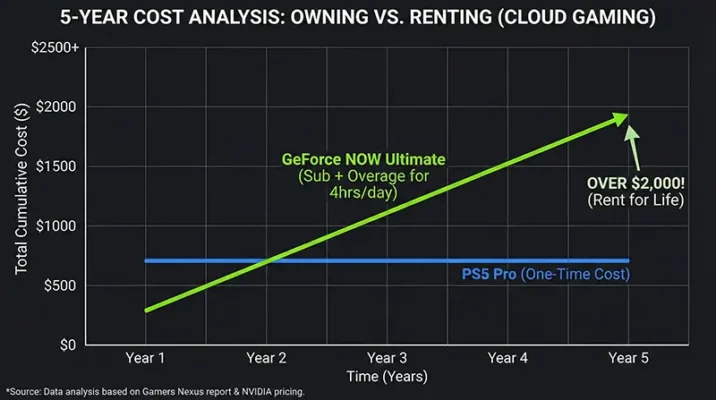
As shown in the data analysis by Gamers Nexus, the costs spiral quickly once you become a “heavy” user. The illusion of affordability vanishes when you crunch the numbers for a long-term cloud gaming service subscription.
Let’s break down the cost for a dedicated gamer playing 4 hours a day (approx. 120 hours/month):
-
Standard Price: You expect to pay the sticker price of $19.99/month (Ultimate).
-
Actual Price: Because you exceeded the cap by ~20 hours, you must purchase two 15-hour blocks.
-
New Monthly Bill: Your bill jumps to $31.97/month.
Over 5 years, that “affordable” subscription ends up costing nearly $2,000. That is almost the price of building a high-end PC yourself. The difference? At the end of those 5 years, you own absolutely nothing.
Long-Term Cost Comparison
| Playtime / Day | Monthly Cost (Ultimate) | 5-Year Cost (Ultimate) | 10-Year Cost (Ultimate) |
|---|---|---|---|
| 2 Hours | $19.99 | $1,199.40 | $2,398.80 |
| 4 Hours | $31.97 | $1,918.20 | $3,836.40 |
| 6 Hours | $55.93 | $3,355.80 | $6,711.60 |
-
Compare to PS5 Pro: ~$700 (One-time cost).
-
Compare to Steam Machine (Projected 2026): ~$1,000 (One-time cost).
If you are a heavy user playing 6 hours a day, you could buy five PS5 Pros for the price of renting one virtual Nvidia Ge Force GPU for 5 years.
Why NVIDIA Wants You to Rent (The Death of Ownership)
The Gamers Nexus investigation highlights a disturbing trend: mega-corporations are moving post-consumer. They don’t want to sell you a product once; they want to rent it to you for life. This is the “Death of Ownership.”
Selling you a GPU is a one-time transaction. But locking you into a subscription ecosystem allows NVIDIA to:
-
Retain the Assets: They keep the GPUs to reuse or repurpose for high-profit AI workloads when you aren’t gaming.
-
Change the Deal: As we’ve seen with Netflix and Adobe, they can raise prices or tighten limits whenever they want.
-
Force AI Adoption: By controlling the cloud hardware, they can force the integration of data collection features.
This mirrors trends in the housing market, where private equity firms purchase supply to force people into perpetual renting. NVIDIA is effectively trying to become the “landlord” of your PC gaming experience.
Making Ownership Impossible
Why would anyone agree to this? Because NVIDIA is making the alternative—building your own PC—increasingly impossible. Rumors suggest NVIDIA plans to cut consumer GPU supply significantly in 2026 to prioritize enterprise customers. By artificially constraining supply, they keep physical GPU prices purposefully high.
When an RTX 5080 costs $1,200+ and is impossible to find, a $20/month cloud gaming subscription looks like a savior. In reality, it is a trap.
Competitor Landscape: GeForce NOW vs. Xbox Cloud Gaming
While NVIDIA pushes for higher costs, how does the competition fare? Many users are now looking toward Xbox Cloud Gaming as an alternative.
Xbox Cloud Gaming is currently bundled with Game Pass Ultimate. Unlike NVIDIA’s model, where you must buy your games separately on Steam or Epic, Xbox gives you a library of titles. However, the visual fidelity on Xbox is generally lower (capped at 1080p/60fps on many devices) compared to the 4K/120fps potential of the best cloud gaming tier on GeForce NOW.
Key Differences:
-
Library: Cloud games on Xbox are included in the subscription. On GeForce NOW, you stream games you already own.
-
Performance: NVIDIA offers superior hardware (RTX 4080 equivalents), whereas Xbox Cloud Gaming runs on Series X server blades.
-
Web Access: Both services are accessible via browser. Users often type Play.GeForceNOW.com or XBox.com/Play to access these services instantly.
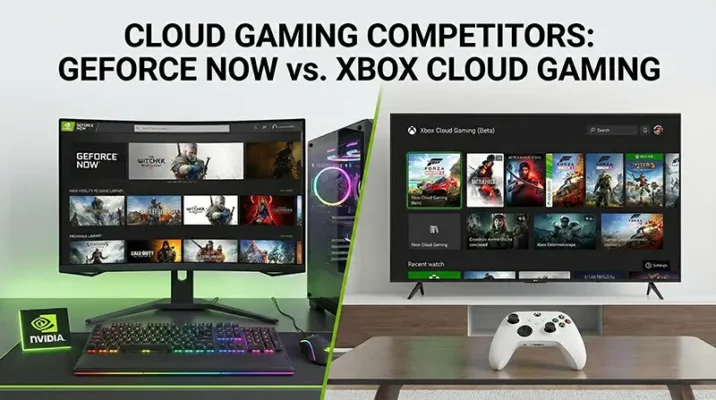
For those simply looking to play casual titles, Xbox might offer better value. But for high-fidelity PC enthusiasts, NVIDIA still holds the performance crown—albeit at a steep rental price.
Is Cloud Gaming Free Anymore?
A common query among gamers on a budget is: “Is cloud gaming free anymore?”
Technically, yes. GeForce NOW still retains a free tier, but it is heavily restricted. Users on the free plan face long queue times, ad interruptions, and a strict 1-hour session limit. You can relog immediately after your hour is up, but the friction is designed to push you toward a paid subscription.
Comparatively, rumors suggest Microsoft is testing an ad-supported version of Xbox Cloud Gaming that could allow users to play cloud gaming games for free in exchange for viewing advertisements.
If you are looking for a truly free, high-performance experience, those days are likely over. The industry is collectively moving toward a paid subscription model.
Conclusion: The Inescapable Event Horizon
The push toward subscription GPUs isn’t about convenience; it’s about control. By pricing physical hardware out of reach and introducing metered billing for cloud gaming, NVIDIA is building a future where the average person is priced out of personal computing ownership.
As Gamers Nexus puts it, this is an “inescapable event horizon.” The only way to win is to hold onto your hardware, refuse to subscribe to predatory tiers, and support open platforms that still allow you to own what you buy. Whether you choose Xbox Cloud Gaming, build a PC, or stick to consoles, be aware of the long-term costs of renting your hobby.
Frequently Asked Questions (FAQs)
Starting January 1, 2026, existing Performance and Ultimate tier subscribers will be capped at 100 hours of playtime per month. New subscribers may face these limits sooner. This averages out to approximately 3 hours of gaming per day.
If you exceed the monthly cap, you will be charged for additional time in 15-hour blocks. Performance tier users pay $2.99 per block, while Ultimate tier users pay $5.99 per block.
For casual users, yes. However, for heavy users (4+ hours/day), cloud gaming is significantly more expensive in the long run. Over a 5-year period, a heavy user could pay nearly $2,000 in subscription fees without owning any hardware, compared to buying a PS5 Pro for ~$700.
Currently, Xbox Cloud Gaming (part of Game Pass Ultimate) does not have a strict monthly hourly cap like NVIDIA’s new policy. However, it often has longer queue times during peak hours and offers lower visual fidelity (1080p) compared to GeForce NOW’s 4K capabilities.
Yes, NVIDIA still offers a Free tier, but it is heavily restricted. Free users face ad interruptions, long queue times, and a strict 1-hour session limit, requiring them to log out and back in to keep playing.
Related Products

GeForce RTX 50
GeForce RTX 50
GeForce RTX 50
GeForce RTX 50
GeForce RTX 50
