

Feb
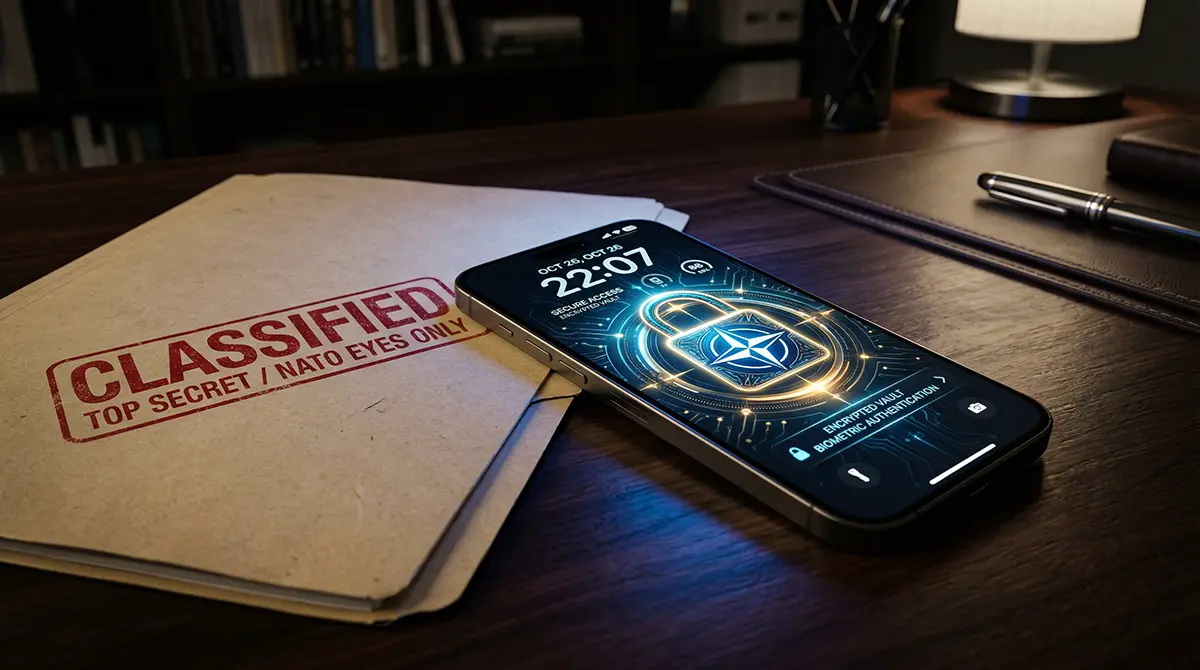
Have you ever looked at the smartphone sitting on your desk and wondered if it could guard actual state secrets? In an unprecedented move that has shaken the tech world this February 2026, that wild thought is now a certified reality. The Apple iPhone has officially become the first and only consumer device cleared for NATO classified intel. For tech enthusiasts and general users here in Pakistan, this isn’t just a distant global headline—it’s a massive validation of the device you use every day to WhatsApp your family, check your bank balance, or run your business.
This certification covers all 32 NATO member nations, verifying that the Apple iPhone meets the absolute highest NATO classified information standards. In this deep dive, we are going to explore why this clearance is considered the “holy grail” of hardware trust. We will unpack the technology that makes the Apple iPhone so impenetrable, compare it to traditional military hardware, and discuss exactly what this Apple enterprise security milestone means for privacy-conscious users in Pakistan.
The Dawn of a New Security Era for the Apple iPhone
Why NATO Certification is the “Holy Grail”
For decades, there has been a massive, unscalable wall between everyday consumer gadgets and military-grade tech. If you wanted to process highly sensitive diplomatic or military communications, you couldn’t just pick up a smartphone from a local tech market in Hafeez Centre or Saddar. You had to use bulky, specialized, and highly restricted equipment manufactured by traditional defense contractors.
That era is officially over. The fact that an off-the-shelf Apple iPhone—the very same device available at your nearest authorized Apple reseller—is now cleared for NATO secrets is nothing short of mind-blowing. It proves that the iOS security architecture is so robust that it can handle data that, if leaked, could cause international incidents. For the everyday Pakistani, whether you are a university student organizing your campus life or a corporate executive closing international deals, knowing that your Apple iPhone has cleared the strictest security audits on the planet offers unmatched peace of mind.
This is not just a clever marketing gimmick drummed up in Cupertino; it is a rigorous, third-party endorsement that money simply cannot buy. It positions the Apple iPhone as the undisputed leader in the secure communications market, fundamentally changing how the world views consumer devices for government use.
Breaking Down the NATO Classified Intel Clearance
What Does “Information Assurance” Actually Mean?
When an entity as massive as NATO clears a device, they don’t just check if it has a strong six-digit passcode or a nice Face ID animation. They test for a doctrine known as “Information Assurance” (IA). This means the Apple iPhone was relentlessly vetted to ensure it guarantees the confidentiality, integrity, and availability of classified data under extreme duress.
It means the device can actively resist advanced, state-sponsored cyberattacks, prevent unauthorized physical data extraction if the phone is captured, and maintain secure encrypted communications even if the surrounding cellular or Wi-Fi network is entirely compromised. Achieving this on a device designed to play mobile games and scroll through social media is an engineering marvel.
The Shift from Defense Contractors to Consumer Tech
Historically, defense companies like L3Harris and General Dynamics had a complete monopoly on secure communications. They built purpose-built, highly restricted devices that were notoriously difficult to use and lacked modern interfaces. Now, Apple has crashed that exclusive party. By ensuring that the standard Apple iPhone meets these aggressive criteria, they have successfully merged consumer convenience with military-grade lockdown. The Apple iPhone essentially bypasses the need for allied governments to spend billions on developing proprietary hardware from scratch, accelerating tech deployment across modern defense forces.
The Apple iPhone vs. Traditional Military Hardware
The Cost Advantage: $1,200 vs. $5,000 Devices
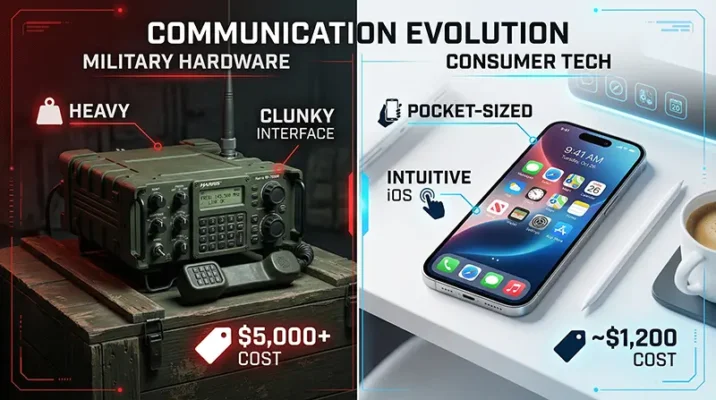
Let’s talk economics, because the numbers highlight exactly why this is a disruptive moment in tech history. A specialized military communications device can easily cost upwards of $5,000 per unit, and that doesn’t even factor in the costs of specialized training to use its clunky software. In stark contrast, a brand-new top-tier Apple iPhone (like the iPhone 17 Pro Max) costs roughly $1,200 globally.
When you factor in the Apple iPhone price in Pakistan 2026—which, after local taxes, import duties, and PTA approvals, lands roughly between 450,000 to 700,000 PKR depending on the model—it is still a mere fraction of the cost of a specialized military terminal. This massive price difference forces procurement officers globally to rethink their defense budgets. Why buy a heavy, $5,000 single-purpose brick when an Apple iPhone offers a sleek, intuitive interface alongside validated Apple iPhone military grade security?
Security Without Compromise: No Backdoors Allowed
One of the most unique and critical insights here is Apple’s stubborn refusal to compromise its core principles. For years, government agencies have pressured tech giants to build “backdoors” into their software to bypass encryption during law enforcement investigations. Apple famously fought the FBI over this very issue, arguing that a backdoor built for the “good guys” inevitably becomes an exploit for malicious hackers.
The NATO certification proves Apple was right all along: you can achieve the absolute highest level of government trust without compromising the fundamental privacy of the Apple iPhone. They didn’t have to weaken the device to get it cleared; the commercial device was simply strong enough as is.
What This Means for Tech Users in Pakistan
Corporate Data Security in a Digital Pakistan
Pakistan is currently undergoing a massive digital transformation. From booming fintech startups in Karachi offering Roshan Digital Accounts to massive software houses in Lahore and Islamabad exporting IT services globally, digital data is the modern currency. With this digitization, corporate espionage and cyber threats are very real, everyday concerns.
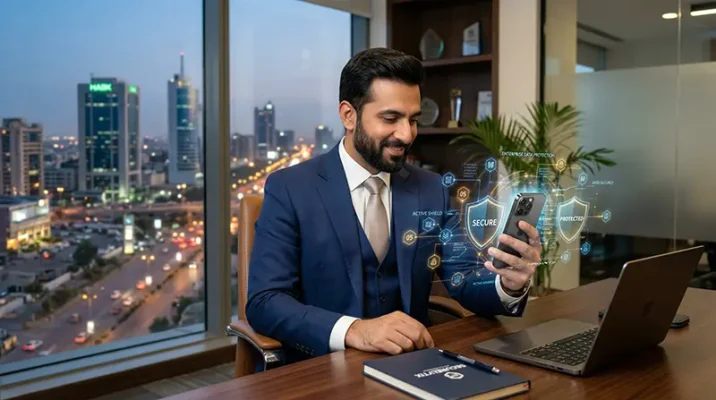
For Pakistani executives, startup founders, and business owners, the news that the Apple iPhone is cleared for NATO intel is a loud, clear signal: this is the ultimate secure mobile platform you want your company’s proprietary data residing on. If your corporate communications, client intellectual property, and financial records are stored on an Apple iPhone, you are utilizing a device trusted by 32 international militaries. That’s a serious flex when dealing with international clients who demand rigorous enterprise data protection Pakistan.
PTA Approvals and Local Deployment Considerations
While the global news is stellar, local context is always what matters most. PTA approved secure smartphones are essential for uninterrupted network access in Pakistan. When enterprises here deploy the Apple iPhone to their staff, they must ensure these devices are fully PTA compliant to leverage local 5G and secure cellular networks safely. Because the Apple iPhone integrates seamlessly with local carrier settings (like Jazz, Zong, or Nayatel) while maintaining its encrypted core independently, it stands as the ideal choice for Pakistani government officials, journalists, and high-profile individuals seeking uncompromising privacy-first smartphone options.
The Tech Behind the Trust: iOS and Hardware Encryption
The Role of the Secure Enclave
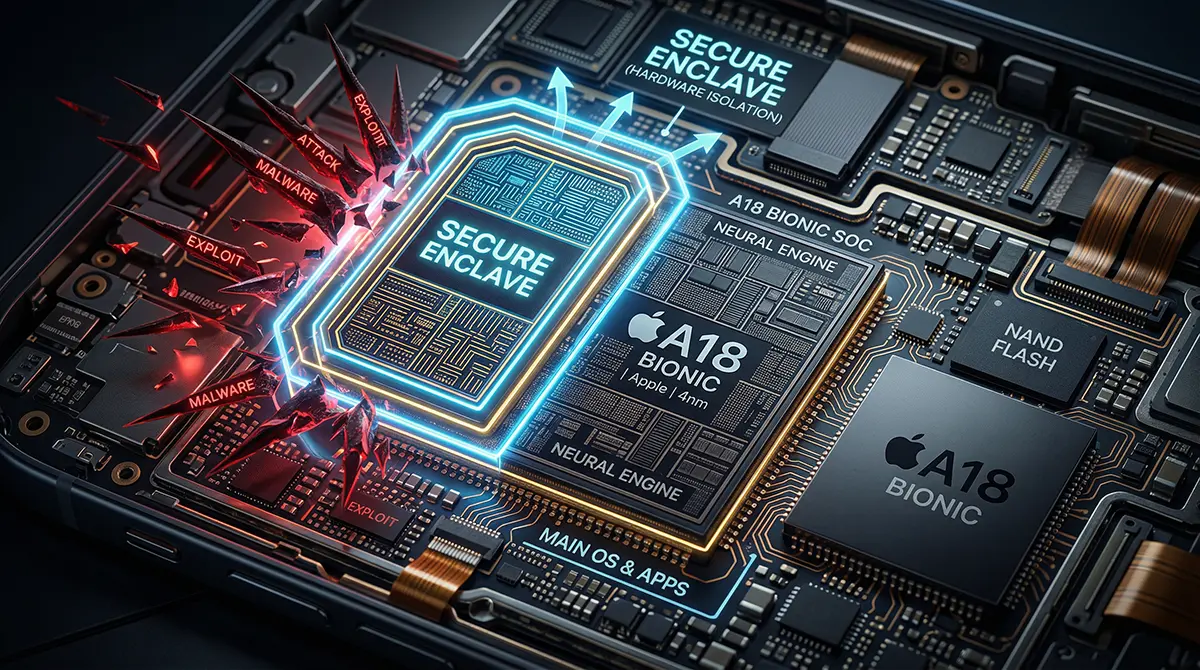
You might be wondering, exactly how does the Apple iPhone pull this off? The secret sauce isn’t just smart software coding; it is deeply, physically baked into the hardware. The beating heart of iPhone hardware encryption is the “Secure Enclave.” This is a dedicated, isolated subsystem integrated directly into Apple’s custom silicon chips (like the powerful A18 or A19 processors).
The Secure Enclave is completely cut off from the main processor. Even if the main iOS system is somehow fully compromised by a highly advanced malicious app, the Secure Enclave remains untouched. It handles your most sensitive information—your biometric data from Face ID and the complex cryptographic keys used to scramble your data. For NATO to sign off on the Apple iPhone, their cyber-warfare units had to relentlessly test this Secure Enclave and ultimately admit defeat against its digital walls.
Bypassing the Android Ecosystem
This tight hardware-software integration is exactly why the Apple iPhone secured this clearance while others haven’t. Android devices, by their very nature, often suffer from fragmentation—different manufacturers using different Snapdragon or MediaTek chips, heavily modified operating systems, and varying update schedules.
Apple, on the other hand, controls absolutely everything in the Apple iPhone, from the sand on the silicon chip to the glass on the screen. This “walled garden” ecosystem, often criticized by tech enthusiasts for being too restrictive, is precisely what makes the iOS security architecture an impenetrable fortress worthy of classified military intelligence.
Pressure on the Competition: Samsung, Google, and Microsoft
Can the Galaxy Series Catch Up?
Apple just threw down the ultimate gauntlet in the smartphone wars. By securing this Apple enterprise security milestone, the Apple iPhone has put immense, immediate pressure on its biggest rivals: Samsung, Google, and Microsoft.
Samsung has its Knox security platform, which is highly respected and already used by many government agencies for non-classified or lower-tier secure administrative work. Google has the impressive Titan M2 security chip in its Pixel phones. However, neither has achieved full-blown NATO clearance for classified intel across 32 allied nations for a standard consumer device. The Apple iPhone is now the unquestioned golden standard.
For the tech-savvy Pakistani consumer who is constantly embroiled in the classic “iPhone vs. Android” debate in local cafes, this adds a massive, heavy weight to the Apple side of the scale. If you are choosing a phone based purely on which secure mobile platform can better protect your digital life, your banking apps, and your private chats against future threats, the Apple iPhone currently holds a trump card that no Android device can easily match.
Quick Takeaways
- Historical Milestone: The Apple iPhone has officially become the very first consumer device approved to handle classified information for 32 NATO member nations.
- Massive Cost Efficiency: Procuring an Apple iPhone (approx. $1,200) massively undercuts the cost of traditional, clunky military defense communication devices ($5,000+).
- Security Without Compromises: Apple achieved this incredible clearance without adding any government “backdoors,” maintaining maximum privacy for everyday consumers.
- Hardware Supremacy: The isolated Secure Enclave and the tightly controlled iOS security architecture are the primary technical reasons the Apple iPhone passed these rigorous military audits.
- Local Pakistani Impact: For executives, officials, and everyday users in Pakistan, investing in a PTA-approved Apple iPhone literally means carrying a military-grade secure mobile platform in your pocket.
Conclusion
The global tech landscape shifted monumentally in February 2026. By becoming the only consumer gadget cleared for NATO classified intel, the Apple iPhone has completely rewritten the rules of digital trust. It proved once and for all that we no longer have to choose between a beautifully designed, user-friendly interface and hardcore, military-grade security.
For the people of Pakistan—whether you are an IT professional architecting software in Lahore, an entrepreneur building a brand in Karachi, or just someone who deeply values their personal digital privacy—this news is incredibly relevant. The device you rely on daily isn’t just a cultural status symbol or an excellent camera; the Apple iPhone is now a globally recognized, certified vault for the world’s most sensitive data. As competitors scramble in their R&D labs to match this Apple enterprise security milestone, the Cupertino giant can comfortably sit on the throne of hardware trust.
Is it time to audit your own digital security? Ensure you are keeping your iOS constantly updated and are actively utilizing all the built-in privacy features your smartphone has to offer.
References
- TechBuzz. (2026, February 26). Apple Devices First Consumer Tech Cleared for NATO Secrets. Retrieved February 28, 2026, from TechBuzz
- Apple Inc. (2026). iPhone – Apple. Retrieved February 28, 2026, from Apple
- Wikipedia. (2026). iPhone. Retrieved February 28, 2026, from Wikipedia
Frequently Asked Questions (FAQs)
Absolutely not. The NATO certification was awarded precisely because the Apple iPhone is incredibly secure against all unauthorized access. Apple maintained its firm stance on not creating backdoors, ensuring privacy-first smartphone options remain completely intact for everyday users.
While the exact list of cleared models scales with ongoing OS updates, the certification primarily focuses on the modern iOS security architecture found in recent devices, heavily featuring the iPhone 16 and the latest iPhone 17 series running the newest iOS versions.
The NATO certification itself does not directly increase the retail price of the phones. The Apple iPhone price in Pakistan 2026 is still dictated by international dollar exchange rates, local sales taxes, and PTA regulatory duties. However, this unmatched security validation certainly justifies the premium cost of the device.
While fierce competitors like Samsung offer genuinely great security through the Samsung Knox platform, currently, the Apple iPhone holds the exclusive title for this specific NATO classified intel clearance, setting a brand-new benchmark for what a secure mobile platform must look like.
The Secure Enclave is a dedicated, physically isolated chip subsystem within the Apple iPhone that handles iPhone hardware encryption. It keeps your sensitive passwords and Face ID biometric data completely safe, even if the rest of the phone’s operating system is somehow compromised by a virus.
Join the Conversation!
What are your thoughts on the Apple iPhone being trusted with actual NATO secrets? Does this change how you view your smartphone’s security, or are you still a die-hard Android fan willing to wait for the competition to catch up? Let us know your thoughts in the comments below, and don’t forget to share this article with your tech-savvy friends to spark a debate!
