

News
The OpenAI “Success Tax”: Is Your Startup Ready for the New AI Business Model?
Jan
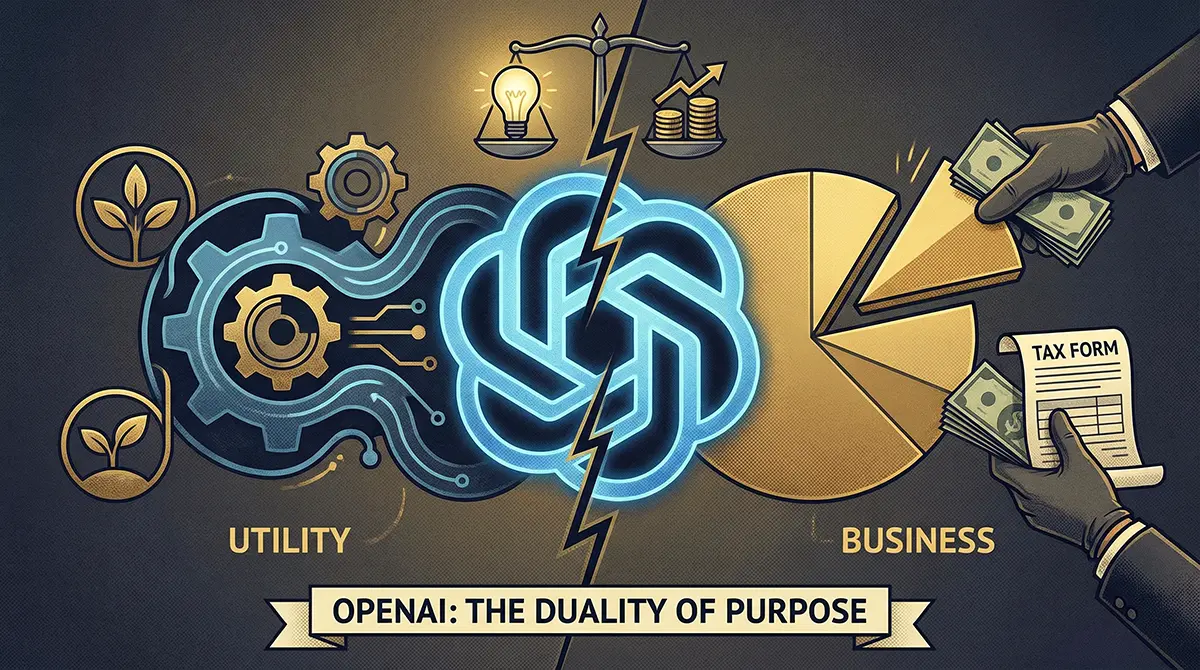
If you thought OpenAI was just a utility company selling you “electricity” (tokens) to run your business, think again. In the rapidly evolving world of Artificial Intelligence, the rules of engagement are changing. They don’t just want to power your factory anymore; they want a piece of everything you build inside it.
In a move that is sending shockwaves through the startup ecosystem and enterprise world, OpenAI CFO Sarah Friar has outlined a radical new business model for the company. The days of simple ChatGPT API subscriptions are ending. The future, according to Friar, is “Value-Sharing.”
This article explores why this seemingly innocent phrase might be the most expensive change in the history of technology and what the “OpenAI Success Tax” means for your company in 2026.
The End of the Utility Era: A Radical Shift
Speaking in a company blog post and podcast released this week, Sarah Friar was surprisingly blunt about the financial future of OpenAI. She explicitly stated that for high-value industries—like pharmaceuticals, energy, and finance—the company plans to move beyond charging merely for compute power.
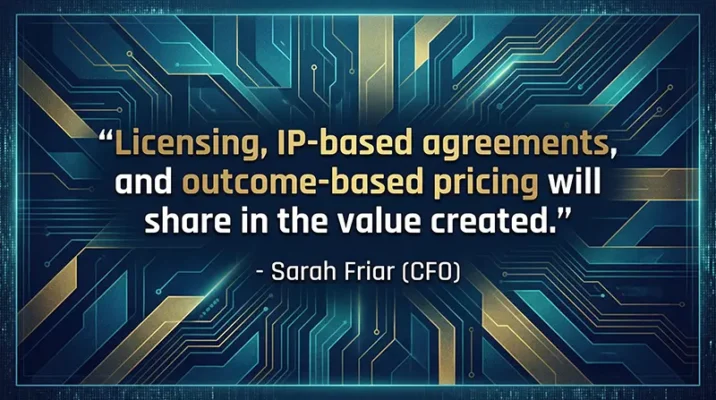
“As intelligence moves into scientific research, drug discovery… new economic models will emerge. Licensing, IP-based agreements, and outcome-based pricing will share in the value created.” — Sarah Friar, CFO
What This Means for You
The translation is stark. If you use ChatGPT API or the upcoming GPT-6 to discover a cure for cancer or design a revolutionary battery, OpenAI doesn’t just want the $0.50 you paid for the API calls. They want a royalty on the drug.
They view their Artificial Intelligence models not as passive tools (like Microsoft Word) but as co-founders or investors that deserve equity in your breakthrough. This shift from a utility model to an equity-like model is what industry analysts are calling the “OpenAI Success Tax.”
The Financial Reality: $14 Billion in Losses
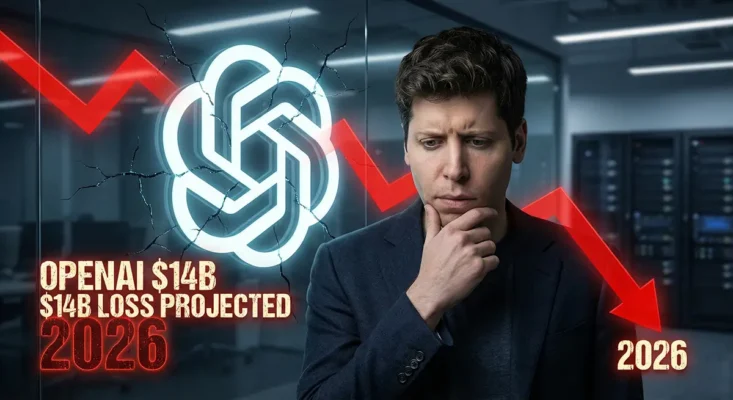
Why is OpenAI making this aggressive pivot? The answer lies in the sheer economics of building Superintelligence. As we analyzed earlier this week, OpenAI is projected to lose a staggering $14 billion in 2026.
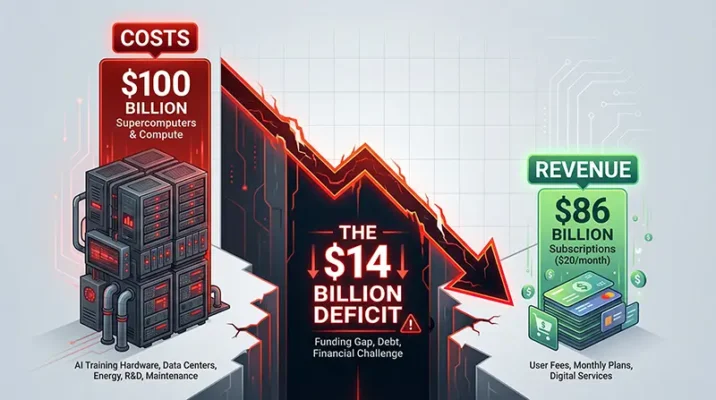
Selling chat subscriptions for $20/month is simply not enough to pay for the $100 billion supercomputers they are currently constructing. To survive without constantly begging investors for cash, OpenAI needs a “Mega-Hit.”
- The Cost of Compute: Training frontier models requires energy and hardware that costs billions.
- The Revenue Gap: Simple subscription models cannot cover these exponential costs.
- The Solution: Own a slice of the next Google, Pfizer, or Tesla.
They need to capitalize on the success of the companies that build on top of their platform. If a startup uses GPT to write its code or design its products, OpenAI wants to ensure they share in the financial upside.
Value-Sharing: The “Success Tax” Explained
The concept of “Value-Sharing” sounds cooperative, but in practice, it functions as a tax on your innovation. In the context of IP (Intellectual Property), this model introduces significant friction for any business relying on third-party AI.
How It Works
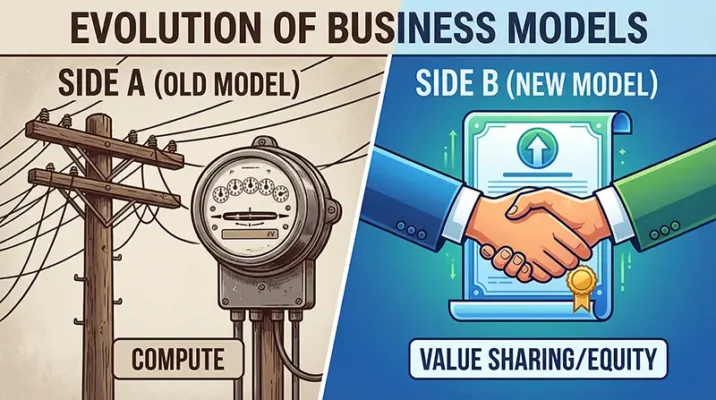
Instead of a flat fee, pricing becomes dynamic based on the outcome of the work.
- Standard Usage: You pay for tokens (electricity).
- High-Value Outcome: You pay a percentage of the revenue generated (royalty).
For example, if an energy company uses Artificial Intelligence to optimize a grid and save $10 million, OpenAI might argue that their “intelligence” created that value and demand a percentage of the savings.
The Trap for Startups and Enterprises
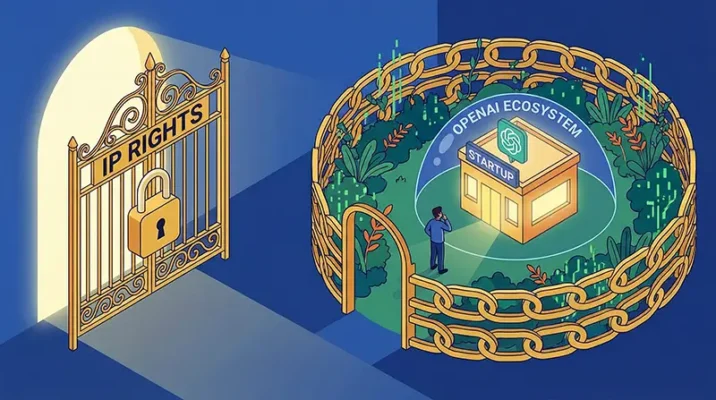
For founders and CEOs, this presents a nightmare scenario in 2026. The technology landscape is becoming a minefield of vendor lock-in and legal complexities.
1. Vendor Lock-in
If you agree to an “IP-sharing” deal, you are effectively married to OpenAI forever. Switching to competitors like Anthropic or Google Gemini later becomes legally impossible if your core intellectual property is tied to a specific OpenAI licensing agreement.
2. The “Utility” Trap
Imagine if your electricity company demanded 5% of your restaurant’s profits because “our electricity cooked the food.” That is essentially the argument OpenAI is making. They are asserting that the intelligence provided is a creative partner, not just a utility.
The Capability Overhang and Future Trends
CFO Sarah Friar also noted a massive “capability overhang” in AI—meaning the models are currently more capable than what businesses are actually using them for. The goal for 2026 is to close this gap.
However, as businesses rush to utilize these advanced capabilities, they must be wary of the Terms of Service. The future of software development is not just about code; it is about legal rights and revenue distribution.
Key Trends to Watch:
- Outcome-Based Pricing: Expect more SaaS tools to charge based on results rather than seats.
- IP Wars: Legal battles over who owns AI-generated breakthroughs will intensify.
- Regulatory Scrutiny: Governments may intervene if “platform taxes” stifle innovation.
Conclusion: Navigate the Future Carefully
The era of “cheap, neutral AI” is officially dead. OpenAI is signaling that they are no longer just a platform; they are a hedge fund that pays in compute instead of cash.
If you are building a startup in 2026, read the Terms of Service very, very carefully. You might be giving away your company without realizing it. The OpenAI Success Tax is real, and it is coming for your bottom line.
Resources
- MSN: OpenAI’s real IP play: Why structural dependency, not your prompts, is the target.
- TheInformation: OpenAI Plans to Take a Cut of Customers’ AI-Aided Discoveries.
- TheCanary: OpenAI announces plan to leech profit from its customers’ work.
Frequently Asked Questions (FAQs)
The “OpenAI Success Tax” is a term used to describe OpenAI’s shift from a simple utility pricing model (pay-per-token) to a value-sharing model. This means OpenAI intends to take a percentage of the revenue or equity from high-value discoveries (like new drugs or scientific breakthroughs) created using their models, rather than just charging for the compute time.
Startups may face stricter Terms of Service requiring “outcome-based pricing.” Instead of a flat monthly fee, startups in high-value industries (finance, biotech, energy) might have to pay royalties on their products or share Intellectual Property (IP) rights with OpenAI, potentially diluting their own equity.
According to CFO Sarah Friar, OpenAI is projected to face $14 billion in losses in 2026 due to the massive costs of training superintelligence. Simple subscription fees cannot cover these costs. Outcome-based pricing allows OpenAI to capture a share of the immense value created by their models in sectors like healthcare and scientific research.
Sarah Friar explicitly stated that for high-value tasks, the company will move beyond charging for compute. She mentioned that “licensing, IP-based agreements, and outcome-based pricing will share in the value created,” signaling a departure from the “neutral utility” era of AI.
To avoid vendor lock-in, companies should carefully review all API agreements for IP-sharing clauses. Diversifying AI providers (using models from Anthropic, Google, or open-source alternatives like Meta Llama) and building model-agnostic infrastructure can help protect your business from being legally tied to a single provider.
Related Blogs
OpenAI Financial News 2026: The Shocking $14 Billion Loss & Bankruptcy Risk
Explosive OpenAI financial news 2026 reveals a $14 billion loss. Discover why Sam Altman's AI giant faces bankruptcy risk by 2027 and what it means for ChatGPT users.
Jan

OpenAI Jony Ive Device: Is This the Revolutionary “Anti-Smartphone” of 2026?
Discover the rumors behind the OpenAI Jony Ive device. Learn how Sam Altman and LoveFrom are building a screenless artificial intelligence hardware revolution in 2026.
Jan

this was a very well written and informative article thanks for the hard work u put into it. i love how u took a complex topic and made it so easy to understand for everyone regardless of their background. it is clear that u put a lot of time into making sure the info was accurate and easy to follow. thanks for the help as always man!