

Hardware
iPhone 17e Disappointment: Why a 60Hz Display in 2026 is an Insult
Jan
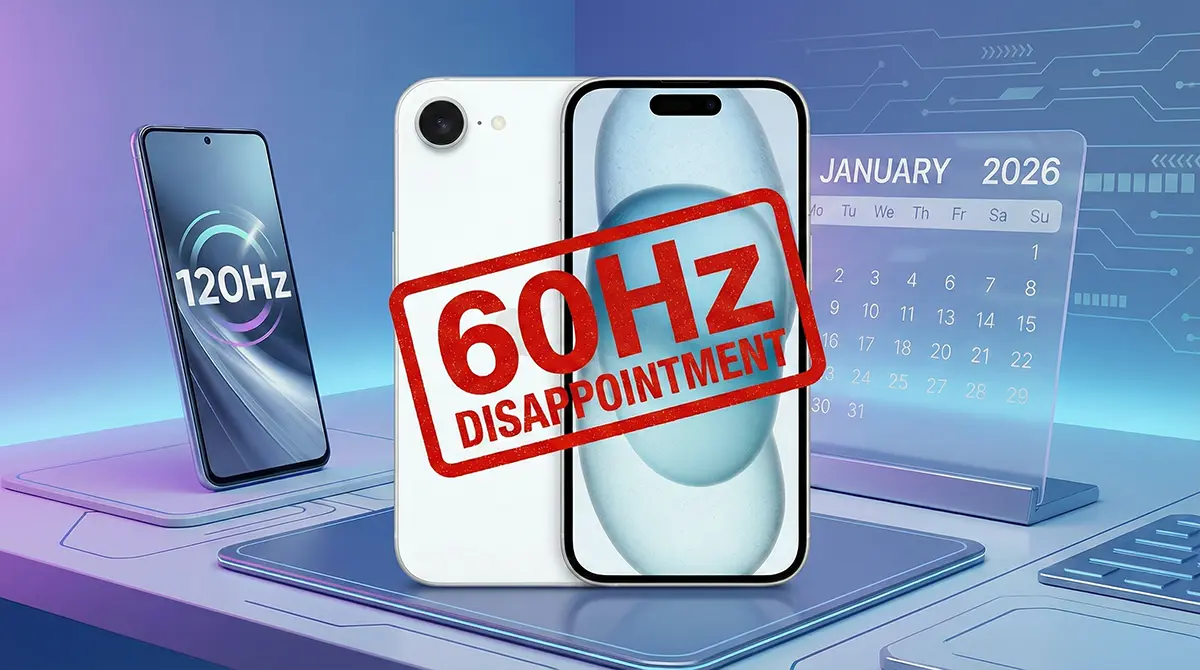
If you were hoping that 2026 would be the year Apple finally treats its budget customers with the respect they deserve, we have some bad news. According to the latest leaks from reliable industry insiders, including Digital Chat Station, the upcoming iPhone 17e—Apple’s designated “budget” entry for the iPhone 17 lineup—is retaining one of the most criticized features of the last decade: the 60Hz display.
At a rumored price of $599 (approximately 165,000 PKR before taxes), Apple is reportedly planning to sell you a device in 2026 that scrolls with the stuttery lag of a phone from 2015. In a market where even entry-level Android phones offer high refresh rates, this decision feels less like a compromise and more like an insult to consumers.
Here is why the iPhone 17e might be the most controversial release of 2026 and why you should think twice before buying it.
The iPhone 17e: A Wolf in Sheep’s Clothing
The leaks confirm that the iPhone 17e will indeed receive a significant facelift, modernizing its appearance to match the premium models. However, a closer look at the specs reveals a device that is powerful on the inside but visually dated on the outside.
The Good: Dynamic Island and A19 Power
Finally, Apple is ditching the notorious “notch.” The iPhone 17e will feature the Dynamic Island, effectively making it look like a modern iPhone 16 Pro or iPhone 15 at first glance.
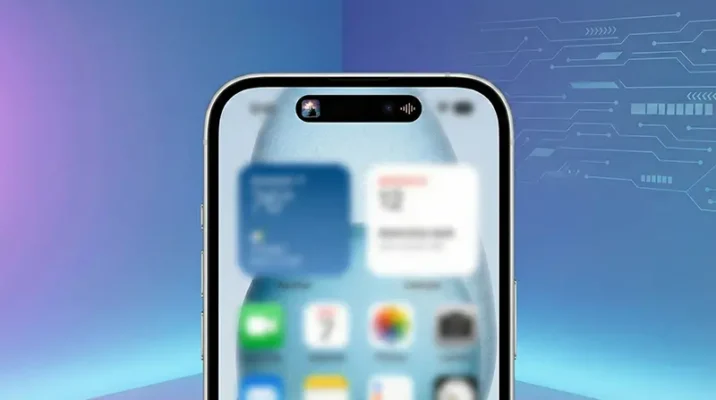
Under the hood, it is expected to pack the powerful A19 chip (or a slightly downclocked variant). This silicon ensures that the phone will be incredibly fast, likely outperforming almost any Android flagship in raw processing benchmarks. For gaming and heavy apps, the A19 will be a beast.
The Bad: The Static Screen
Despite the modern look and powerful engine, the experience falls apart when you touch the screen. The display is rumored to be stuck at a basic 60Hz display refresh rate.
-
No ProMotion (120Hz).
-
No 90Hz middle ground.
-
Just plain old 60Hz.
In 2026, using a 60Hz screen on a premium-priced device is a jarring experience, especially when the rest of the world has moved on to smoother visuals.
The 60Hz Display Problem: Stuck in 2015
Why is a 60Hz display such a dealbreaker for the iPhone 17e?
Refresh rate refers to how many times per second the screen updates its image. A 60Hz screen updates 60 times a second, while a 120Hz screen (like Apple’s ProMotion or standard Samsung panels) updates 120 times.
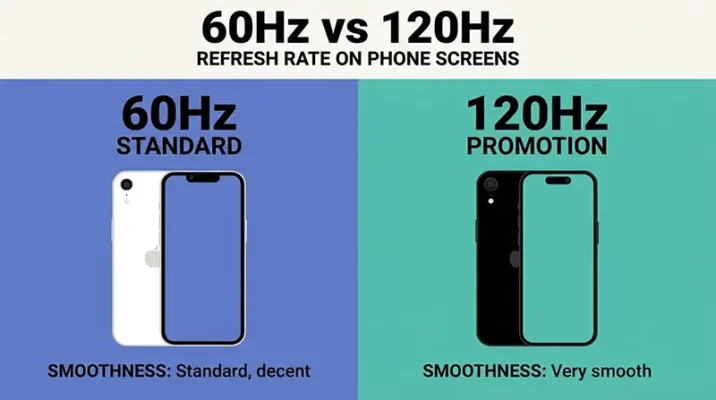
Note: “Once you see high refresh rate, you cannot unsee it.”
When you scroll through Instagram, browse the web, or navigate the UI on a 60Hz screen, the motion looks choppy and creates a “blur” effect. On a 120Hz screen, that same motion is fluid, crisp, and responsive. By locking the iPhone 17e to 60Hz, Apple is essentially asking you to pay a premium price for a phone that feels twice as slow as its competitors, regardless of how fast the A19 chip actually is.
iPhone 17e vs. Android Competitors: The Absurd Reality
To understand how ridiculous this decision is, you only need to look at the smartphone market landscape in Pakistan and globally in 2026.
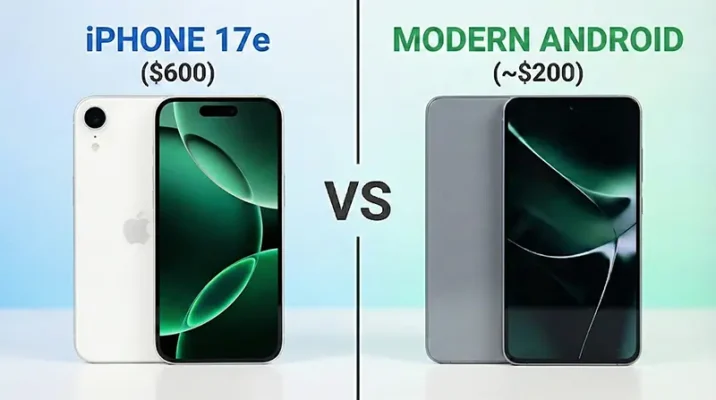
You can currently walk into a shop and buy a budget device like the Samsung Galaxy A16 or a Redmi Note 15 for roughly $200 (approx. 55,000 PKR). These phones offer features that Apple refuses to put in its $600 device.
| Feature | Budget Android ($200) | iPhone 17e ($600 / ~165K PKR) |
|---|---|---|
| Refresh Rate | 120Hz OLED | 60Hz OLED (Outdated) |
| Bezels | Slim | Standard |
| Scrolling Feel | Smooth & Fluid | Choppy & Dated |
| Processor | Mid-range | High-end (A19) |
| Value | High | Low |
When looking for the best budget smartphone, consumers expect compromises. However, paying three times the price for a screen that feels significantly worse is hard to justify. While the iPhone 17e wins on processing power, the day-to-day interaction—swiping, scrolling, and tapping—will feel inferior to a cheap Android.
Why Apple is Handicapping the iPhone 17e
It isn’t about cost. A 60Hz OLED panel saves Apple mere pennies compared to a 120Hz panel in 2026. This decision is purely about Market Segmentation.
Apple is a master at upselling. They know that if they gave the $600 iPhone 17e a smooth 120Hz screen, fewer people would feel compelled to buy the $1,000+ iPhone 17 Pro.
The ProMotion display is currently the single biggest differentiator left for their high-end models. By purposefully handicapping the cheaper phone, they are forcing enthusiasts and tech-savvy users to upsell themselves to the Pro models just to get a modern screen experience. They are creating a problem so they can sell you the solution for an extra $400.
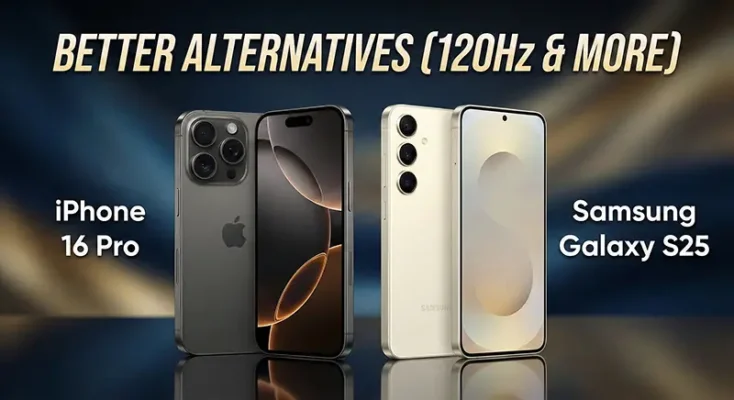
Better Alternatives: iPhone 16 Pro and Galaxy S25
If you are in the market for a new phone in 2026 and have around $600 to $700 to spend, you have much better options than the iPhone 17e.
1. The Used iPhone Market
Instead of buying a new, handicapped device, look for a used iPhone. Specifically, a refurbished or used iPhone 16 Pro will likely cost a similar amount by 2026.
-
Pros: You get the ProMotion 120Hz display, a triple-camera setup, and premium build quality.
-
Cons: Slightly older chip (A18 Pro), but still incredibly fast.
2. Samsung Galaxy S25
For those willing to switch ecosystems, the Samsung Galaxy S25 is the clear winner. Samsung has standardizes 120Hz across its flagship lineup.
-
Pros: Beautiful 120Hz AMOLED screen, excellent cameras, and modern design.
-
Price: Likely competitive with the iPhone 17e in the Pakistan market.
Even the Samsung Galaxy S25 Ultra might be available on deals or in the used market, offering an experience that is lightyears ahead of the 17e.
Conclusion: Do Not Settle for Less
If you are upgrading from an ancient iPhone 11, the iPhone 17e might look fine to you simply because you are used to a 60Hz screen. But ignorance is bliss only until you see what you are missing.
If you have ever used a 120Hz screen—even on a friend’s cheap Android—going back to 60Hz feels like your phone is broken. It is sluggish, blurry, and frustrating.
Our Advice: Do not reward Apple for putting a 2015 screen on a 2026 device. If you have $600 to spend, buy a used iPhone 16 Pro or make the switch to a Samsung Galaxy S25. Your eyes (and your wallet) will thank you.
Sources
Frequently Asked Questions (FAQs)
No. According to the latest leaks from Digital Chat Station, the iPhone 17e will retain a standard 60Hz display. It will not feature the 120Hz ProMotion technology found in the Pro models or the 90Hz screens found in budget Android competitors.
The iPhone 17e is rumored to launch at $599 USD. In Pakistan, this converts to approximately 165,000 PKR (depending on the exchange rate in 2026), excluding PTA taxes and customs duties.
It depends on what you value. The iPhone 17e will likely have a faster processor (the A19 chip), but the Samsung Galaxy S25 offers a superior visual experience with a 120Hz OLED screen and slimmer bezels. For pure display quality, the Galaxy S25 is the better choice.
Yes. One of the major upgrades for the iPhone 17e is the removal of the notch in favor of the Dynamic Island, giving it a modern look similar to the iPhone 15 and 16 series.
We highly recommend buying a used iPhone 16 Pro. For a similar price, you get a 120Hz ProMotion display, a dedicated telephoto camera lens, and a premium titanium build, which the plastic/aluminum iPhone 17e lacks.
