

News
Samsung Memory Shortage Crisis: Why No One Can Escape the 2026 AI Tax

Jan
We thought the semiconductor crisis was just about gaming PCs and high-end graphics cards. We were wrong.
In a chilling interview with Reuters on January 5, 2026, Samsung’s Co-CEO TM Roh dropped a bombshell that fundamentally changes the outlook for the global consumer electronics market: “No one can escape memory shortages.”
While gamers have been panicking about $200 RAM kits and $5,000 GPUs, a silent disaster has been brewing in the home appliance sector. According to Samsung, the “Stargate” AI vacuum—a massive supercomputer project by OpenAI—is now so powerful that it is sucking the resources away from everyday essentials like TVs, refrigerators, and washing machines.
If you are planning to upgrade your home appliances in Pakistan this year, pay close attention. Here is why your next smart appliance might cost a fortune—or be significantly “dumber” than the model you bought three years ago.
The Warning: An Unprecedented Samsung Memory Shortage
Samsung isn’t just a phone company; they are the largest appliance maker in the world and a dominant force in the global semiconductor market. When their CEO speaks, the entire tech industry listens.
In his recent statement, TM Roh explained that the global shift toward HBM (High Bandwidth Memory) for AI data centers has forced the company to cannibalize production lines that used to make simple, cheap chips for household electronics.
“As this situation is unprecedented, no company is immune to its impact. The crisis affects not only mobile phones but other consumer electronics, from TVs to home appliances.” — TM Roh, Samsung Co-CEO
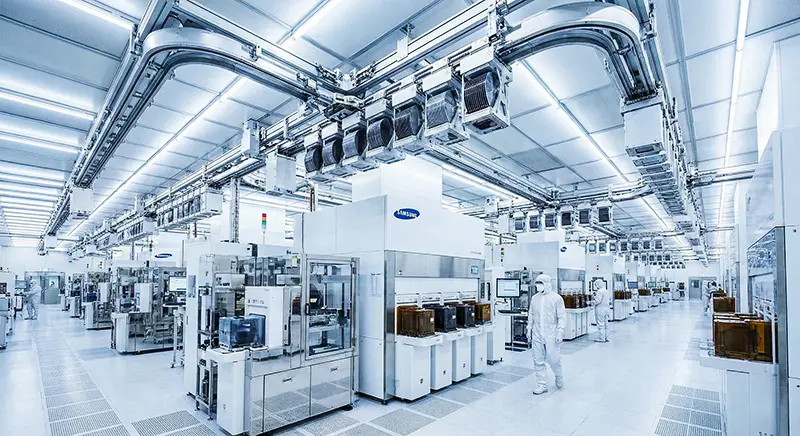
This isn’t a temporary supply chain hiccup. It is a structural shift in how silicon is allocated globally. The Samsung memory shortage is a direct result of the world prioritizing Artificial Intelligence over consumer convenience.
Why Does My Fridge Need RAM?
You might be asking, “Why does my washing machine need a memory chip? It just washes clothes.”
In 2026, almost everything is a computer. The days of analog dials and simple mechanical timers are gone. To function, modern appliances rely on sophisticated operating systems that require RAM and flash memory.
-
Smart TVs: They need significant RAM to buffer 8K streams, run AI-based upscaling processors, and manage complex operating systems like Tizen or Google TV.
-
Refrigerators: That “Family Hub” screen on your door runs a full OS, manages inventory cameras, and connects to your Wi-Fi.
-
Washing Machines: Modern machines use AI sensors to detect fabric types and load weight, adjusting water and spin cycles in real-time.
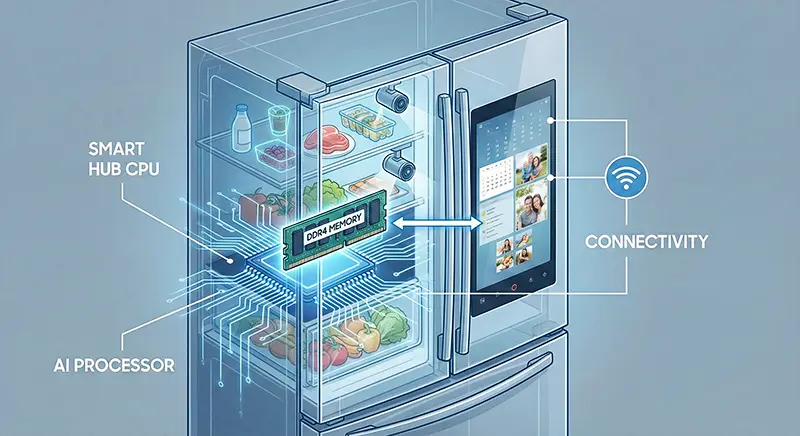
All these devices rely on DDR4 or LPDDR memory. However, because Samsung and SK Hynix have shifted nearly 40% of their wafer capacity to feed the insatiable hunger of the AI sector, there is simply no capacity left to manufacture these “basic” chips efficiently.
The “Stargate” Ripple Effect: OpenAI vs. Your Kitchen
The root cause of this Samsung memory shortage is a project known as “Stargate.”
As we reported earlier, OpenAI’s joint venture with Microsoft to build the “Stargate” supercomputer requires a staggering 900,000 silicon wafers per month. This infrastructure is critical for the next generation of AI models, but it comes at a steep cost to the consumer market.
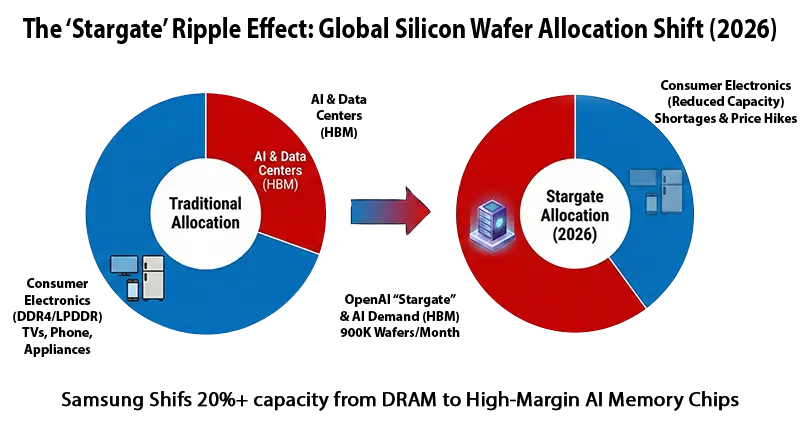
To meet this demand, Samsung has reportedly cut consumer DRAM production by 20%. The manufacturing lines that once churned out cheap memory for your Smart TV are now being retooled to produce high-margin HBM chips for data centers.
This is a zero-sum game. Every wafer used for OpenAI is one less wafer available for consumer electronics, creating a fierce bidding war for the remaining supply.
The Consequence: Price Hikes and “Dumb” Downgrades
So, what does this mean for the average consumer? The impact will be felt in two distinct ways starting Q2 2026.
1. Inevitable Price Hikes
Analysts predict a 15-20% price increase on Smart TVs and high-end appliances. The cost of raw memory components has skyrocketed, and manufacturers are passing those costs directly to you. This is effectively an “AI Tax” on household goods.
2. The “Dumb” Downgrade
Just as we saw with the Honor Win phone reducing RAM specs to cut costs, appliance makers are starting to remove features.
-
Expect to see new 2026 TV models with less RAM, resulting in slower menus and laggy interfaces.
-
“Smart” features may be stripped back to keep sticker prices stable.
-
Premium features like voice control or on-device AI processing may become subscription-only or reserved for ultra-luxury models.
The Irony: Record Profits
Here is the part that might make your blood boil. While warning consumers about “inevitable” price hikes due to the Samsung memory shortage, Samsung’s memory division is projecting a record-breaking $14 Billion profit for this quarter. They are capitalizing on the scarcity they helped create by chasing AI money, leaving consumers to pay more for the scraps that are left.
The Pakistan Impact: Hafeez Center to Feel the Sting
For consumers in Pakistan, the situation is compounded by local economic factors.
The current stock of electronics in major markets like Hafeez Center in Lahore or Abdullah Haroon Road in Karachi was imported before these new global price hikes took full effect. However, inventory is thinning out.

Once the new shipments arrive in February 2026, Pakistani consumers will face a double whammy: the global increase in RAM costs plus potential adjustments in import duties and the rupee-dollar exchange rate.
If you are looking for a Samsung TV, a high-end fridge, or even a mid-range laptop, the prices you see on the shelf today are likely the lowest they will be for the rest of the year.
Buyer’s Advice: Beat the 2026 Price Hike
We are entering a period where inflation in the electronics sector is driven not just by currency devaluation, but by a physical shortage of components.
Our recommendation is simple: If you have been planning to buy a high-end OLED TV or a smart appliance for your new home, do it this week. Do not wait for the “new models” to arrive. The 2026 models are likely to be more expensive and potentially less powerful than their 2025 predecessors due to the memory shortage.
Summary of Action Steps:
-
Buy Now: Secure your electronics before February 2026 stock arrivals.
-
Check Specs: Be wary of new models with unspecified RAM counts.
-
Look for 2025 Stock: Older models may offer better value and higher specs than the incoming “stripped-down” versions.
The “Stargate” project is changing the world of AI, but it is also making it much harder to buy a decent refrigerator. Don’t let the Samsung memory shortage catch your wallet off guard.
Source: Reuters – Samsung Co-CEO Interview on Memory Shortage (January 5, 2026)
Frequently Asked Questions (FAQs)
Samsung electronics prices are rising due to a global Samsung memory shortage. The company has shifted 40% of its production capacity to manufacture High Bandwidth Memory (HBM) for AI data centers, specifically for OpenAI’s “Stargate” project. This has created a scarcity of standard chips used in consumer devices, driving up costs.
The shortage affects almost all “smart” appliances that require operating systems and RAM. This includes Smart TVs (especially 8K and OLED models), smart refrigerators (like the Family Hub), and AI-enabled washing machines. Analysts predict a 15-20% price hike for these items.
“Stargate” is a massive AI supercomputer project by OpenAI and Microsoft. It requires approximately 900,000 silicon wafers per month. This unprecedented demand is “sucking” resources away from the consumer market, causing what is now known as the “AI Tax” on everyday household electronics.
Yes. While current stock in markets like Hafeez Center or Abdullah Haroon Road reflects older import prices, new shipments arriving after February 2026 will be significantly more expensive. Pakistan will face the double impact of global component inflation and local import duties.
It is highly recommended to buy now. The upcoming 2026 models are expected to be more expensive and may feature “downgraded” specs (less RAM) to keep costs stable. Purchasing current 2025 stock offers better value for money before the shortage fully hits the retail market.
